REVIEW · SIEM REAP
Angkor Wat Temples & Tonle Sap Lake Private Day Tour
Book on Viator →Operated by Green Era Travel · Bookable on Viator
Two ancient worlds in one day. This Angkor Wat and Tonlé Sap tour pairs UNESCO-classic temples with a living floating community at Kompong Phluk. You’ll get an English guide, air-conditioned rides, and a boat trip that shows how the lake still shapes daily life.
I like that the guide puts the temples into story form, not just facts on a sign. I also like the practical pacing: cold bottled water, hotel pickup, and a schedule that helps you see Angkor Wat plus Angkor Thom without juggling multiple tickets and transfers.
One thing to consider: entrance fees are extra (the Angkor Pass), and you’ll be walking and standing in heat. If that kind of day sounds intense, plan for slower moments and hydration.
In This Review
- Key highlights at a glance
- A temple day plus a living lake
- Morning pickup and getting your Angkor Pass
- Angkor Wat: more than the postcard view
- Angkor Thom South Gate: the dramatic entry
- Bayon Temple: faces, bas-reliefs, and a maze of rooms
- Tonlé Sap Lake and Kompong Phluk: seeing daily life on stilts
- Heat, walking, and how to stay comfortable
- Price and value: what $79 really buys you
- Who should book this tour (and who should skip it)
- Should you book the Angkor Wat & Tonlé Sap day tour?
- FAQ
- What’s included in the tour price?
- Do I need to pay extra for temple entrance?
- How long is the day tour?
- Is lunch included?
- What should I wear to visit the temples?
- Is the transport private?
Key highlights at a glance
- English-speaking guide with in-depth temple explanations that make the carvings feel readable
- Angkor Wat + Angkor Thom in the same day, so you don’t waste time coordinating separate tours
- Small group size (max 10) with air-conditioned shared transport
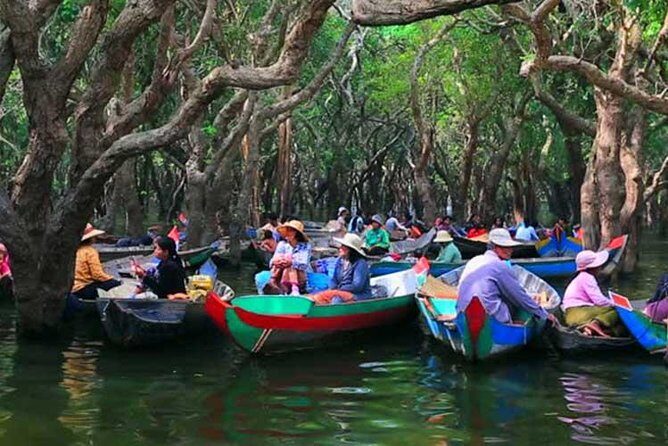
- Tonlé Sap boat ride to Kompong Phluk to see lake life up close
- Bottled water provided to help you manage the heat
- Dress code enforced (trousers or knee-length skirt/dress), so pack accordingly
A temple day plus a living lake
This tour is built for people who want more than photos. Yes, Angkor Wat is the main event. But the second half is what makes the day feel modern: you’ll see how Tonlé Sap and its floodplains still drive work, school, and community life.
If you’re short on time in Siem Reap, this is a smart match. You get the “wow” of Angkor’s architecture and the quieter, everyday reality of Cambodia’s lake culture—without spending your day arranging transport between distant stops.
You can also read our reviews of more private tours in Siem Reap
Morning pickup and getting your Angkor Pass
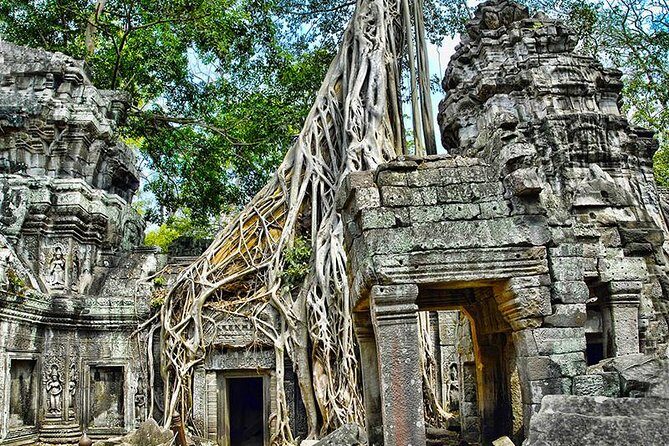
Your day starts early. You’ll be ready for pickup around 7:30–8:30am from your hotel, in an air-conditioned vehicle. Then you head to the Angkor Wat Ticket Office to pay for and collect the Angkor Pass, which is required.
This matters because it prevents the most annoying travel-day problem: arriving at Angkor and spending time sorting out tickets while the morning heat rises. The pass is not included in the tour price, but the tour covers the lead-in so you can move on quickly once you have it.
Practical note: this tour is listed with a mobile ticket option, and it can be helpful if you like having everything ready in advance. Either way, you’ll want to bring whatever you need for ticketing when it’s time.
Angkor Wat: more than the postcard view
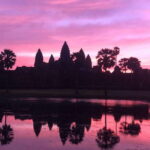
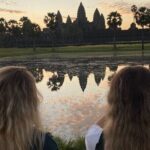
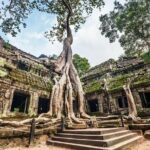
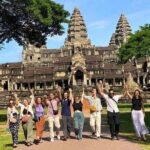
Angkor Wat is built as a state temple and capital for King Suryavarman II in the early 12th century. It’s the best-preserved temple at the site and has stayed a major religious center over time—first Hindu (dedicated to Vishnu), then later Buddhist.
Here’s what I think you’ll actually feel when you’re inside: this place doesn’t just look impressive, it’s engineered for meaning. The design represents Mount Meru from Hindu mythology, with layers of galleries rising in steps. The temple sits inside a moat and within outer walls, and the size is huge enough that even after you see it in photos, your brain still has to catch up in real life.
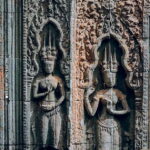
Your guide’s job isn’t just to point out names. A strong guide explains how to read what you’re seeing—especially the way the galleries and bas-reliefs work like a visual story. One of the most praised parts of this tour is how the guide ties the carvings to the big history of Cambodia, so you get context for what would otherwise be a blur of stone.
Time on this stop is about two hours. That’s enough to see the key areas without sprinting, but not enough to do everything slowly and perfectly if you’re a linger-everywhere type. If you’re the kind of person who likes long photo pauses, just don’t plan a “no rush” day—you’ll need to keep moving.
Angkor Thom South Gate: the dramatic entry
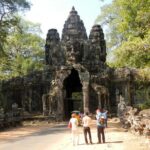
After Angkor Wat, you head into Angkor Thom, the fortified city area. You’ll enter through the South Gate over a causeway lined with statues of demons and gods, each carrying a giant naga (a snake deity figure).
This is one of those moments where your guide really helps. The South Gate is visually loud, and explanations can make it click: it’s not random decoration, it’s part of how Angkor told stories in stone—through symbols that were meaningful to people who lived with the legends.
This stop is shorter (around 30 minutes), so it’s more of a strong visual hit than a slow museum-style visit. If you want extra time here, you’ll need to accept that the day’s later stops will be tighter.
Bayon Temple: faces, bas-reliefs, and a maze of rooms
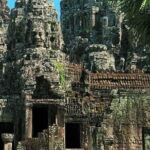
Next is Bayon Temple, set at the center of Jayavarman VII’s capital. Bayon is known for its richly decorated Khmer style and—most memorably—the stone faces that appear on towers throughout the complex.
Bayon is dated to the late 12th or early 13th century and served as a state temple for Jayavarman VII in the Mahayana Buddhist era. The layout is described as having three levels, with square galleries and bas-reliefs at the first two, then a central sanctuary dominating the third level. It’s also noted for having no enclosing wall of its own because it’s already protected by the city walls.
In practice, Bayon can feel like a gentle maze. You’ll see enough to appreciate the design and details, but you probably won’t be able to take in every carving unless you’re there for many hours. This is where having an English-speaking guide matters: they help you prioritize what to look for so you leave feeling like you understood the place, not just visited it.
Time here is about 45 minutes. That usually hits the sweet spot: see the faces, walk the main areas, and grasp what makes Bayon different from Angkor Wat.
Tonlé Sap Lake and Kompong Phluk: seeing daily life on stilts
After temple time, you switch gears. You’ll have a lunch break on your own account, then drive about 45 minutes to the quay for the lake boat ride.
On the water, you’ll travel by local boat for about 1.5 hours, passing through Kompong Phluk—often described as a floating village and village on stilts. The name is given as harbor of the tusks, and the setting is the star: you’ll see colorful houses, schools, temples, church, and local government offices built over water and connected to daily routines.
This part is valuable because it links the ancient and the current. The temples speak in stories from centuries ago. Kompong Phluk shows you how water and flooding still shape livelihoods now—how people live with the rhythm of the lake.
Your boat continues past the village area as well, and the ride timing helps you get a sense of the wider floodplain environment. In rainy season, the surrounding green flooded forest may be visible, which makes the lake feel almost like a moving ecosystem.
Important practical consideration: the tour notes that a canoe ride in a mangrove forest is not included (it’s listed as something that happens in rainy season). So don’t assume extra nature add-ons are part of your ticket.
Heat, walking, and how to stay comfortable
Siem Reap can be punishingly hot. This tour directly addresses that in a practical way: you’ll have air-conditioned transport, and cold bottled water is provided on the bus.
Still, Angkor is outdoors. So plan like it’s a warm-day hike with stops. Wear breathable clothes under the dress code rules. Pack sunscreen and a hat if you can. And if your legs get tired, keep your eye on the next “anchor moment” (South Gate, then Bayon, then the boat). That mental pacing helps you avoid the tired spiral.
Also note the dress requirement: only trousers or a knee-length skirt/dress is permitted. Khmer temples typically expect respectful coverage, and the tour is clear about what’s allowed. If you show up in the wrong outfit, you’ll lose time finding a workaround.
Price and value: what $79 really buys you
The headline price is $79 per person for a day tour lasting about 7 hours. What you’re paying for is not just entry tickets. You’re paying for:
- an experienced English-speaking guide
- hotel pickup and drop-off
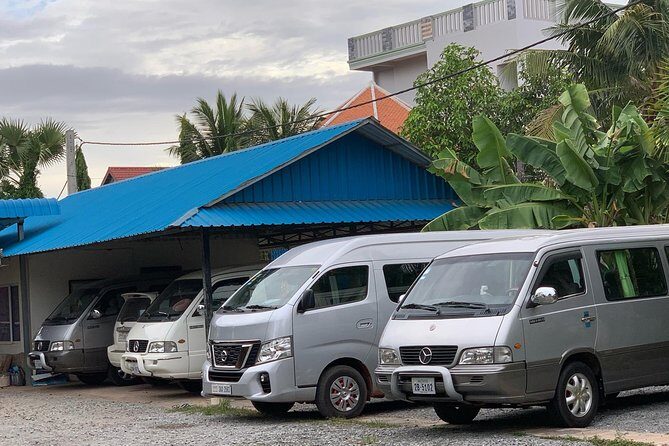
- shared air-conditioned transport (bus/mini van)
- a shared boat trip on Tonlé Sap
- cold bottled water on the bus
- a small group limit (max 10)
On top of that, you pay the Angkor Pass separately: listed as $37 per person. Temple entrance fees are not included in the tour price, so budget for both costs.
Is this good value? Usually, yes—especially if you want both Angkor and the lake in one day. Many people pay similar money for Angkor alone once you add guide and transport. Here, the lake boat ride is part of the package, and that’s the part that changes the day from purely historical to genuinely lived-in.
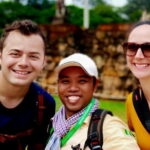
One more angle on value: some guides are praised for helping guests beyond the typical tourist needs. A review specifically mentions guide Mr. Phai Phearom being willing to help a solo traveler who had a stroke and handling them with care. That’s not something you can guarantee every day, but it’s a good sign about professionalism and attention—especially if you’re traveling with mobility or stamina concerns.
Who should book this tour (and who should skip it)
This fits you best if:
- you want Angkor Wat and Angkor Thom without booking multiple tours
- you care about context, not just photos (the guide style is a major selling point)
- you want the Tonlé Sap part included, so you see more than temples
You might want to look elsewhere if:
- you hate walking and heat and need a very slow, low-footprint day
- you already planned to spend your whole day at Angkor and want less driving and switching gears
- you’re expecting a truly private, just-you vehicle (transport is shared, even if the group stays small)
For families: children must be accompanied by an adult. The tour also calls for moderate physical fitness, which means you should gauge your comfort with uneven temple grounds and long outdoor stretches.
Should you book the Angkor Wat & Tonlé Sap day tour?
If your goal is a full Siem Reap picture—ancient stone stories plus how people live with water—this is a strong choice. The best part is the combination: a guided Angkor circuit that makes the carvings meaningful, followed by a boat ride that shows Tonlé Sap as a living system, not a side trip.
Book it if you want value for a one-day window and you’ll appreciate an English-speaking guide who explains what you’re seeing. I’d also book it if you like being cared for in the basics: hotel pickup, air-conditioned rides, cold water, and a small group pace.
Skip or reconsider if you’re extremely heat-sensitive or you’re hoping for a fully private experience with no sharing of transport.
In short: it’s a day that tries to give you both the legend and the life around it—and it does that with solid comfort planning.
FAQ
What’s included in the tour price?
The tour price includes an experienced English-speaking guide, hotel pickup and drop-off, shared air-conditioned transport, a shared boat trip at Tonlé Sap, and cold bottled water on the bus.
Do I need to pay extra for temple entrance?
Yes. The Angkor Pass is required and is listed as $37 per person. Entrance fees are not included in the tour price.
How long is the day tour?
It runs about 7 hours (approx.), including temple visits and the Tonlé Sap boat ride.
Is lunch included?
Lunch is not included. You’ll have a lunch break on your own account during the day.
What should I wear to visit the temples?
Only trousers or a knee-length skirt/dress is permitted.
Is the transport private?
The tour uses shared air-conditioned bus/mini van transport. The group is limited to a maximum of 10 travelers, so it’s small, but not fully private.