REVIEW · SIEM REAP
Private one-day tuktuk ‘small tour’ of the oldest Angkor temples
Book on Viator →Operated by Angkor Wat Shared Tours · Bookable on Viator
A day of Angkor, but without feeling locked in. This private tuk-tuk route is built for squeezing in major highlights and quieter ruins, with hotel pickup and bottled water keeping you comfortable between stops. I especially like the chance to ride between temples instead of fighting traffic, and the off-the-beaten-track mix that fits an 8–9 hour day. One key consideration: Angkor entry is not included, and there’s also an optional tour guide fee if you want someone to go deeper.
If you’re trying to understand Angkor without turning it into a homework assignment, this format helps. You get a set route, plus the ability to adjust start time and pickup location, which matters a lot in a place where crowds and heat can shape your whole day. Go into it expecting a driver who will help you manage the schedule and timing, and you’ll come out happy and not overly tired.
In This Review
- Quick hits on this one-day small tour
- Why a tuk-tuk day works for old Angkor temples
- Pickup, bottled water, and the 8–9 hour pacing
- Angkor Wat on the first stop: plan for the crowds and the entry
- Banteay Kdei: monk cells, roots, and a quieter kind of wow
- Ta Prohm: jungle-retaken ruins and Tomb Raider energy
- Ta Keo: the unfinished pyramid that changes the mood
- Angkor Thom and the South Gate: gods, demons, and the center axis
- Phnom Bakheng at sunset: the extra stop you should plan for
- How drivers and guides shape your day
- Price, value, and what you might still pay
- Customizing your route without losing the plot
- Who this tour is best for (and who should skip it)
- Should you book this one-day Angkor tuk-tuk tour?
- FAQ
- What’s included in the tuk-tuk tour price?
- Are Angkor entry tickets included?
- How long is the tour and how many temples do we visit?
- Do we get a guide?
- Is Phnom Bakheng included on every tour?
- What’s the cancellation policy?
Quick hits on this one-day small tour
- Private tuk-tuk for small groups: only your group goes around, with customization for start time and pickup.
- A smart mix of classics and lesser-visited temples: Angkor Wat, Banteay Kdei, Ta Prohm, and more.
- Built for comfort: round-trip private transfer, plus bottled water during the day.
- Stops are timed for flow: about 1 hour each at the main temples, so you keep momentum.
- Optional sunset add-on: Phnom Bakheng is included only for the sunset version.
- You still need the Angkor Pass: admission tickets aren’t included, so plan that before you go.
Why a tuk-tuk day works for old Angkor temples
Angkor can feel like a choose-your-own-adventure maze. A car or bus gets you there, but a tuk-tuk makes the day feel more personal and easier to manage in small chunks—especially when you’re bouncing between major ruins and quieter ones.
This tour is designed for that rhythm: you move around the ancient capital, stop for about an hour, then roll on. That timing helps because the temples change a lot depending on light, crowds, and how long you’re willing to stand in the sun.
What I like most is the mix of “must-see” and “less crowded if you get the timing right.” Angkor Wat is on the list, but you’re also hitting sites like Banteay Kdei and Ta Prohm—temples that feel very different from each other in mood and setting.
You can also read our reviews of more private tours in Siem Reap
Pickup, bottled water, and the 8–9 hour pacing
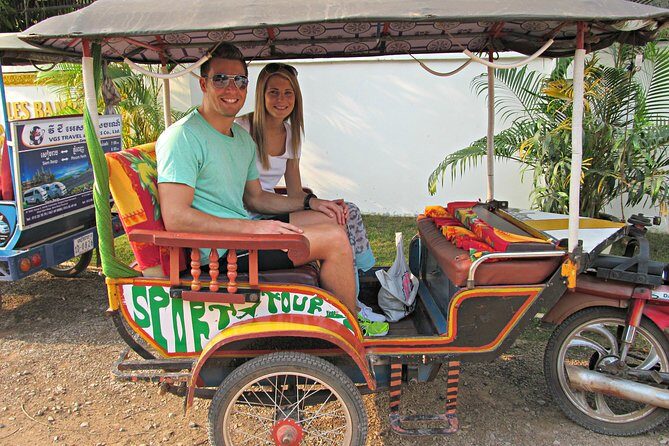
The day runs roughly 8 to 9 hours, which is long enough to feel like you really did Angkor, but short enough to avoid turning it into a full-on endurance event. Pickup and drop-off are included if you select that option, and you’ll have private transport around Angkor with round-trip transfers.
The bottled water part sounds basic, but it matters. In Siem Reap heat, small comfort items are the difference between enjoying ruins and just surviving them. One review specifically called out ice-cold water after temple visits, which matches what you’d want on a long day.
Your schedule is also adjustable. You can customize the start time, pickup location, and the number of travelers, which is helpful if you’re trying to avoid the worst crowd waves or just want a later morning pace.
Angkor Wat on the first stop: plan for the crowds and the entry
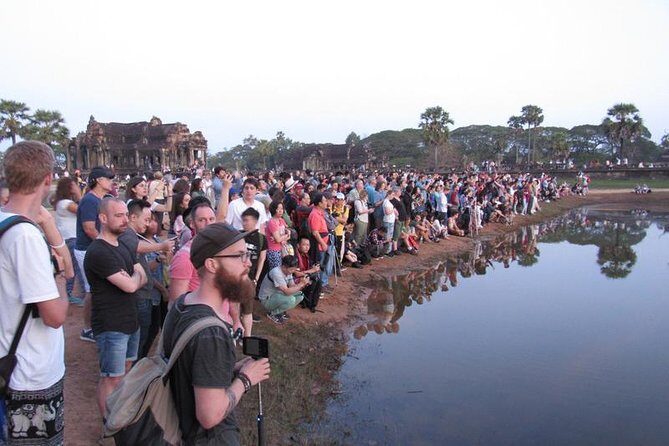
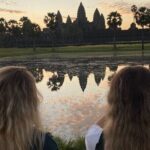
Angkor Wat is the big one. It’s described as the largest religious monument in the world, and it’s also famous for sunrise—so even if you’re not doing a sunrise version, it’s still a place that draws people fast.
On this itinerary, it’s stop 1 with about 1 hour on site. Admission isn’t included, so you’ll need your entry ticket, and in practice that means planning for the Angkor Pass before you arrive at the gate.
Here’s the practical move: treat your first stop like an arrival phase. Get oriented quickly, pick a few key angles you want to see, and don’t try to do everything. Angkor Wat is huge, and trying to speed-run it can make you miss the details that actually make it special.
Banteay Kdei: monk cells, roots, and a quieter kind of wow
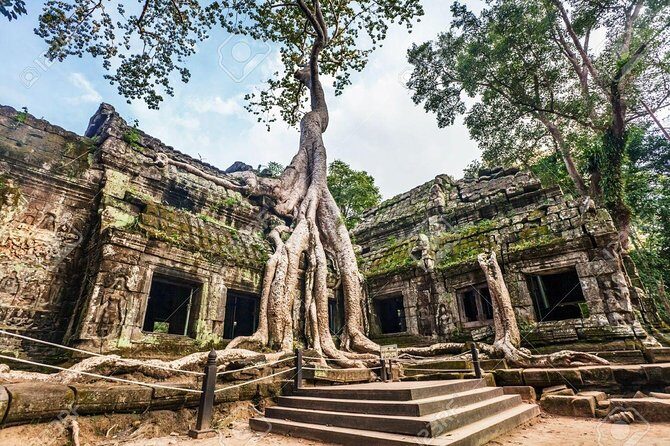
After Angkor Wat’s scale, Banteay Kdei gives you a different flavor of ancient Angkor. It’s known as the citadel of monk’s cells, and the description focuses on how the ruins interact with nature.
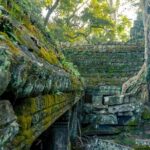
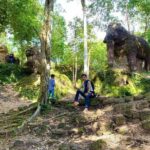
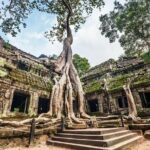
Expect towering, sinuous trees and the famous look of silk cotton tree roots weaving through stone. That root-and-stone texture is exactly the sort of scene you’ll appreciate more when you’re not rushing—so the 1-hour window works well if you slow down for photos and close-up viewing.
One more reason I like this stop: it feels less “tour bus loud” than the headline sites, and the setting gives you visual variety. You’re not just looking at buildings; you’re watching a whole ecosystem take hold of masonry over time.
Ta Prohm: jungle-retaken ruins and Tomb Raider energy
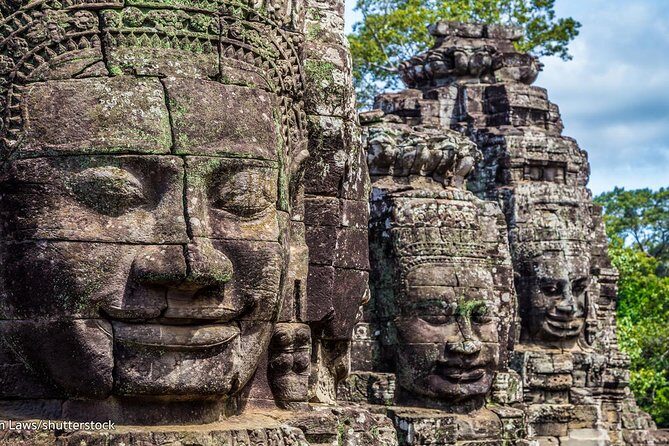
Ta Prohm is the temple most people recognize even if they can’t name it right away. It’s described as a picturesque ruin partially taken back by the jungle, and it’s also known as the Tomb Raider temple because of the film connection.
You get about 1 hour here, which is a good match for what Ta Prohm does best: dramatic composition. The jungle setting frames the ruins, so you’ll likely find yourself pausing at different “views” instead of only walking in straight lines.
One practical note: Ta Prohm can be busy depending on timing, but the tuk-tuk format helps you get where you need to be and keep your flow. If your driver has local knowledge, it can make a noticeable difference in how crowded the ruins feel when you arrive.

Ta Keo: the unfinished pyramid that changes the mood
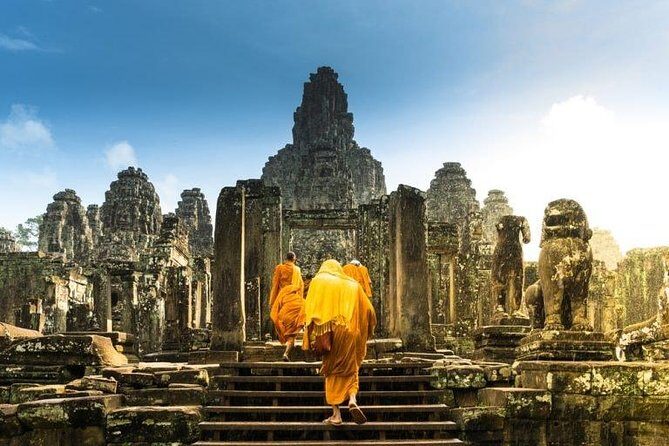
Ta Keo stands out because it was never finished, and that unfinished quality shows in how it looks and how it feels compared to many other temples. The shape described is square and layered-pyramid, and the stop is noted as one of the more dramatic sites on the route.
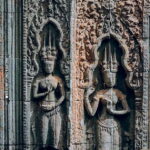
This is also the kind of temple where you’ll get more from taking the time to look upward and then step back for wider views. The description hints at climbing terraced areas, so if you’re someone who likes vantage points, you’ll probably enjoy this stop.
The benefit of placing Ta Keo after Ta Prohm is pacing. You go from jungle drama to geometric structure, which gives your eyes a reset. It’s a subtle trick, but it helps your brain not turn every ruin into the same visual pattern.
Angkor Thom and the South Gate: gods, demons, and the center axis
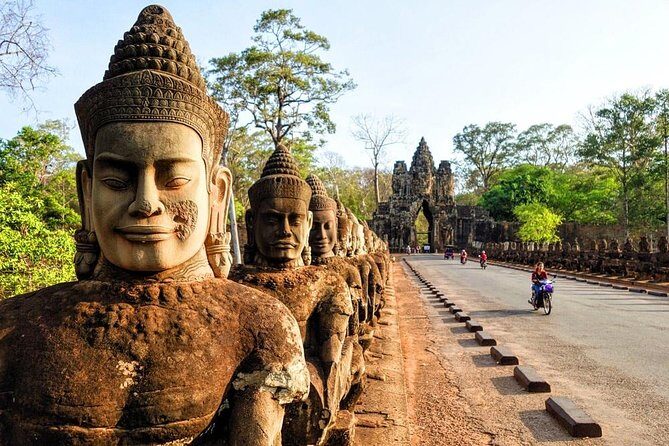
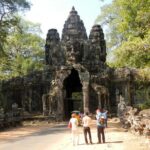
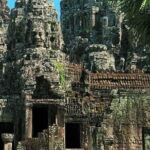
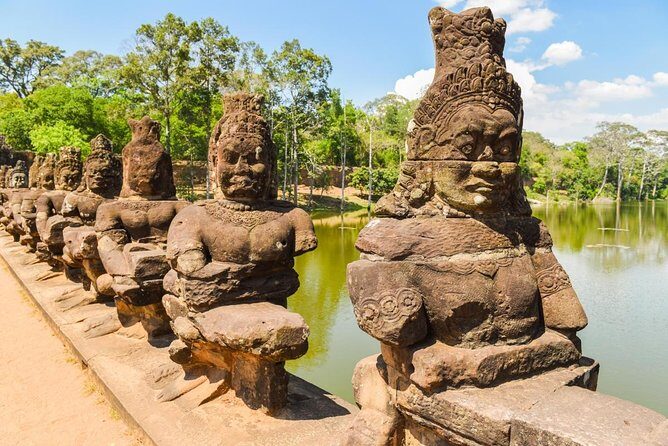
Angkor Thom is described as the latter capital of the Angkor Empire. The route includes the South Gate, lined with gods and demons locked in an eternal tug-of-war—an image that helps you “read” the place when you arrive.
You’ll also reach the temple of Bayon at the center as part of this stop. You’re given about 1 hour at this portion of the itinerary, which means you should focus on getting the main impression first and then adding detail if time allows.
I like how the South Gate scene acts like an intro scene for the whole day. It’s not just a passageway; it’s part of the storytelling, with strong visual symbolism right as you enter.
Phnom Bakheng at sunset: the extra stop you should plan for
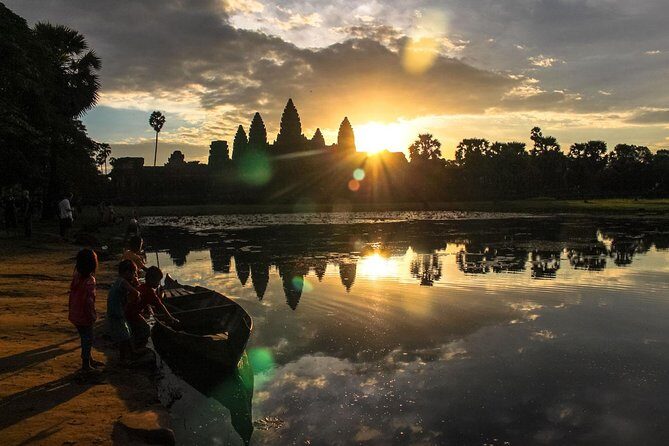
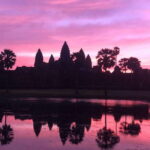
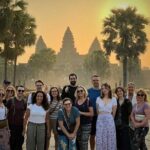
Phnom Bakheng is included only on the sunset tour. It’s described as a hilltop temple built hundreds of years before Angkor Wat, and it’s also one of the best places in Cambodia to watch sunset—overlooking Angkor Wat itself.
So this is not just another temple stop. It’s a timing game. If sunset is your priority, it’s smart to build the rest of your day around it so you’re not rushing through earlier ruins.
If you do the sunset version, treat it as a finale. Head up with enough time to enjoy the view changing as light fades, and don’t plan to do a ton of extra exploring after you’re done—your legs and eyes will appreciate a slow end.
How drivers and guides shape your day
The driver experience is a big part of why this tour scores so well. Names show up repeatedly—Bros Sa De, Phalla, Polo, Sim, Bong Sim, and Lin—and the pattern is consistent: drivers handle routing, share explanations in English, and keep the day moving at the right speed.
One review described a driver using local knowledge to pick the best route to avoid crowds during a busy local festival. That’s a real advantage with Angkor, where timing can make the same temple feel totally different.
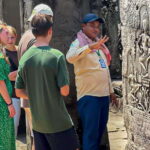
Now, a balanced note: one review pointed out that this provider does not include a guide who enters the sites. That means you should expect information before or after visits, but not a full on-site guide following you inside every temple.
If you want deeper commentary on carvings and temple symbolism as you walk, budget for an optional tour guide (listed at $45 per booking) or be ready to rely on your own reading and curiosity during the stop time.
Price, value, and what you might still pay
The headline price is $23.00 per group (up to 3), and it’s described as a private small tour with hotel pickup, private transport around Angkor, and bottled water. That pricing structure is actually pretty good value in Cambodia because you’re paying for private movement through a spread-out site.
Just don’t forget what’s not included. Angkor admission tickets aren’t included on the itinerary stops, and you’ll need the Angkor Pass. Also, a tour guide is optional and listed at $45 per booking.
So the real value equation looks like this: you’re paying for a private day with transport and comfort, and you’re paying extra separately for site entry and possibly deeper guiding. For many visitors, that’s a fair trade because it lets you choose how hands-on you want the day to be.
One more practical detail: confirmation is received at booking, and the tour uses a mobile ticket. That keeps the day simple once you’re in Siem Reap.
Customizing your route without losing the plot
This tour runs on a set itinerary, but you can customize things like start time, pickup location, and number of travelers. That matters because Angkor is all about managing your energy and your timing.
If you want a cooler start, ask for an earlier pickup time. Even though the itinerary text doesn’t spell out sunrise, the reviews include sunrise versions with early starts around 5am, specifically to avoid crowds and heat. If that’s your vibe, you’ll want to align your planning around that kind of start.
If you’d rather keep it relaxed, use the customization flexibility to avoid overly packed arrival times. The best version of this tour is the one that matches how you handle walking in heat and how much you like stopping for photos.
Who this tour is best for (and who should skip it)
This is a strong choice for couples and small groups who want a private day with simple logistics and quick temple visits. If you like the idea of moving between temples without the hassle of sorting transport yourself, you’ll find the tuk-tuk format genuinely practical.
It also works well if you want to cover several key ruins in one day: Angkor Wat, Banteay Kdei, Ta Prohm, Ta Keo, Angkor Thom, and optionally Phnom Bakheng. The stop timing makes it a good fit for people who want “a complete day” rather than a slow wander.
Skip it if you want a very deep, academic-style guide inside every site. Because the listed tour guide is optional and the driver may provide explanations mainly before or after visits, you may get less interpretation than you want when you’re standing right in front of carvings.
Should you book this one-day Angkor tuk-tuk tour?
If your goal is a high-efficiency, private Angkor day that mixes famous sites with quieter temple scenery, I think it’s a great bet. The drivers you may get—like Sim, Phalla, Polo, Bong Sim, and Lin—are repeatedly described as friendly and helpful, with English explanations and comfort touches like cold water.
Book it if you’re comfortable handling Angkor Pass entry separately and you’re okay with the fact that a full in-temple guide may not be included. If you want that extra depth, consider adding the optional tour guide or bring your own temple reference notes.
One last tip: aim to keep your expectations aligned with the format. You’re getting focused visits—about 1 hour per stop—so you’ll enjoy this most if you choose a few moments to really savor at each temple instead of trying to master the whole complex.
FAQ
What’s included in the tuk-tuk tour price?
The tour includes bottled water, private tour transport, and round-trip private transfer. Hotel pickup and drop-off are included if you select that option. A private tour means only your group participates.
Are Angkor entry tickets included?
No. Each listed temple stop notes admission tickets are not included. You should plan to buy the entry ticket/Angkor Pass separately.
How long is the tour and how many temples do we visit?
The day runs about 8 to 9 hours, and the itinerary lists six main stops with about 1 hour at each: Angkor Wat, Banteay Kdei, Ta Prohm, Ta Keo, Angkor Thom, plus Phnom Bakheng only on the sunset tour.
Do we get a guide?
A tour guide is not included in the base price, and it can be added for $45 per booking. You may get explanations from the driver during the day, but the optional guide is what’s listed as extra.
Is Phnom Bakheng included on every tour?
No. Phnom Bakheng is listed as included only in the sunset tour option.
What’s the cancellation policy?
You can cancel for a full refund if you cancel up to 24 hours in advance of the experience start time. If you cancel less than 24 hours before, the amount paid is not refunded. Free cancellation is available.