REVIEW · SIEM REAP
Siem Reap: 2-Day Temple Highlights Sunrise and Sunset Option
Book on GetYourGuide →Operated by Journey Cambodia · Bookable on GetYourGuide
Two dawns and one golden sunset in Angkor. This 2-day temple run pairs a licensed historian guide with Angkor Wat sunrise and a planned sunset finish, so you’re not just sightseeing—you’re watching Khmer art and belief change with the light.
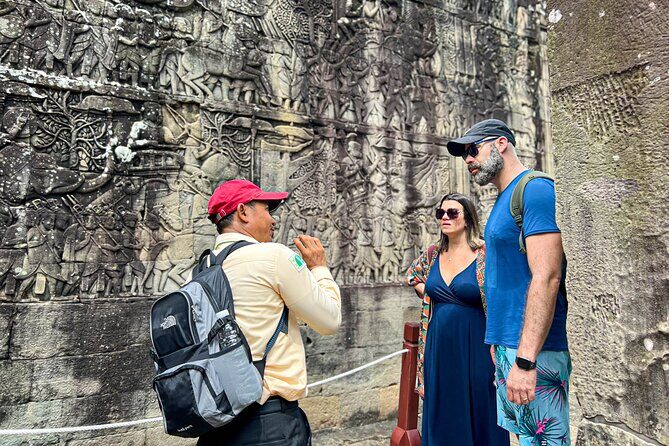
I especially love the way the guide connects details to meaning. If you end up with a guide like Pi, So, or Chhai (names I’ve seen associated with this route), you’ll get clear explanations of the temples’ religion, construction ideas, and the stories carved into the stone.
I also like the practical comfort. You’re in air-conditioned transport, and you’ll be handed mineral water, cool towels, and little refresh breaks for the heat. The main drawback: you need to be ready for early starts and a lot of walking in hot weather, plus you’ll still pay the temple entry fee separately.
In This Review
- Key things I’d prioritize
- Sunrise and sunset timing: why this 2-day combo works
- What you see on day one: Pre Rup, Banteay Srei, Neak Pean, Preah Khan
- Bakheng sunset climb: the payoff and the practical stuff
- Day two before dawn: entering Angkor Wat and creeping through corridors
- Ta Prohm, Ta Nei, and Angkor Thom: where the stone stories keep going
- Price and value: $46 plus the $62 temple pass
- Guide style and small-group comfort (air-con, cold towels, and photo spots)
- What to pack and how to dress for temple days
- Who this tour suits best (and who should skip it)
- Should you book this sunrise and sunset Angkor tour?
- FAQ
- What is included in the $46 price?
- Do I need to pay Angkor temple entry fees separately?
- Is the sunrise entry different from normal visiting?
- What should I bring for the temples?
- What clothing is required?
- Are meals included during the 2 days?
- Is this tour suitable for kids?
- Is it wheelchair accessible or good for mobility impairments?
- What is the cancellation rule?
- Can I reserve without paying right away?
Key things I’d prioritize
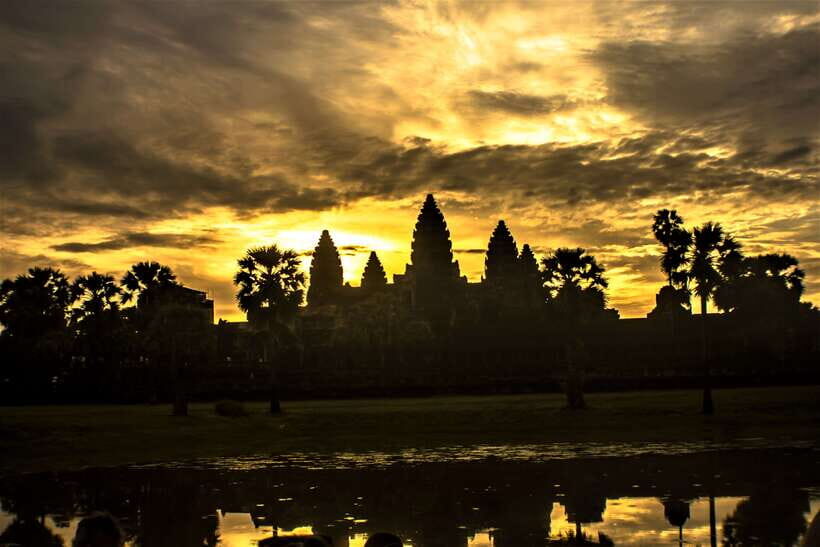
A sunrise plan that starts in the dark: you enter Angkor Wat before most crowds, from a less-visited eastern side.
Banteay Srei’s fine carvings: a smaller sandstone temple with reliefs that get special attention on this route.
Preah Khan’s atmospheric “roots and stone” mix: a restored site that contrasts well with the big showpieces.
Sunset from Bakheng or Pre Rup: a finish timed for color, not just a random temple stop.
Angkor Thom with “faces everywhere”: Bayon towers, plus the Terrace of the Leper King and Terrace of Elephants.
Comfort basics that matter in Siem Reap: cold towels, water, and air-con where you can recharge fast.
Sunrise and sunset timing: why this 2-day combo works
Angkor is huge. If you try to do it in one day, you end up sprinting from one highlight to the next and missing the feel of the place. This itinerary gives you two different rhythms: a late-day light show, then a pre-dawn reset for Angkor Wat.
The big win is that you’re watching the temples at the moments many people don’t manage. For sunrise, you’re picked up to be there before the main crush, then you walk in while it’s still dark. For sunset, you’re not just staying until the sky turns pretty—you’re positioned to climb into the best viewpoint window and stick the landing.
That’s why I think this format is good value. You’re paying for time and timing, not just temple names. If you care about photos, you’ll also notice that the lighting and crowd levels change the experience fast.
You can also read our reviews of more evening experiences in Siem Reap

What you see on day one: Pre Rup, Banteay Srei, Neak Pean, Preah Khan
Day one is built around the temples outside the main Angkor Thom city core. That’s a smart move because you get variety: different sizes, different materials, different vibes, and different kinds of carvings.
You start at Pre Rup, a Hindu temple mountain built as a state temple tied to Khmer king Rajendravarman. It’s a mix of brick, laterite, and sandstone, and the structure is a great “orientation” stop—big enough to feel important, but clear enough to understand where to look.
Next comes Banteay Srei. This is the kind of place you don’t rush. It’s smaller, and the whole point is the craftsmanship. The reliefs on this sandstone temple are considered among the finest in Cambodia, and the visit also has modern history weight: it was only accessible again after the Khmer Rouge period ended in the late 1990s. You’ll feel why people say this one is special once you’re up close.
From there, you swing to Neak Pean and its circular setting. Neak Pean sits on an artificial island in the Jayatataka Baray area, and it pairs a Buddhist temple style with a very deliberate “temple in water” layout. It’s a calmer stop after the busier photo points.
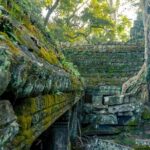
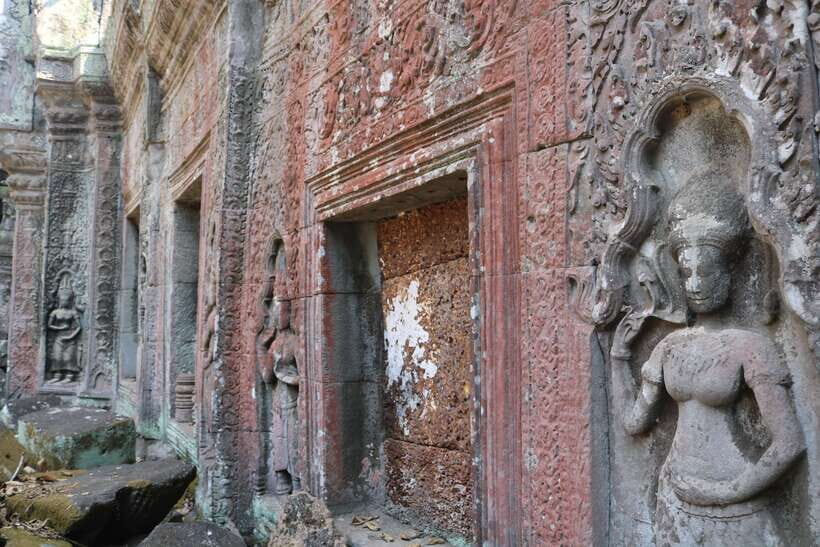
Then you reach Preah Khan. This one is atmospheric in a very physical way: ruined stone structures mixed with tree roots. It’s also a contrast piece. Where Angkor Wat can feel like a grand plan, Preah Khan feels like time doing its work. The World Monument Fund has been restoring parts of the site, and that shows—you see both age and effort in the same frame.
What to watch for day one: don’t plan to see every detail in one go. Instead, pick a few things each stop—carvings, doorways, towers, stone textures—then let the guide’s explanations tie it together.
Bakheng sunset climb: the payoff and the practical stuff
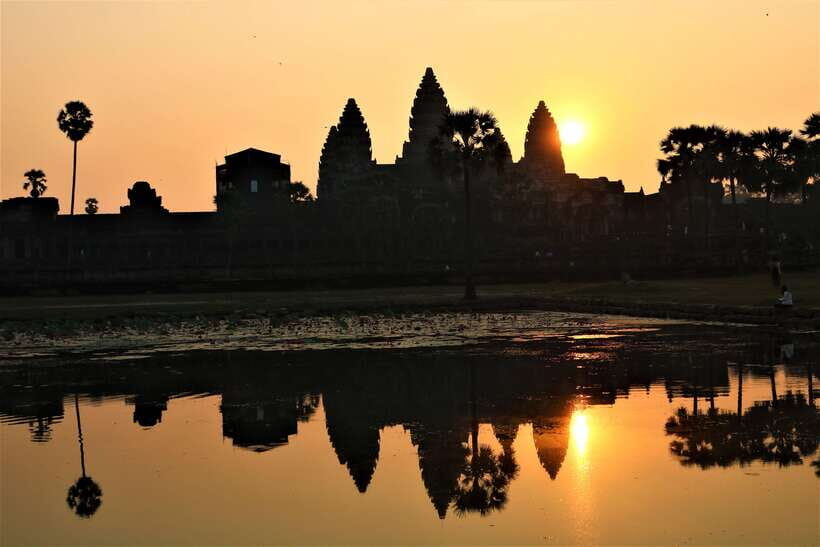
Your day one closes with sunset from either Bakheng or Pre Rup. The temple choice depends on what’s happening that day, but the structure of the experience is the same: you climb up for the view and let the light do the storytelling.
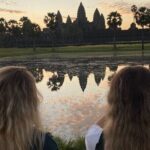
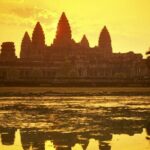
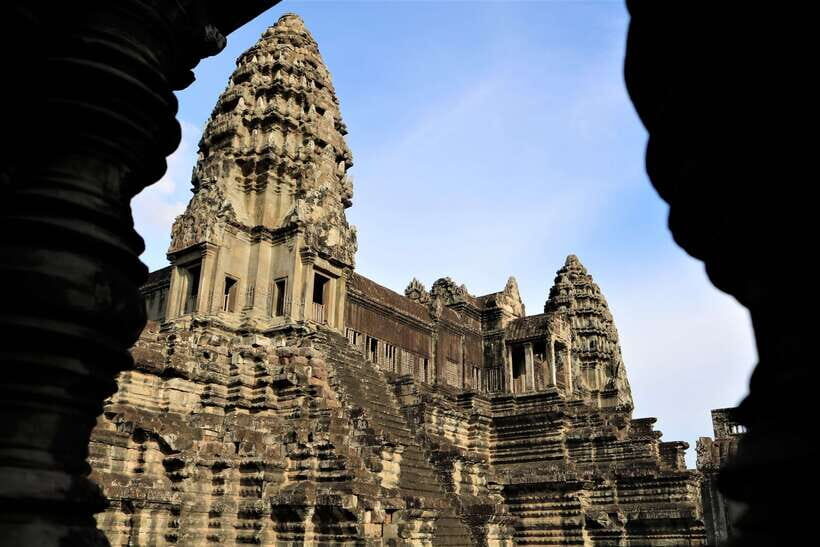
This is where you need to think like Angkor. Sunset isn’t just “look at the sky.” It’s the moment when temple shadows stretch and the stone surfaces show different tones. From higher viewpoints, Angkor Wat can glow in a way you just can’t get at ground level.
The practical reality: sunset means stairs, dust, and heat that hasn’t fully let go yet. Wear comfortable shoes with good grip. If you get even mildly tired easily, plan on resting when your guide builds in breaks—don’t try to out-stubborn the heat.
Also, remember temple rules. Shorts aren’t allowed, and shoulders and knees should be covered respectfully. Sunrise and sunset days are long enough without getting stopped for the wrong outfit.
Day two before dawn: entering Angkor Wat and creeping through corridors
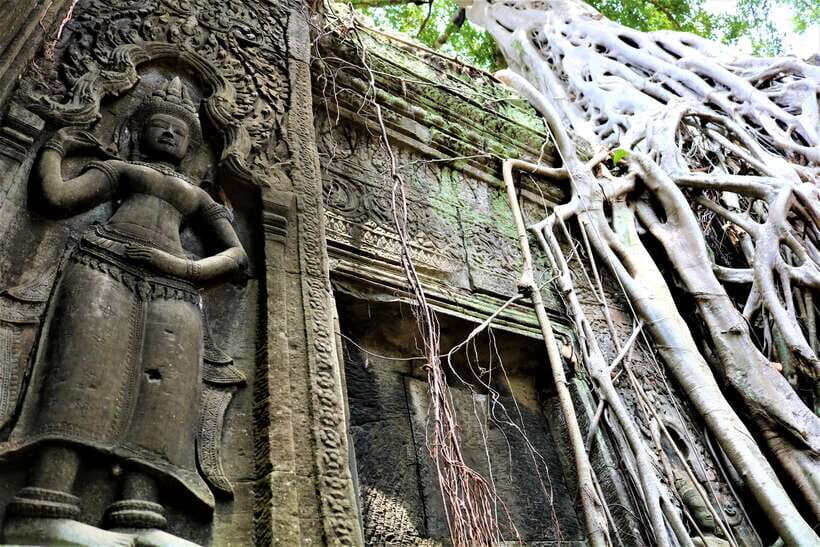
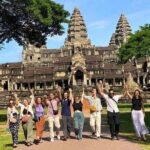
Day two starts pre-dawn. You head out early enough to be at Angkor Wat for sunrise, then enter the temple in darkness. That’s not a cute detail—it changes how you experience the space. When you enter without full light, you’re less focused on what looks good for a photo and more focused on scale and shape.
You’re also asked to bring a torch. You don’t need to light up the world, but you do need a practical light for your path and steps. This matters because the temple floor can be uneven, and you’ll be walking carefully while it’s still dim.
A strong part of this sunrise plan is the approach. You go in via the eastern side, described as less visited. That helps you avoid the biggest press and gives you a little more room to move and look slowly.
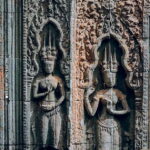
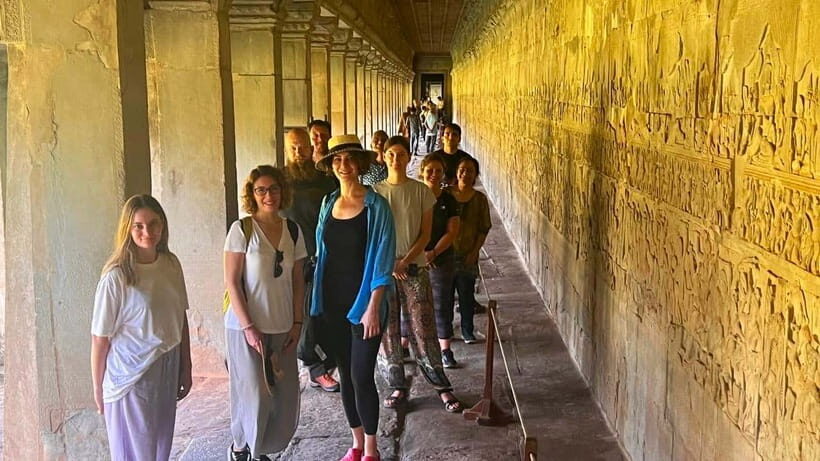
Once inside, you walk along corridors with bas-relief carvings. One stretch is singled out for being the longest in the world, and the guide’s job is to help you understand what you’re seeing. When you know what the scenes represent, the carvings stop being random texture and start being a religious document in stone.
After the sunrise, you finish at Angkor Wat with breakfast outside the temple. It’s a simple way to reset your energy before the rest of the day stacks on.
Ta Prohm, Ta Nei, and Angkor Thom: where the stone stories keep going
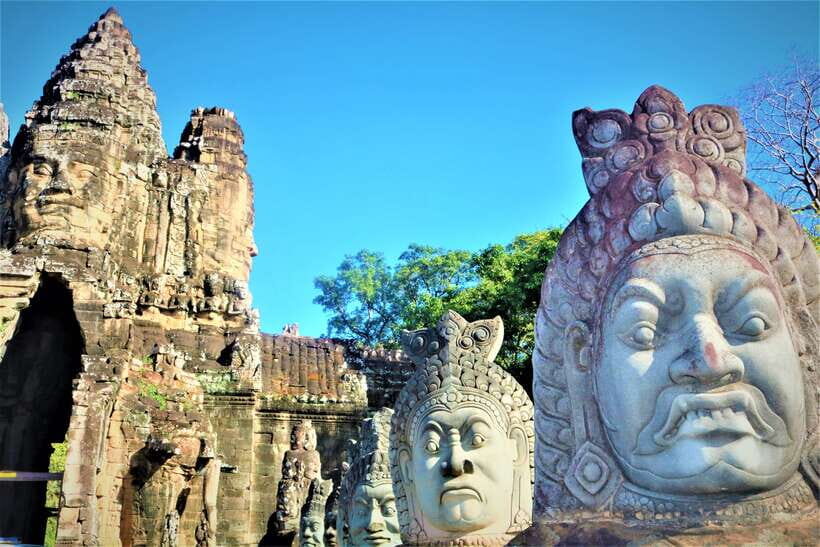
After sunrise, the tour shifts from the iconic to the atmospheric and then to the city-core drama.
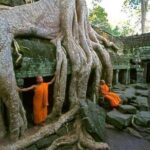
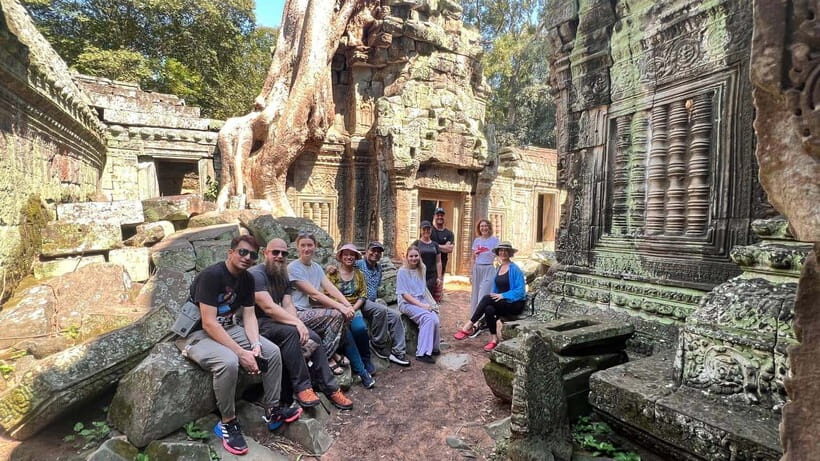
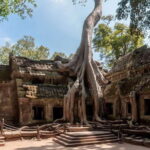
Ta Prohm is next. It’s famous for jungle growth and the look of the temple as if time was paused mid-ruin. This stop also has a clear historical anchor: it was once home to 2,740 monks. Today it still carries that “living with nature” feel, and it resembles what French explorer Henri Mouhot saw when he rediscovered the site in the early 1850s. You don’t just watch vines here. You feel how a temple can be both sacred site and survivor.
Then you move to Ta Nei, a late 12th-century stone temple. This one is a good breather after Ta Prohm’s intensity. Ta Nei feels like a reminder that Angkor isn’t one style—there are many phases and many builders’ signatures.
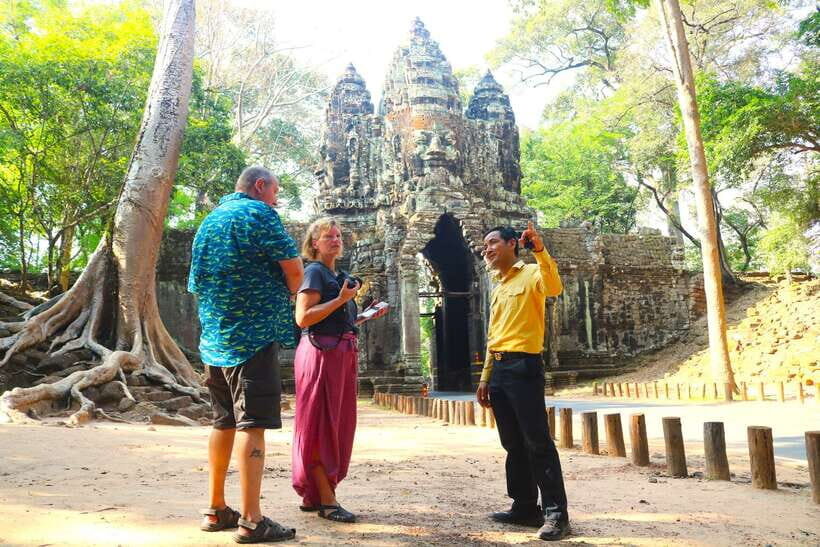
After that, you enter Angkor Thom, starting at the southern gate. This gate is flanked by 54 stone figures on each side: gods on the left, demons on the right. It’s classic Khmer visual theater—your body knows you’re entering an important boundary.
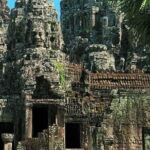
Inside, you reach Bayon, with its central towers covered in more than 200 enormous faces. This is where the tour’s historian-style guidance pays off again. The guide helps you read the towers instead of just pointing at them.
Then comes two of Angkor Thom’s signature terraces: the Terrace of the Leper King and the Terrace of Elephants. Even if you don’t know the names ahead of time, the shapes and carvings connect to the broader Khmer worldview of kingship, ritual, and story.
By this point, you’ll probably notice something: you’ve moved through different religious layers—Hindu foundations, Buddhist practice, and later historical overlays. That’s exactly what makes Angkor feel bigger than a set of postcards.
A few more Siem Reap tours and experiences worth a look
Price and value: $46 plus the $62 temple pass
The tour price is listed at $46 per person, but the temple entry fee is separate. You’ll want to budget $62.00 per person for a 2- or 3-day pass.
So is it still a good deal? Yes, if you care about structure and comfort. You’re paying for:
- a licensed historian guide (not just a driver with a microphone)
- round-trip air-conditioned hotel transfers
- sunrise access timing and an organized sunset viewpoint
- basic hydration and cooling (mineral water, cool towels)
- a small-group setup
Without the guide, you can still visit Angkor. But you’ll likely miss why certain temples were built, what the carvings are saying, and how the parts relate to Khmer religion and history. With the guide, you leave with a mental map, not just a camera roll.
If you’re strictly on a tight budget, this might feel like a “double spend” once you add the pass. But that pass is the cost of entry to Angkor itself. This option turns that spend into two days of time-saved, heat-managed temple viewing.
Guide style and small-group comfort (air-con, cold towels, and photo spots)
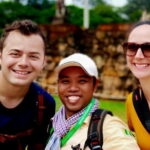
One repeated theme in the experience is how much the guide helps you slow down in the right places. People mention guides like Pi, So, Chhai, Sak, Yuth, and Pal Saruon for picking key sites, finding great photo spots, and pacing the group well. The tone is also practical—lots of time for questions, and humor often shows up when everyone is sweating.
You’ll also feel the small-group advantage. The van setup is designed to be manageable, so you’re not stuck as one moving crowd. That matters for sunrise and sunset when timing is everything.
And then there’s the “heat survival package.” Air-conditioned transport helps, but the real lifesaver is the routine cool-down: water and cold towels after each hot stretch. When the weather is aggressive, those small resets keep you from turning into a cranky statue by noon.
Photo tip you can use right away: ask the guide where the light hits best before you start snapping. Sunrise and sunset are fast. If you wait until the sky looks good, you’ll be late.
What to pack and how to dress for temple days
This trip asks for straightforward planning. Wear comfortable shoes because you’ll climb and walk on uneven ground. Bring insect repellent because outdoor time in Cambodia isn’t insect-free.
For sunrise, bring a torch as requested. Even if your phone light seems tempting, a dedicated torch tends to be more reliable for short, careful navigation.
Dress rules are important. Shorts aren’t allowed. You should cover shoulders and knees respectfully. This isn’t just about manners—it’s also how you avoid wasting time at a temple gate when you’re already on a tight schedule.
Last practical note: keep your water accessible. The tour provides mineral water, but it helps to keep your own bottle or two within reach during longer temple blocks.
Who this tour suits best (and who should skip it)
This is best for you if you want Angkor Wat sunrise and you also want the temples beyond the obvious crowd magnets. If you like explanations about religion and Khmer history, the guided format is a big plus.
It’s also a good match if you want comfort during the hot hours. Air-conditioned transport and cooling towels make the long day feel less punishing.
Skip it or choose a different format if you:
- have mobility impairments or need wheelchair access (this tour is not wheelchair accessible)
- are traveling with children under 8
- can’t handle early pre-dawn starts and lots of walking
And be honest with yourself about heat tolerance. Angkor can be doable, but only if you respect pacing and keep cooling breaks in your routine.
Should you book this sunrise and sunset Angkor tour?
I’d book it if your priority is the full emotional arc of Angkor: sunset color, then a pre-dawn sunrise at Angkor Wat, then the wider Angkor complex through Ta Prohm and Angkor Thom. The guide-led context makes the temples feel readable, not random.
I wouldn’t book it if you want a relaxed stroll with no early mornings, or if you’re worried about walking in heat or climbing for sunset viewpoints. Also, remember you still need to pay the $62 temple pass.
If you’re first-time to Angkor and you want the experience to feel guided, timed, and well paced, this 2-day temple highlights route is a smart use of your time in Siem Reap.
FAQ
What is included in the $46 price?
The tour includes hotel pickup and drop-off in Siem Reap City, air-conditioned transportation, a licensed English-speaking tour guide, mineral water, soft drink or cake tasting, and cool towels. It also includes sunset viewing on this option.
Do I need to pay Angkor temple entry fees separately?
Yes. Temple entry fees are not included. The listed pass price is $62.00 per person for a 2- or 3-day pass.
Is the sunrise entry different from normal visiting?
You’ll depart pre-dawn and enter Angkor Wat in darkness from the eastern side. The tour asks you to bring a torch.
What should I bring for the temples?
Bring comfortable walking shoes, insect repellent, and a torch for the sunrise segment.
What clothing is required?
Dress respectfully with covered shoulders and knees. Shorts are not allowed.
Are meals included during the 2 days?
Meals are not included. The tour does include water and a soft drink or cake tasting, and you can expect breaks where you can handle food on your own.
Is this tour suitable for kids?
No. It’s not suitable for children under 8 years old.
Is it wheelchair accessible or good for mobility impairments?
No. The activity is not wheelchair accessible and is not suitable for people with mobility impairments.
What is the cancellation rule?
You can cancel up to 24 hours in advance for a full refund.
Can I reserve without paying right away?
Yes. The option is listed as reserve now and pay later, so you can keep plans flexible.