REVIEW · SIEM REAP
1-Day private Angkor Temple Tour by Tuk Tuk from Siem Reap
Book on Viator →Operated by Journey2 Angkor · Bookable on Viator
Angkor, minus the stress. This private 8-hour day trip is built for flexibility, so you can move at a sane pace instead of being herded. I really liked the luxury, super-clean tuk tuk touches (cold towels and bottled water) and the calm guidance from Sim, who made the stories click. One thing to plan for: the Angkor Wat entrance fee isn’t included, so you’ll need to buy that e-ticket ahead of time.
If you want the big-hitters (Angkor Wat, Angkor Thom, Ta Prohm) without cooking in the sun all day, this route does a smart job of mixing walking and quick tuk tuk hops. You’ll also have a couple of surprise stops that aren’t part of the most obvious track, which keeps the day from feeling repetitive.
In This Review
- Key things I’d focus on before you book
- Private Tuk Tuk Day Trip: Comfortable Angkor Touring from Siem Reap
- Angkor Wat from the Eastern Side and the Jungle Walk to the Library Pool
- Angkor Thom South Gate, Bayon Faces, and the Right Pacing
- Royal Palace Area Temples: Baphuon, Phimeanakas, and Khmer Geometry
- The Terrace Circuit: Elephants and the Leper King
- Ta Prohm at the Best Angle for Photos and Shade
- Price, Tickets, and Getting Good Value for $30
- Who Should Book This Private Angkor Tour (and Who Might Not)
- Should you book this 1-Day private Angkor Temple tour by tuk tuk?
- FAQ
- How long is the 1-day private Angkor Temple tour?
- Is this tour private or shared?
- What’s included in the price?
- Do I need an entrance ticket?
- Will I be able to buy my Angkor Wat ticket in advance?
- What should I wear for the temples?
- Can I cancel and get a full refund?
Key things I’d focus on before you book
- A private tuk tuk with comfort perks like bottled water and cold towels, not just basic transport
- Angkor Wat using the less-busy eastern entrance, plus time for bas-reliefs without rushing
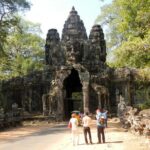
- A face-heavy Angkor Thom circuit: Bayon’s 200+ stone faces and the South Gate’s 54 figures per side
- Royal-palace zone temples in a logical loop (Baphuon, Phimeanakas, and more)
- Ta Prohm the way it’s meant to feel: trees, stone, and jungle atmosphere with an easy photo plan
- Time built for explanations and photos, not only checklists
Private Tuk Tuk Day Trip: Comfortable Angkor Touring from Siem Reap
This is a true private setup. Only your group rides in the tuk tuk, and your schedule is flexible enough to match your energy and your interests. That matters at Angkor, where the biggest problem isn’t the temples—it’s the pace. A private driver + guide means you don’t have to “keep up” with other people’s plans.
The comfort side is real. One of the strongest points from the experience is that the tuk tuk is kept very clean, and you get cold towels plus bottled water. In Cambodia heat, those small details make a noticeable difference when you’re doing temple-to-temple walking breaks. The tour also includes hotel pickup and drop-off, which is the easy button if you’d rather not think about logistics before you’re even at the gates.
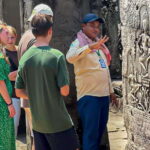
You also get an English-speaking guide who explains what you’re seeing as you go. When you know what to look for—myths in the bas-reliefs, royal symbolism, and why certain structures were built—it turns photos into understanding. You’ll get photo opportunities along the way too, and the day is structured around not just seeing, but getting your bearings and staying comfortable.
The trade-off? You’ll still spend a day mostly outdoors. Even with tuk tuk gaps and a guide who helps you avoid peak crowd pressure, you should plan for a long walk day and bring your own water instincts (you will have bottled water from the tour, but you’ll be happier if you pace yourself).
You can also read our reviews of more private tours in Siem Reap
Angkor Wat from the Eastern Side and the Jungle Walk to the Library Pool
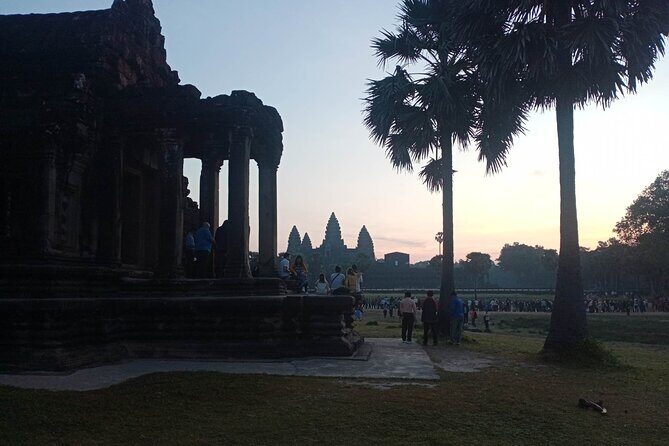
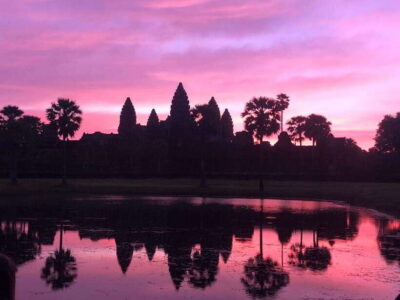
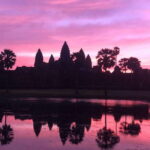
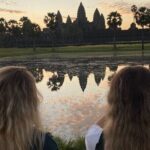
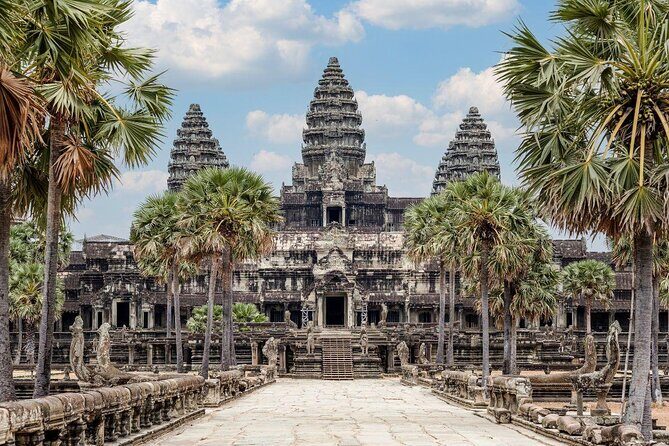
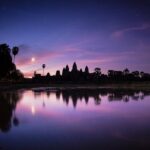
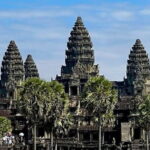
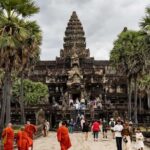
Angkor Wat is the headline for a reason. It’s the world’s largest religious complex, built in the early 12th century, and it’s still an active spiritual center in a way many other ruins are not. In practice, that means the atmosphere is different. It’s not only stones and history; it’s a place with ongoing meaning.
What makes this tour’s Angkor Wat visit feel smarter is the approach. You enter from the eastern side, described as a less-visited entrance. That’s a big deal because Angkor Wat can feel like a photo factory at the wrong moments. Starting off from a quieter side helps you settle in before the main crush ramps up.
From there, you’ll do a short on-foot stretch, including a jungle path to the North ancient library pool. That bit of walking isn’t just for movement. It changes the tone. The path lets you slow down, look at how the temple sits inside its setting, and get your first real views before you step into the complex core.
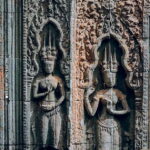
Inside, you spend time in the central chambers where your guide connects what you’re seeing to the stone bas-reliefs—especially the long run of carvings noted as the longest stretch in the world. This is where a good guide earns their keep. You’ll also hear myths and stories carved into the stone, which is what turns Angkor Wat from pretty to personal.
One more practical point: Angkor Wat is the only stop with an entrance fee not included in the price. Your guide will send you a link to buy an Angkor Wat temple e-ticket days in advance, which is exactly what you want. Buy it early enough that you’re not scrambling on the day, when lines and heat can be real.
Angkor Thom South Gate, Bayon Faces, and the Right Pacing
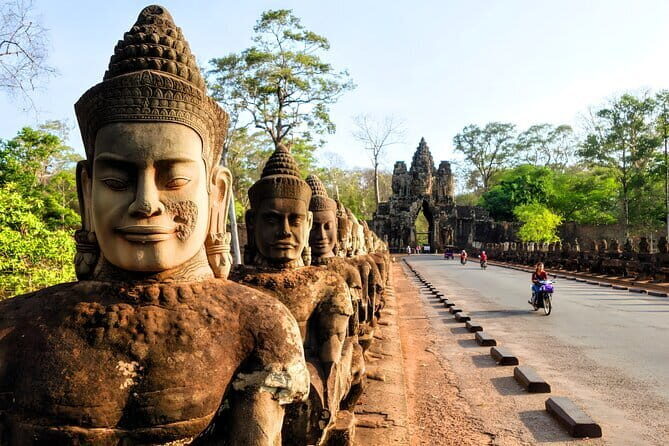
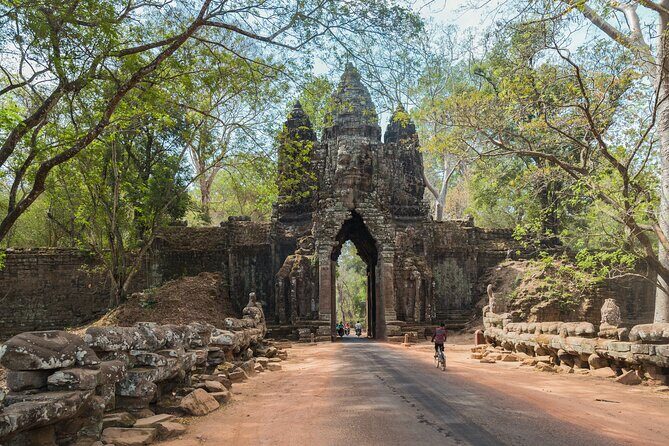
After Angkor Wat, you shift into Angkor Thom, the ancient capital city of the Khmer Empire. The first major hit is the South Gate. This gate is flanked by rows of 54 stone figures on each side, which is the kind of detail that’s hard to appreciate until you’re standing there and realizing how intentional the gateway design is.
A nice advantage here is timing. The South Gate stop is short, about 20 minutes. That works because you’re not supposed to linger at a gate like it’s a museum gallery. The point is to reframe the day, then move into the deeper “why did they build it this way” parts of Angkor Thom.
Next comes Bayon, built in the 13th century as the state temple of King Jayavarman VII. If you’ve ever seen photos of the serene smiling faces on the towers, you know why Bayon is famous. Here, you’re looking at more than 200 enormous faces clustered around the central peak. Standing at Bayon, you start to notice how the faces feel like they are watching from every angle. It’s not one view. It’s a whole field of expression.
You also get time for Bayon’s bas-reliefs, described as showing a mix of mythological, historical, and even everyday scenes. This is another place where guide explanations can help you spot what matters instead of only admiring textures. The outer galleries’ reliefs make it clear these temples weren’t built for one moment; they were built for long-term meaning and storytelling.
The pacing is what I’d call “realistic.” Bayon gets about 50 minutes, which is enough time to see the main towers and galleries without feeling like you’re losing the rest of the day. You’re also still on a private route, so if you want an extra minute to walk a different viewing angle, you usually can.
Royal Palace Area Temples: Baphuon, Phimeanakas, and Khmer Geometry
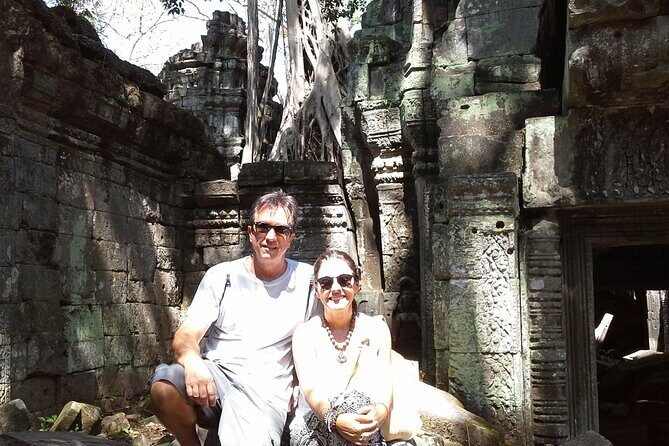
Angkor Thom isn’t only faces and gates. In the royal palace area, the architecture becomes a bit more about power and structure—temple-mountain shapes and layered enclosures.
Baphuon is one of the best transitions. It sits in Angkor Thom northwest of Bayon, built mid-11th century. It’s described as a three-tiered temple mountain, and the measurements are big enough to make it feel like a miniature city of stone: about 120 meters by 100 meters at the base, and 34 meters tall without its tower (roughly 50 meters with it). The tour gives you around 40 minutes here.
If you like architecture that’s readable, Baphuon helps. It’s not just “look, ruins.” It’s a sense of geometry—tiering, enclosure relationships, and how different structures link to the royal complex.
Then you move to Phimeanakas (also known as Vimeanakas). This is inside the walled enclosure of the Royal Palace. It’s an end-10th-century structure, associated with Rajendravarman’s reign (941–968) and completed by Suryavarman I. The description focuses on the three-tier pyramids that form a Hindu temple, with a tower on top and galleries around the upper platform.
That detail about galleries matters, because it tells you this wasn’t simply a decorative temple. It was designed as a vertical experience—something that shaped movement, viewing, and ritual space.
Practical tip: these palace-zone temples can include a bit more climbing and uneven ground. The tour includes flat-shoe guidance for a reason. Keep your footing steady, and don’t rush the views. This is one of those spots where a minute of pause can improve a photo more than changing camera settings.
The Terrace Circuit: Elephants and the Leper King
A lot of Angkor days turn into a pattern: temple, photos, heat, repeat. This tour helps break that pattern with the terraces—long, staged spaces that feel different from the pyramid towers.
The Terrace of Elephants is described as 350 meters long. It was used as a giant reviewing stand for public ceremonies and served as the base for the king’s grand audience under Jayavarman VII in the 13th century. A local Khmer nickname is also mentioned: the Ancient Khmer Stadium. That’s a helpful mental image. Think of it as a place for events and spectacle, not just worship.
Then comes the Terrace of the Leper King. It’s U-shaped and thought by some to have been used as a royal cremation site. The modern name comes from a 15th-century sculpture found there that depicts the Hindu god Yama, the god of death. The stop is about 30 minutes, which is enough to understand what the terrace is while also letting you cool down between more intense ruins.
This terrace pairing works well because it shows Angkor wasn’t only about temples rising from jungle. It also included designed public spaces tied to ceremony and belief. If you enjoy connecting architecture to human behavior, these two are worth paying attention to.
Again, you’ll still be outdoors. Plan for that. Hydrate, take short breaks when you’re breathing hard, and keep your shoulders and knees covered when needed. The tour notes that some temples require clothing that covers your knees and shoulders, and casual clothing is fine if it meets that rule.
A few more Siem Reap tours and experiences worth a look

Ta Prohm at the Best Angle for Photos and Shade
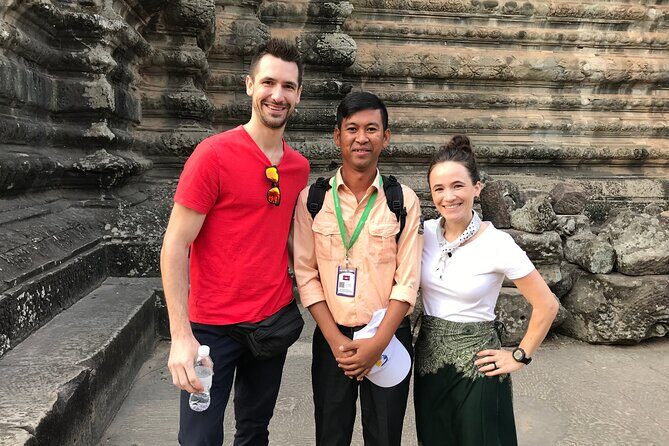
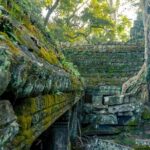
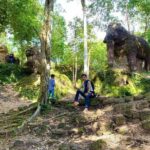
Ta Prohm is the temple people recognize from the world’s most famous Angkor photos: trees growing out of ruins, stone framed by jungle. It’s built in the 13th century and is described as one of the most atmospheric of all temples. It was UNESCO listed in 1992.
What makes Ta Prohm special in this day’s flow is the role it plays. By the time you reach it, you’ve already seen the symmetry and structure of Angkor Wat and the face-filled drama of Bayon. Ta Prohm feels like a different world—less about perfect geometry, more about survival, growth, and the tension between nature and stone.
The tour gives about one hour here, and that’s a good amount of time. You’ll want time to look up at the tree roots and hanging vines, then step back for wide shots that show the scale. The “Tomb Raider temple” nickname is common, but you don’t need the movie link to understand what draws people. The setting is doing most of the work: trunks, roots, and corridors of stone.
Photo tip that’s more practical than trendy: start with the easier wide views, then return for your closer shots after you understand the light and the best walk lines. With a private guide, you’re not forced to keep moving in lockstep, so you can get the shots you actually care about rather than only the ones you can grab at a glance.
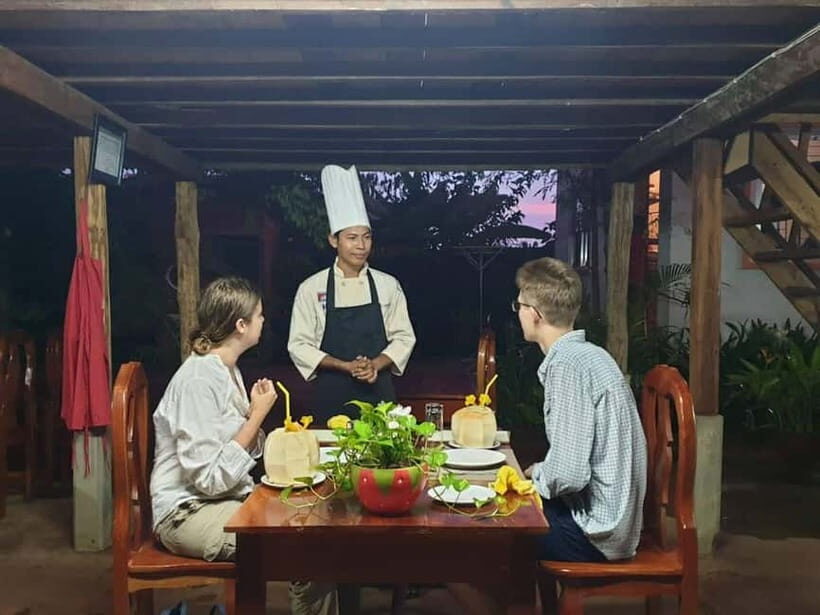
One more detail: this tour includes a lunch stop in a local restaurant with cold drinks at a 12th-century temple complex. That helps you refuel before Ta Prohm, when the walking feels relentless.
Price, Tickets, and Getting Good Value for $30
The tour price is listed as $30 per person, and it runs about 8 hours. For a private tuk tuk day with an English-speaking guide, that’s usually a good value in Siem Reap—especially because the tour includes hotel pickup and drop-off and bottled water.
But you have to budget for the one key item that isn’t included: the Angkor Wat entrance fee. The rest of the stops are marked as free on the tour schedule. That means the value isn’t only in transport; it’s in how the day is planned so you’re not paying entry fees at every temple stop.
Your guide also sends you a link to purchase the Angkor Wat e-ticket days in advance. That can save you time and reduce day-of friction. It also helps you avoid the situation where you arrive and have to figure out tickets on the spot while you’re already hot and tired.
So is it worth it? If you want a guided day with comfort touches and a route that hits the main sites plus a couple of surprise stops, $30 plus the Angkor Wat ticket can feel very fair. If you’re the type who just wants to wander on your own with zero structure, you might spend less by self-guiding, but you’ll give up the storytelling and the pacing that makes a long day easier.
A small extra planning note: the experience is typically booked about 24 days in advance. If you’re traveling during a busy season or you have a tight schedule, booking ahead is a smart move.
Who Should Book This Private Angkor Tour (and Who Might Not)
I think this tour fits best if you want Angkor without chaos. Private transport matters when you’re trying to avoid the worst crowd pressure and the worst sun exposure. You’ll also appreciate a guide who explains what you’re seeing, especially at places where stone carvings and symbolism can feel like decoration if nobody connects the dots.
It also suits you if you like photography but don’t want to treat every stop like a 30-second photoshoot. Bayon and Ta Prohm both benefit from a slower rhythm, and this schedule builds time for viewing.
This might be less ideal if you hate walking at all. Even with tuk tuk gaps, you’ll spend time on foot at Angkor Wat and Ta Prohm. Also, if you’re extremely budget-sensitive and you already know Angkor well and plan to do it entirely on your own, you may prefer a cheaper format that doesn’t include guiding.
One practical note: some temples require clothes that cover knees and shoulders. Casual clothes work as long as they meet the rule, but you’ll want to be ready. Flat shoes are strongly suggested because Angkor paths can be uneven.
Should you book this 1-Day private Angkor Temple tour by tuk tuk?
If you want the classic Angkor temples with guidance, comfort, and a day that stays flexible, I’d book it. The biggest wins are the private tuk tuk comfort touches, the guide-led explanations (Sim is specifically praised), and the way the day balances major sights with breaks from the hardest crowd moments.
I’d book it even more confidently if you already plan to handle the Angkor Wat e-ticket ahead of time, since the tour price doesn’t cover that entrance fee. Get that sorted early, wear the right clothes, and you’ll have a much smoother day.
FAQ
How long is the 1-day private Angkor Temple tour?
It runs about 8 hours.
Is this tour private or shared?
It’s private. Only your group participates.
What’s included in the price?
You get an English-speaking tour guide, a private vehicle in a tuk tuk, hotel pickup and drop-off, and bottled water.
Do I need an entrance ticket?
You’ll need an entrance fee for Angkor Wat. The other temple stops in the schedule are marked as free.
Will I be able to buy my Angkor Wat ticket in advance?
Yes. Your tour guide sends you a link to purchase the Angkor Wat temple entrance e-ticket days in advance.
What should I wear for the temples?
Some temples require clothes that cover your knees and shoulders. Casual clothes are fine as long as they meet that requirement, and flat shoes are recommended for comfort.
Can I cancel and get a full refund?
Yes. You can cancel up to 24 hours in advance for a full refund. If you cancel less than 24 hours before the start time, the amount paid won’t be refunded.