REVIEW · SIEM REAP
Angkor Wat Private Tour in a Tuk Tuk
Book on Viator →Operated by Green Era Travel · Bookable on Viator
Angkor feels bigger than your map. This private tuk-tuk day packs the key Angkor sights with clear commentary, hotel pickup, and a live English guide.
What I especially like is how the tuk-tuk format helps you cover ground at a pace that feels realistic, and how the guide connects the carvings to Hindu legends while you’re standing right there.
One thing to plan for: the tour price does not include the Angkor Archaeological Park admission ticket. That means your budget is really tour cost plus a separate $37 per person entry fee, plus whatever you choose for meals.
In This Review
- Key Things That Make This Tuk-Tuk Angkor Tour Work
- Why a Private Tuk-Tuk Changes the Angkor Day
- 8:00 AM Pickup and the Real Shape of a 6–7 Hour Day
- Stop 1: Your First Temple Morning in Siem Reap
- Stop 2: Angkor Thom Capital City and Its Big “Why”
- Stop 3: Bayon Temple and the Carving-to-Meaning Connection
- Stop 4: Terrace of the Elephants (and Leper King) as a Viewing Platform
- Stop 5: Ta Prohm’s Ruin Beauty and the Power of a Story
- Stop 6: Angkor Wat with Extra Time Where It Counts
- Guides Are the Difference: Names I’d Pay Attention To
- Price and Value: $45 Tour vs. the $37 Ticket
- What’s Included (and What You’ll Still Handle)
- Who Should Book This Private Tuk-Tuk Day
- Quick Decision: Should You Book It?
- FAQ
- What’s the duration of the Angkor Wat private tour in a tuk-tuk?
- What time is pickup in Siem Reap?
- Is this tour private or shared?
- Is hotel pickup and drop-off included?
- Does the tour include bottled water?
- Are admission fees included in the price?
- Is food or drinks included?
- What temples are included on the itinerary?
- What is the cancellation policy?
Key Things That Make This Tuk-Tuk Angkor Tour Work
- Hotel pickup and drop-off keep the day simple, with pickup at 8:00 am from your hotel in Siem Reap
- Live English commentary helps you understand the carvings and temple stories as you move from stop to stop
- Bottled mineral water is provided during the tour, so you’re not scrambling in the heat
- Private group format means you’re not stuck waiting for strangers or splitting attention
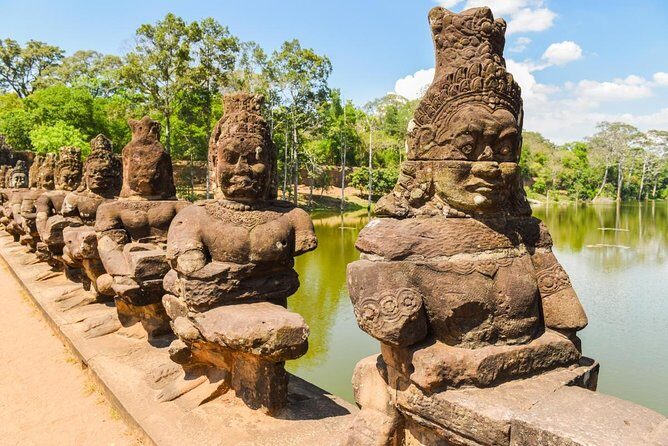
- A tight temple route hits Angkor Thom, Bayon, Terrace of the Elephants, Ta Prohm, and Angkor Wat in one long, focused day
Why a Private Tuk-Tuk Changes the Angkor Day
Angkor is not a “walk until you’re done” kind of place. It’s spread out, and the paths can feel slow when you’re trying to do it on your own. A tuk-tuk tour solves that. It keeps you moving through the Angkor Archaeological Park with enough flexibility to reach the main photo stops without burning your legs early.
The private part matters too. When it’s just your group, your guide can set the rhythm. If you want a slower moment for inscriptions or carvings, you can usually take it. If your timing is tight, the day still stays structured around the major temples. And since this is designed as a full-day outing, you get a proper flow instead of a rushed “hit the highlights” loop.
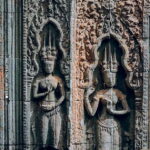
Most importantly, this isn’t just transport. You’re paying for interpretation. The route is paired with commentary on Angkor’s history and the Hindu legends represented in intricate carvings, so the sights connect instead of feeling like separate monuments.
You can also read our reviews of more private tours in Siem Reap


8:00 AM Pickup and the Real Shape of a 6–7 Hour Day
You’ll start with pickup at 8:00 am from your hotel in Siem Reap. Expect a long day, but a well-paced one. This isn’t a short half-day where you run out of time after the first two temples. The schedule is built to keep you seeing major sites in the same day: Angkor Thom zone, Ta Prohm, then Angkor Wat.
A practical advantage of leaving early is that it gives you a better shot at calmer navigation and fewer time crunches between stops. Even if the heat and humidity stay consistent, starting at 8 gives you more room to slow down when you want to.
Duration is listed as about 6 to 7 hours, and the itinerary reflects that: multiple stops clustered around the Angkor Thom area before moving toward Ta Prohm and then ending at Angkor Wat, where you’ll typically want the most time.
Stop 1: Your First Temple Morning in Siem Reap
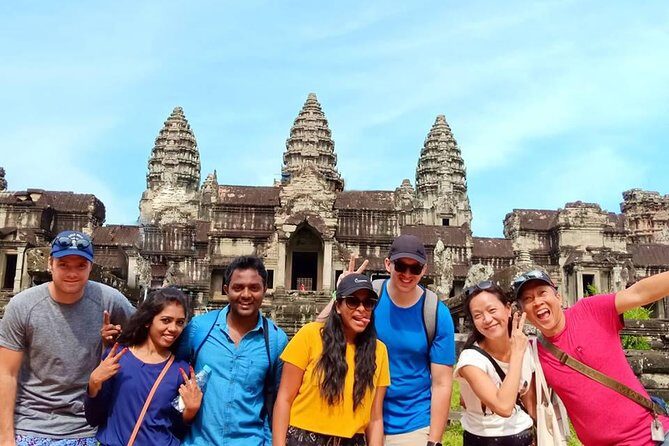
The tour kicks off in Siem Reap with pickup at your hotel. There’s no temple stop here in the same way as the others, but it’s part of what makes the day feel organized. You don’t have to manage getting yourself to the right entrances, finding your way inside, or coordinating timing with other people.
For value, this is a big deal. You’re effectively buying back time and energy. You also start with a guide who knows how your day will unfold, which makes the first temple stops feel smoother.
Stop 2: Angkor Thom Capital City and Its Big “Why”

Angkor Thom is the kind of stop that helps you frame everything that comes next. It’s described as the capital city of the Khmer empire, built at the end of the 12th century under King Jayavarman VII. That context matters because Angkor isn’t only one temple. It’s a whole planned worldview.
You get about 40 minutes here. That sounds short until you realize this stop is more about orientation: where you are, what this area represented, and how the carvings and layout relate to the empire’s message.
One drawback to consider: with 40 minutes, you won’t have time to study every stone detail up close. This is a great stop if your guide is doing the heavy lifting on meaning. If you’re the type who likes to read every inscription word-by-word, you may want to lean on your guide’s pointers and pick a few carvings to focus on.
Stop 3: Bayon Temple and the Carving-to-Meaning Connection
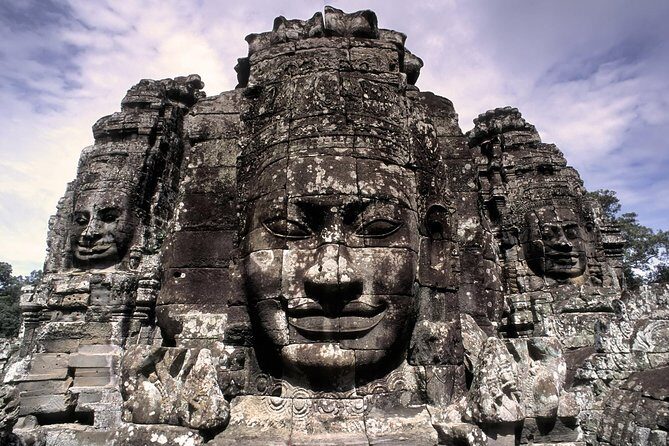
Bayon is one of those temples that rewards attention. It’s richly decorated and tied to King Jayavarman VII as a state temple for Mahayana Buddhism, built around the late 12th or early 13th century. What makes this stop extra useful on a guided tour is how the commentary can connect what you see with what it meant.
You’ll have about 40 minutes at Bayon. That works because Bayon isn’t just one viewpoint; it’s a temple where you’ll keep noticing new details as you move. With a live English guide, the carvings stop being random texture and start becoming stories.
One review highlight that sticks out from the overall feedback: guides are praised for breaking down details about inscriptions and decorations. That’s exactly the kind of thing that turns Bayon into a “I finally get it” moment instead of just a photo stop.

Stop 4: Terrace of the Elephants (and Leper King) as a Viewing Platform
Next comes the Terrace of the Elephants. This terrace is described as a platform where the king viewed the victorious return of his army. So while it looks like stonework, it also functions like a political stage. That’s a big shift in how you can interpret the space.
Then you continue to the Terrace of the Leper King, known for detailed carvings. You’ll spend around 30 minutes total for this block.
Here’s what you should watch for: terraces like these are meant to be walked and viewed from certain angles. A guided day helps because you’re more likely to pause at the best vantage points instead of drifting past. If you want to capture the carvings well, you’ll do best when you’re not rushing.
Possible consideration: 30 minutes can feel tight if you want long, slow study time. This stop is ideal if you like structured “see, understand, move on” pacing.
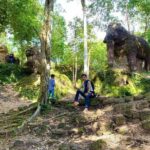
Stop 5: Ta Prohm’s Ruin Beauty and the Power of a Story
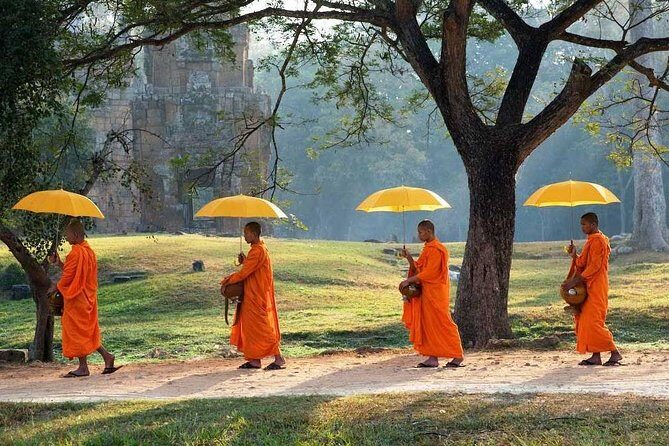
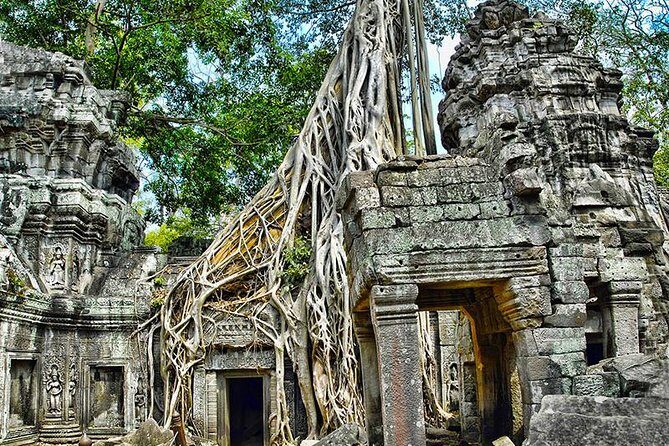
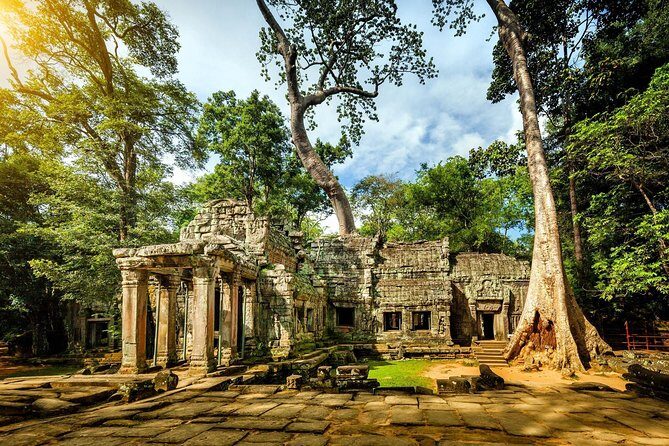
Ta Prohm is described as a state of ruin that’s also a state of beauty, which is exactly the mood shift you want after the more formal Angkor Thom and terrace zones. Ta Prohm was built around the mid-12th to early 13th century, and it’s tied to King Jayavarman VII, with dedication details included in the tour description.
You’ll have about 1 hour here, which is the longest stop after Angkor Wat. That extra time makes sense. Ta Prohm can be more about atmosphere: the way the site looks, the way you feel moving through fragments of walls and corridors, and how the setting changes the way you see the stone.
This is also one of those places where interpretation helps. If you only look at it as a scenic ruin, you miss the layers. If your guide explains what the ruin tells you about the site’s past role, it becomes more than a cool photo.
A note from feedback that’s useful: people mention that guides handle the pace well even for limited mobility. If you need shorter walking segments, it’s worth asking your guide on the day how they can adjust how close you get to monuments to minimize walking.
Stop 6: Angkor Wat with Extra Time Where It Counts
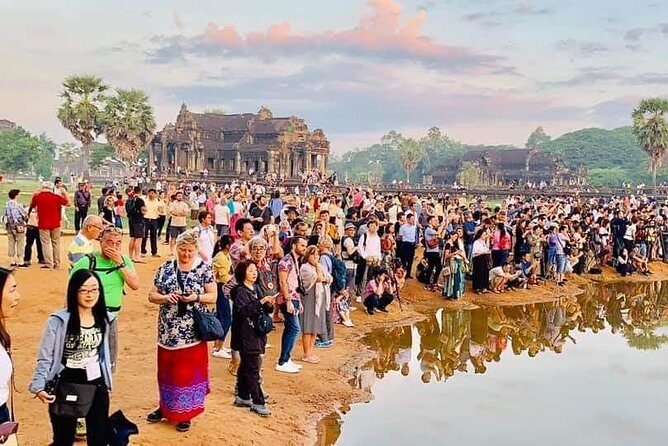
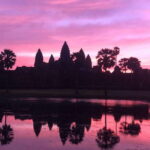
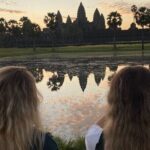
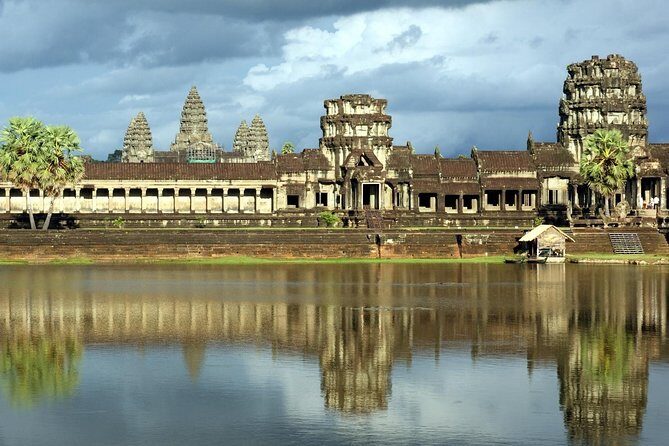
Angkor Wat is the final major temple stop and arguably the emotional anchor of the day. It’s described as the best-preserved temple at the site and built in the early 12th century as the state temple and capital city for King Suryavarman II.
You’ll spend about 2 hours here, and that’s the right amount of time for a guided visit. Two hours gives you enough room to slow down, refocus, and revisit your favorite carvings or angles without feeling like you’re constantly behind schedule.
The best value in Angkor Wat comes from understanding the purpose and design. This tour is set up to help with that through the combination of historical context and commentary. When you know what you’re looking at, the whole complex feels more intentional and less like a maze of walls.
Guides Are the Difference: Names I’d Pay Attention To
In the reviews and overall satisfaction, the consistent thread is guide quality. People specifically praise English ability, punctual timing, and the way the guide and tuk-tuk driver work as a team.
Some guide names that show up in strong feedback include Soydy, Vantha, Phy/Phuy Phy, Long, Voath Vinh, and Nak. The pattern is clear: when the guide’s explanations are clear and detailed, Angkor Wat stops being intimidating and starts feeling understandable.
If you care about more than just photos, you should treat the guide assignment as a real part of your purchase. Look for reviews that mention both knowledge and communication. In this case, that’s exactly what gets called out repeatedly—clear English, helpful answers, and tips that make the carvings and temple design click.
Price and Value: $45 Tour vs. the $37 Ticket
The tour price is $45.00 per person, with private tuk-tuk transport, a local live English-speaking guide, and hotel pickup and drop-off included. Mineral water is also included during the tour.
But you’ll also need to budget for the Angkor National Park Ticket Office admission fee of $37.00 per person, which is not included. On paper, that puts your core total at about $82 per person before meals.
So is it good value? For me, it is when you want three things at once:
- a full-day route across multiple major temples
- guided interpretation so you get more out of each stop
- a private tuk-tuk that reduces logistics stress
Where it might not be ideal is if you’re already comfortable figuring out transport, entry timing, and what to look for on your own. If you’re not, the guide and pickup value becomes easier to justify.
Foods and drinks are not included, so plan for lunch and water beyond what the tour provides. The bottled mineral water helps, but it doesn’t replace the need for actual meals.
What’s Included (and What You’ll Still Handle)
Included:
- Tuk-tuk full day tour
- Local live English speaking guide
- Hotel/airport pickup and drop-off
- Bottled water during tours
Not included:
- Foods and drinks
- Travel insurance
- Admission fee (Angkor National Park Ticket Office at $37.00 per person)
That simple list is refreshing. You won’t get surprised by extra line items beyond meals and the entry fee. The biggest “gotcha” is just remembering the ticket is separate.
Who Should Book This Private Tuk-Tuk Day
This is a great fit if you want a structured temple day without sacrificing explanations. If you like history and want it translated into what you’re seeing—especially the Hindu legends represented in carvings—this route is built for you.
It’s also a strong choice for groups who want privacy and pacing control. Since it’s private, you’re not stuck aligning your timing with strangers.
One more practical point from feedback: even older travelers with limited mobility were supported by guides and drivers who tried to get people closer to monuments to minimize walking. That doesn’t remove the fact that Angkor involves uneven terrain and stairs, but it suggests your guide will likely make reasonable adjustments when possible.
Quick Decision: Should You Book It?
Book this tour if you:
- want hotel pickup and a smooth day plan
- care about understanding what you see in the carvings, not just sightseeing
- prefer a private tuk-tuk route over sorting transport yourself
- are okay with paying the separate admission fee on top of the $45 tour price
Consider a different option if you:
- only want one or two temples and don’t want a longer day
- plan to rely mostly on self-guided exploration and don’t need a guide’s explanation
- have a very tight schedule and would rather do less traveling across the park
FAQ
What’s the duration of the Angkor Wat private tour in a tuk-tuk?
The tour runs about 6 to 7 hours.
What time is pickup in Siem Reap?
Pickup is offered at 8:00 am from your hotel in Siem Reap.
Is this tour private or shared?
It’s a private tour/activity, so only your group participates.
Is hotel pickup and drop-off included?
Yes. Hotel pickup and drop-off are included.
Does the tour include bottled water?
Yes. Mineral water is provided during the tour.
Are admission fees included in the price?
No. The Angkor National Park Ticket Office admission fee is $37.00 per person and is not included.
Is food or drinks included?
No. Foods and drinks are not included.
What temples are included on the itinerary?
The itinerary includes Angkor Thom, Bayon Temple, Terrace of the Elephants (and the Terrace of the Leper King), Ta Prohm, and Angkor Wat.
What is the cancellation policy?
You can cancel for a full refund up to 24 hours in advance of the experience start time. If you cancel less than 24 hours before, the amount paid is not refunded.