REVIEW · SIEM REAP
Explore Angkor Wat by Bike and Sunset
Book on GetYourGuide →Operated by The Guide Cambodia Travel · Bookable on GetYourGuide
Angkor by bike feels like seeing the map breathe. This 9-hour ride links the headline sights with calmer stops and ends at a Phnom Bakheng sunset climb. I love that the day is built around modern mountain bikes and a small group pace, so you move through Angkor without the usual chaos.
Two things I especially liked: getting to Khmer art powerhouses early on (Angkor Wat and Bayon) and then slowing down at Ta Prohm and Ta Nei with time to actually look. One consideration: it’s a serious cycling day in hot weather, and the route is best for people comfortable riding for roughly 25–30 km.
In This Review
- Key highlights you’ll care about
- Entering Angkor Wat early, from the seat of a bike
- The real magic starts: Ta Prohm and the roots
- Lunch pause: fuel up without turning the day sour
- Ta Nei Temple: the calmer jungle circuit
- Angkor Thom East Gate and Bayon’s smiling faces
- Terrace of the Elephants: where the stories feel specific
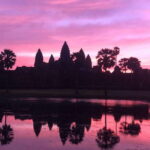
- Phnom Bakheng sunset: the climb and the payoff
- Bikes, Pok’s guidance, and the small-group comfort
- How hard is the ride, really?
- $65 value: what you get for the money (and what costs extra)
- Who should book this bike-and-sunset Angkor day?
- Should you book? My practical call
- FAQ
- What’s the tour duration?
- Where does the tour start?
- Is the Angkor Pass included?
- How much does the tour cost?
- What’s included for biking?
- What food and drinks are included?
- How large is the group?
- Is the tour guided and in English?
- Can I cancel for a refund?
Key highlights you’ll care about
- Modern Giant mountain bikes with disc brakes, front suspension, and large gear ranges
- Small group (max 8) with an English-speaking guide named Pok
- Ta Prohm, with Tomb Raider filming lore and those iconic root trees
- Ta Nei Temple, a quieter jungle stop many people don’t reach
- Angkor Thom East Gate and Bayon’s smiling faces of Avalokiteshvara
- Sunset from Phnom Bakheng, timed for the big sky moment
Entering Angkor Wat early, from the seat of a bike
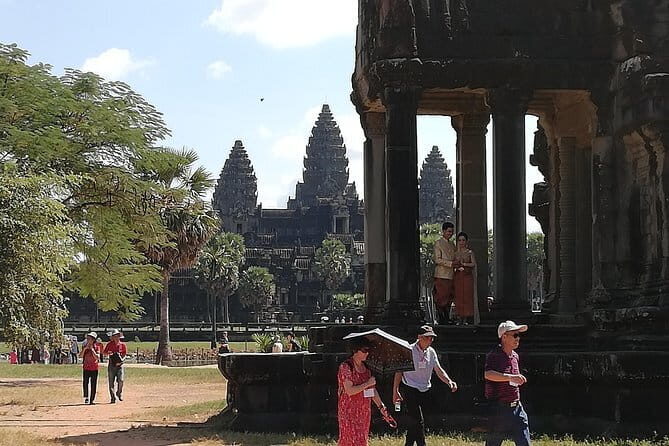
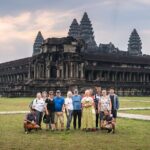
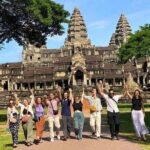
Your day starts with a hotel pickup by tuk-tuk or car, then straight to Angkor Wat. The timing matters. You’re looking at Cambodia’s best-known Khmer landmark before the crowds fully settle in, when the stone still feels cool and the details are easier to notice. Angkor Wat is treated here as the Khmer masterpiece—built as a centerpiece of Khmer art at its high point in the 12th century—and seeing it early sets the tone for everything that follows.
What I like about this approach is that you’re not stuck in one viewing spot, waiting for your turn. You get a guided moment to understand what you’re looking at, then you shift to bike time—so the rest of Angkor doesn’t feel like a checklist.
You can also read our reviews of more cycling tours in Siem Reap
The real magic starts: Ta Prohm and the roots
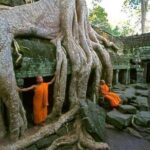
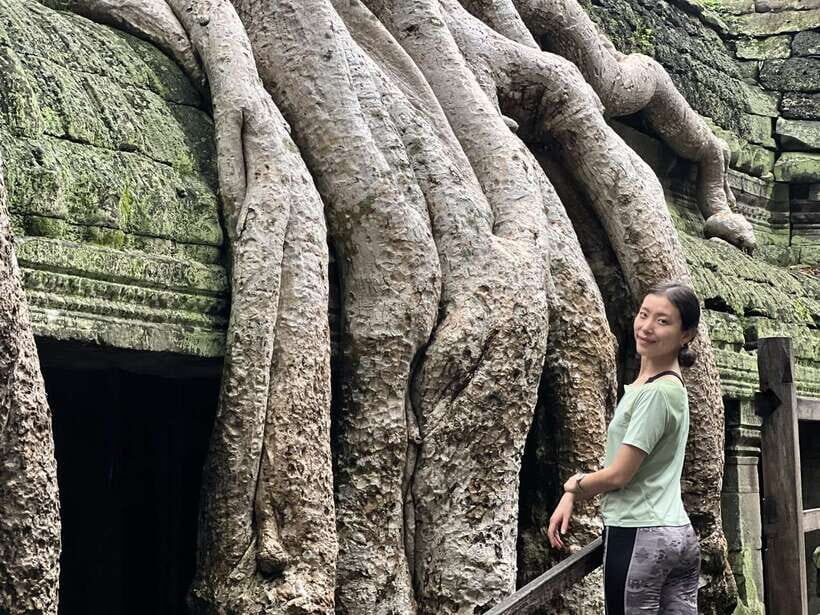
Late morning, you start cycling toward Ta Prohm—the famous jungle temple left much as it was found. This is one of those places where the trees don’t just decorate the ruins. The roots and trunks have taken over, and the whole complex looks like stone and wood are sharing the same skeleton.
And yes, there’s an extra layer to Ta Prohm here: it’s connected to the Tomb Raider film—root visuals that filmmakers loved for the camera. That matters, because it changes how you look at the scene. Instead of just thinking dramatic ruins, you begin spotting angles, sight lines, and why certain “frames” look so cinematic.
Cycling to Ta Prohm also gives you a sense of distance that walking alone can hide. Angkor is big. Riding makes that real fast—in a useful way.
Lunch pause: fuel up without turning the day sour
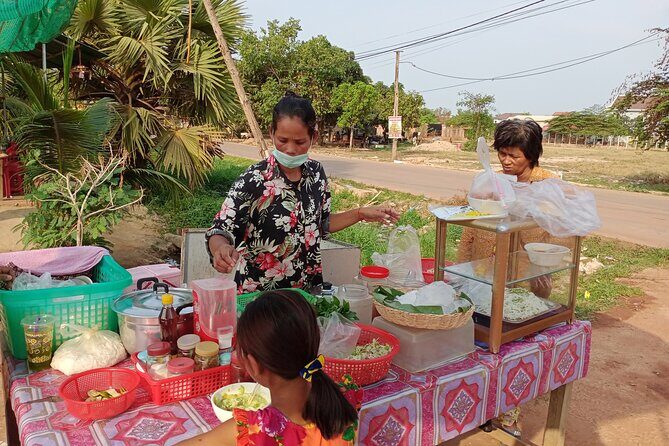
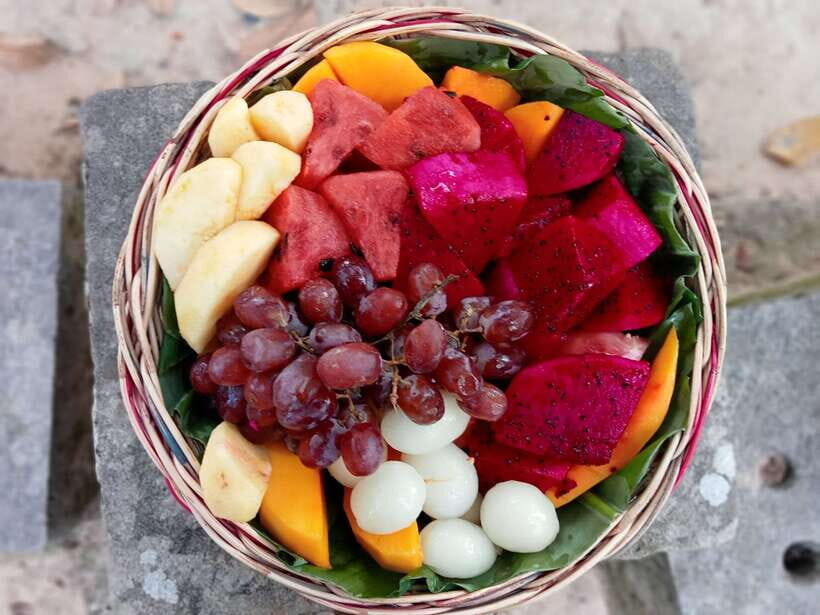
After Ta Prohm, you stop for lunch at a local restaurant. This is more than a break; it’s a temperature-management strategy. When you’re cycling all day in Siem Reap heat, a real meal keeps your energy steady for the afternoon temples and the sunset climb.
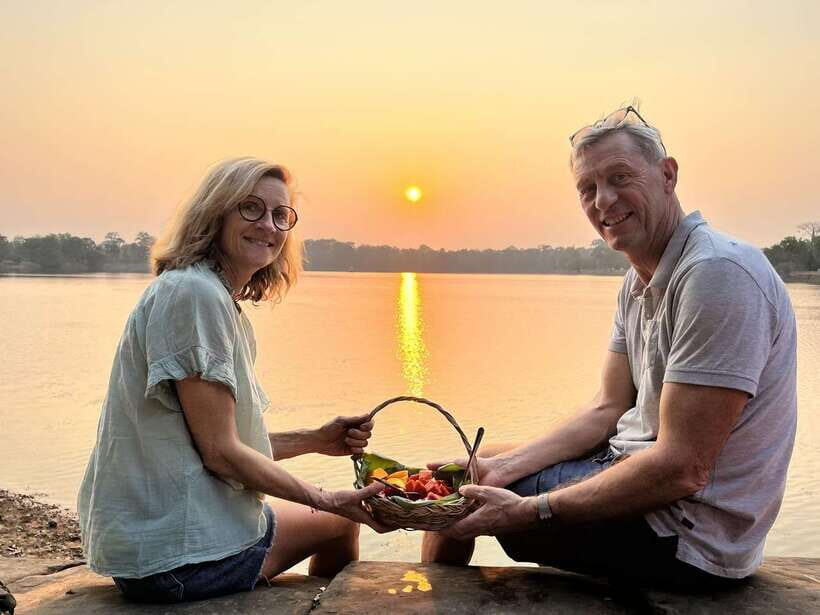
Included lunch comes with practical extras: bottle water, Coke, and fresh fruits. That’s not just convenience. It helps you avoid the common Angkor problem where you spend the last half of the day chasing drinks and snacking on whatever you find.
Ta Nei Temple: the calmer jungle circuit
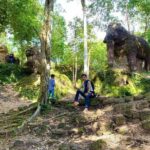
Then comes one of the most worthwhile parts of the itinerary: Ta Nei Temple. This is a ruined temple deep in the jungle where fewer people seem to end up, which makes a big difference to your experience.
At Ta Nei, you’re not just collecting another photo. You’re slowing down enough to notice how the stone sits against the forest—how the ruin reads as a lived-in landscape, not a museum display. Since it’s on the cycling trail, it also feels earned. You arrive a bit worn out (in the good way), and the payoff is the mood: quieter, greener, and easier to “see the place” rather than just see the monument.
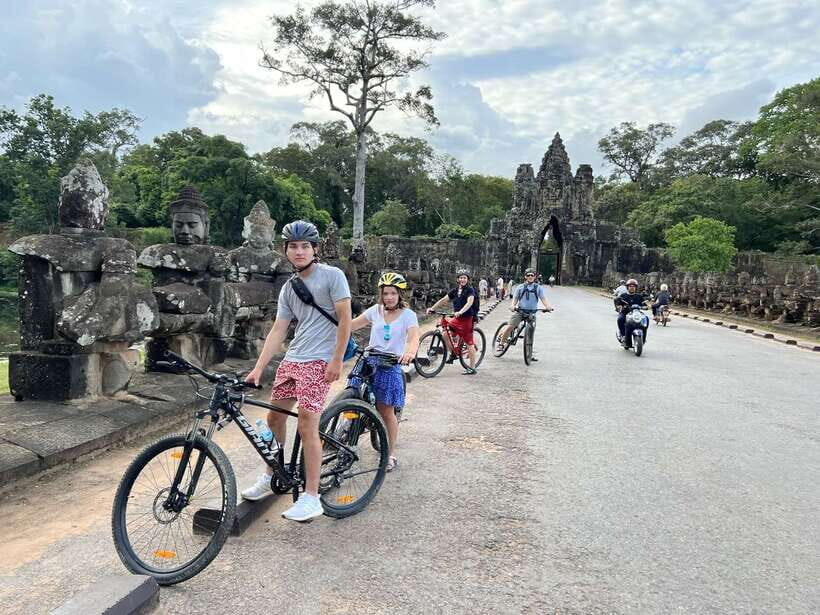
Angkor Thom East Gate and Bayon’s smiling faces
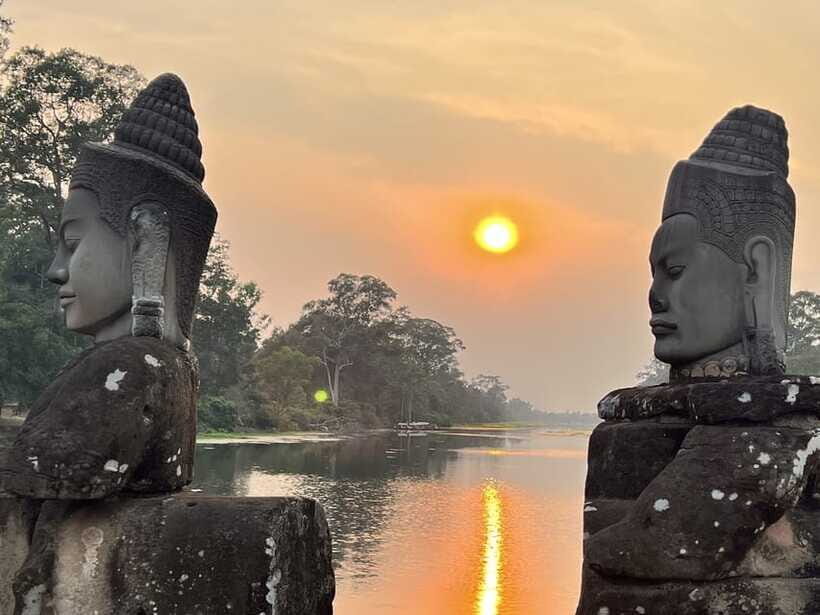
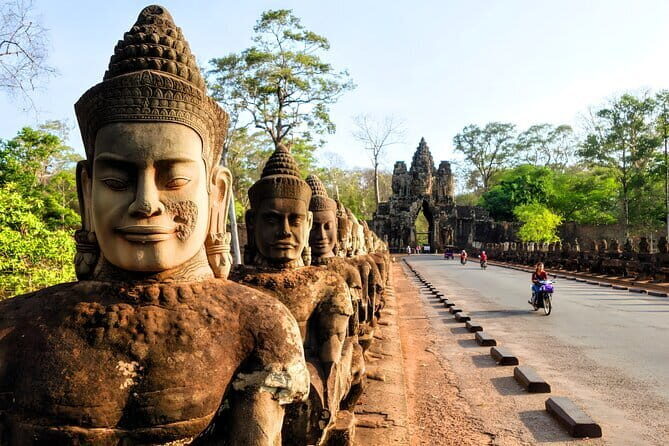
In the afternoon, you head to the east gate of Angkor Thom. This is where the Khmer city scale really clicks. The gate leads you into a bigger mental picture of Angkor as an organized world—walls, gates, and temples laid out for movement and ceremony.
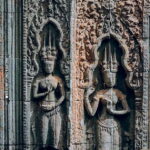
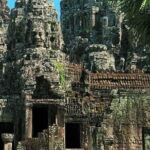
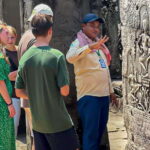
From there, you visit Bayon. The focus here is the famous stone faces—linked to Avalokiteshvara—and the temple connected to Mahayana Buddhist King Jayavarman VII. If you only ever see Bayon from one angle, you miss the point. A guided visit helps you read the composition, then your cycling day helps you keep moving, so you keep catching new angles.
What I like most is the contrast Bayon brings after Ta Nei and Ta Prohm. The jungle temples feel swallowed by nature. Bayon feels like nature meets authority—spiritual faces staring out over a city that once held power.
You can also read our reviews of more evening experiences in Siem Reap
Terrace of the Elephants: where the stories feel specific
Next is the Terrace of Elephants. This is described here as the main terrace where the king would sit to observe the training of elephants. That single detail changes how you look at the terrace.
Instead of seeing it as a stone platform, you picture the activity happening in front of it—order, practice, and power on display. Even if you don’t catch every historical nuance, the guide’s framing helps you connect layout to life. It’s one of those stops that works best when you’re paying attention, not just passing through.
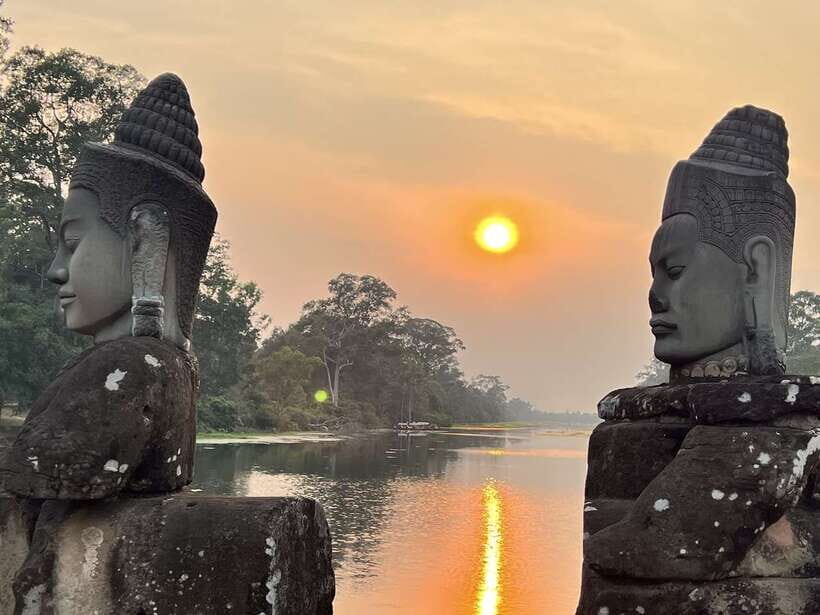
Phnom Bakheng sunset: the climb and the payoff
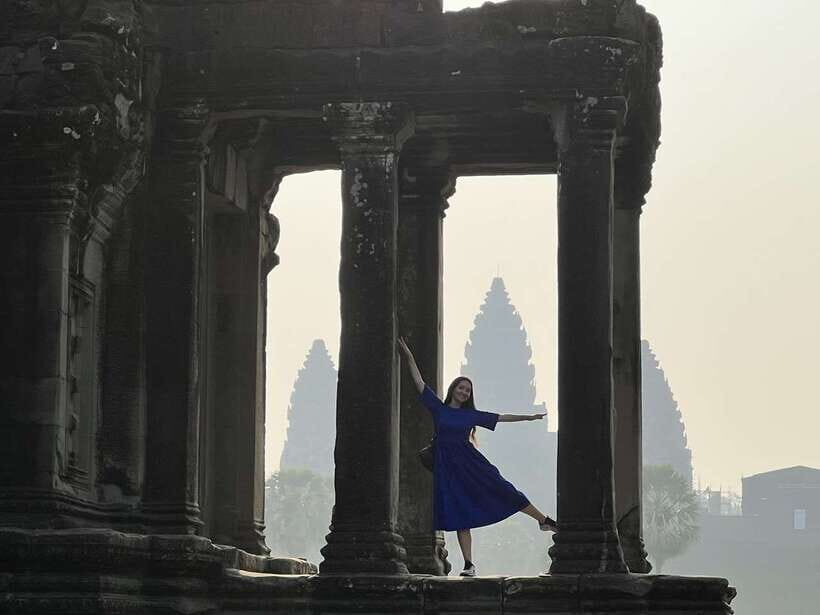
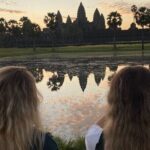
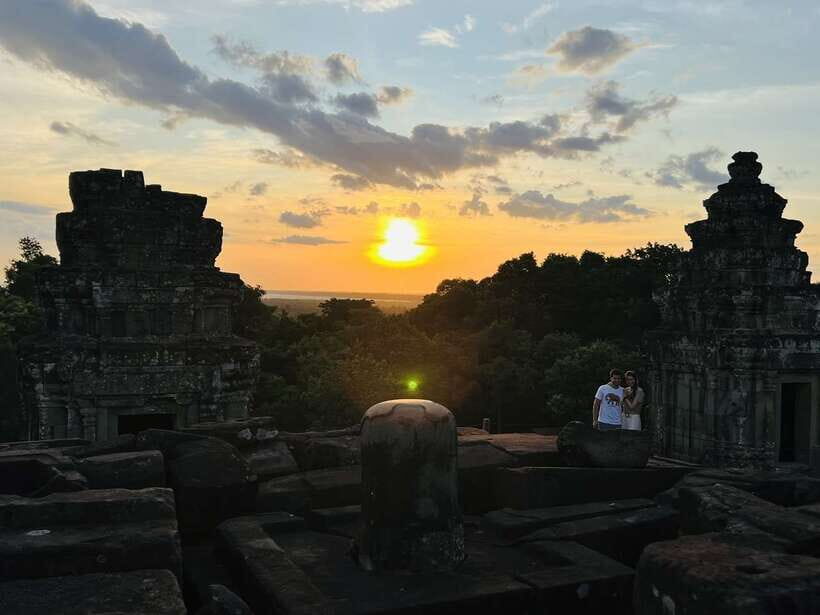
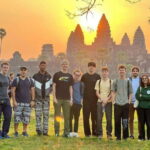
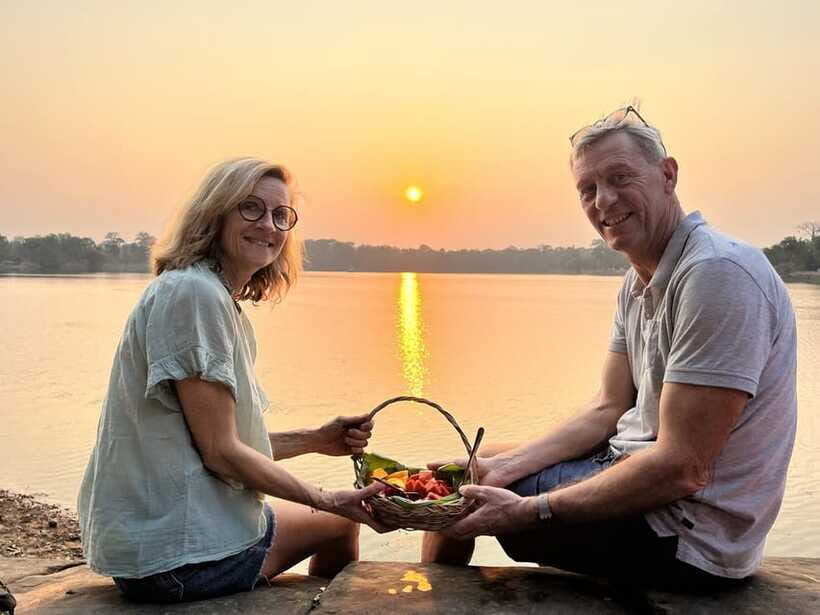
Late afternoon brings the big finale: sunset from the top of Phnom Bakheng. This is the part of the day where you’ll feel the effort you put in earlier. Cycling gets you closer, but the final sunset moment still asks for a climb and some patience.
Here’s how to think about it: you didn’t just “cycle temples.” You paced your day so the last stage hits at the right time. That timing is the whole point of ending here. When the light turns, the view transforms and the temples feel less like objects and more like silhouettes—stacked in the distance, changing with every minute.
Just go in expecting a workout at the end. That way, you’re not disappointed when legs get heavy.
Bikes, Pok’s guidance, and the small-group comfort
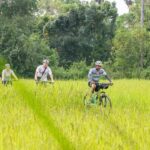
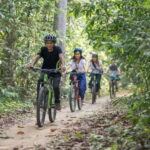
This tour runs with a small group limited to 8 people, which keeps things from turning into a slow-moving parade. You’re also on modern bikes—Giant mountain bikes with large gear sets, disc brakes, and front suspension. In plain terms: you get control and comfort on uneven surfaces.
The ride includes support transportation, which is a real benefit on a long day. Even if you’re strong, it reduces stress. You’re not thinking about logistics every time your route shifts.
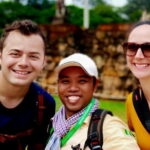
Your guide is Pok, and that comes through in how the day flows: he’s friendly, fun, and keeps the temple stories moving so they don’t turn into a lecture. He’ll also help with photos, which is a small bonus that many temple days forget.
If you’re solo, that photo help can be especially valuable. It’s a simple way to avoid leaving with only a few awkward shots of yourself in front of big stone.
How hard is the ride, really?
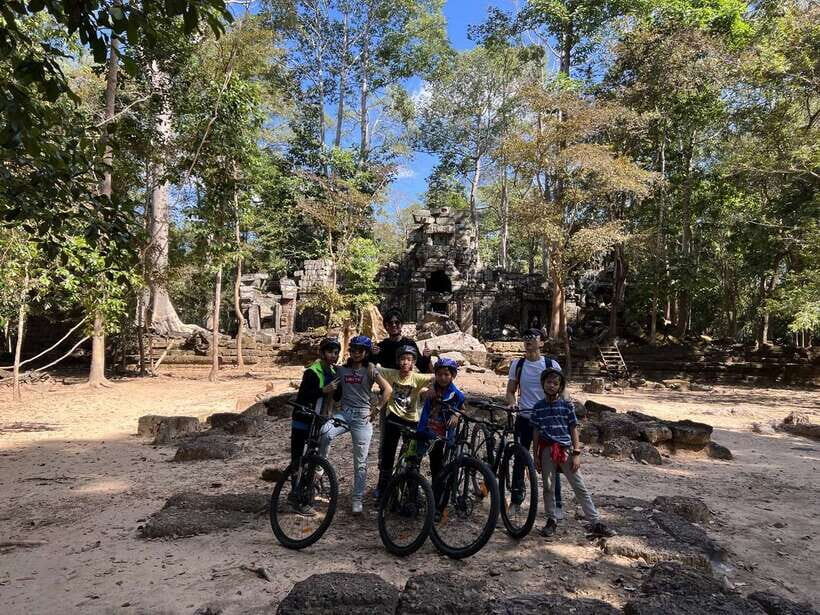
The day typically covers about 25–30 km by bike, depending on the exact route. For active travelers, that’s a satisfying challenge—long enough to feel like you explored, not just “ticked boxes.”
For less-experienced riders, it can be exhausting, especially with heat. One reason this tour works best for fit adults is that the day mixes riding with temple walking and then finishes with a sunset climb. It’s not a lazy sightseeing loop.
My practical advice: if you’re the type who skips a 45-minute workout because you’d rather rest, this may feel tough. If you like active days and you can handle long sun hours, you’ll probably love it.
$65 value: what you get for the money (and what costs extra)
$65 for 9 hours is strong value if you factor in what’s included. You’re not just paying for a guide. You’re getting:
- professional English-speaking guide
- modern mountain bike setup (helmet included)
- water, Coke, fresh fruits, and lunch
- hotel pickup and drop-off by tuk-tuk or car
- support transportation
- a day plan that connects multiple temple zones without requiring you to figure out routes
The big extra cost is the Angkor Pass, which is not included. That means your real total depends on the pass price you choose, but the rest of the day is packaged for you.
For me, the smartest part of the value is the bike quality and the included food/drinks. In Angkor, that reduces friction. You don’t waste time bargaining, hunting, or renting if you want a smooth experience.
Who should book this bike-and-sunset Angkor day?
You’ll likely love this tour if you:
- want an Angkor introduction that mixes headline temples with quieter jungle areas
- enjoy cycling and want a day that feels active, not slow
- like small groups and a guide who keeps things lively
- want sunset timed right, ending on Phnom Bakheng
You might want to skip or choose a gentler option if:
- you’re not comfortable riding for 25–30 km
- you’ll travel with very young kids or someone who can’t handle heat and the day’s pace
- you expect every moment to feel effortless—this is a full-day effort
Should you book? My practical call
If you’re planning your first Angkor visit and you want the day to make sense—Angkor Wat early, Ta Prohm’s jungle drama, Ta Nei’s calmer ruins, Bayon’s smiling faces, then a Phnom Bakheng sunset—this is a well-built route. The value is real because the bike, food, and guide are included, and the small-group size keeps the experience moving.
Book it if you’re ready to ride and you want a day that feels like you explored Angkor for yourself. Pass if you want a more relaxed sightseeing rhythm. In Angkor, legs and timing are everything—this tour treats both seriously.
FAQ
What’s the tour duration?
The tour lasts 9 hours.
Where does the tour start?
You’re picked up from your hotel lobby by tuk-tuk or car. You should wait about 10 minutes before the scheduled pickup time.
Is the Angkor Pass included?
No. The Angkor Pass is not included.
How much does the tour cost?
The price is $65 per person.
What’s included for biking?
You get a modern mountain bike, a helmet, and bottle water during the ride.
What food and drinks are included?
Lunch is included, plus Coke and fresh fruits, and the tour provides water.
How large is the group?
It’s a small group limited to 8 participants.
Is the tour guided and in English?
Yes. It includes a professional English-speaking tour guide.
Can I cancel for a refund?
You can cancel up to 24 hours in advance for a full refund.