REVIEW · SIEM REAP
Siem Reap: Angkor 1-Day Private Tour with Sunset or Sunrise
Book on GetYourGuide →Operated by Vamos Camboja Turismo · Bookable on GetYourGuide
Angkor looks different when a good guide walks you through it. I love the private, personalized temple explanations (you may even get a guide like Youk or Buth, known for big-picture stories plus tiny carving details), and I also love the day’s structure that mixes big classics with photo-friendly moments. One thing to weigh: the sunrise option starts very early and can be crowded, and sunset value depends a lot on weather and visibility.
Timing is the real game here. You’ll choose sunset (pick-up 08:30, wrap around 18:30) or sunrise (pick-up 05:00, tour ends around 12:00), with hotel pickup and drop-off plus cold water and towels at stops. The Angkor Archaeological Park entrance ticket is extra, so budget for that on top of the tour price.
If you want the most relaxed experience (and a broader temple mix), the 2-day version adds the Grand Circuit temples and Banteay Srei after the first day’s Small Circuit + sunset. It’s a long visit either way, but private pacing makes it feel more like a careful plan than a race.
In This Review
- Key things to know before you go
- Sunrise vs Sunset in Angkor: what timing changes
- First stop: Ta Prohm and the jungle-root drama
- Ta Keo and Victory Gate: fast stops that set the mood
- Angkor Thom: the South Gate, Bayon smiles, and the terraces
- Baphuon and Srah Srang: history hits, then you reset
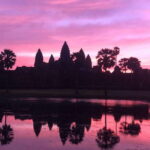
- Angkor Wat in afternoon light: the world’s biggest draw
- Phnom Bakheng sunset hill: when the view pays off
- The 2-day upgrade: Grand Circuit plus Banteay Srei sunrise
- Private transport and pacing: tuk-tuk, AC, and fewer bottlenecks
- Price and value: what $110 covers (and what’s extra)
- Practical stuff: what to pack and temple dress rules that matter
- Who this private Angkor tour suits best
- Should you book this Siem Reap private Angkor tour?
- FAQ
- FAQ
- What’s the pickup time for the sunset option?
- What’s the pickup time for the sunrise option?
- Is lunch included?
- Which temples are included on the 1-day experience?
- What’s included on the 2-day option?
- Are Angkor entrance tickets included in the price?
- What languages are the guides available in?
Key things to know before you go
- Private guide in your language: English, Spanish, French, Portuguese, Italian, German, or Japanese.
- Real time savings on-site: the tour includes skip-the-ticket-line handling (you still buy the entrance ticket separately).
- Sunrise needs a breakfast plan: for sunrise tours, you’ll want a breakfast box from your hotel or snacks.
- Smart temple order: you’ll hit Ta Prohm early and Angkor Wat later, when heat and crowds change.
- Photo-focused stops with a purpose: Victory Gate and Phnom Bakheng aren’t just quick photo ops.
- Weather can change sunset plans: Phnom Bakheng’s views depend on the sky and haze.
Sunrise vs Sunset in Angkor: what timing changes
Picking sunrise or sunset isn’t only about the light. It changes the crowd mix, your energy level, and which parts of the day feel rushed.
For the sunrise tour, the pick-up is about 05:00 and you’ll finish around 12:00. You’ll see the early atmosphere and the big buzz of people heading into the park, and it’s easier to manage with snacks or a breakfast box since lunch isn’t included.
For sunset, pick-up is about 08:30 and the day runs until around 18:30. This option usually feels more comfortable for most people because you can start later, take in a larger share of temples, and then end with Phnom Bakheng at golden hour. Still, sunset is weather-sensitive—if skies are cloudy or visibility is poor, the “wow” factor can shrink fast.
You can also read our reviews of more private tours in Siem Reap
First stop: Ta Prohm and the jungle-root drama
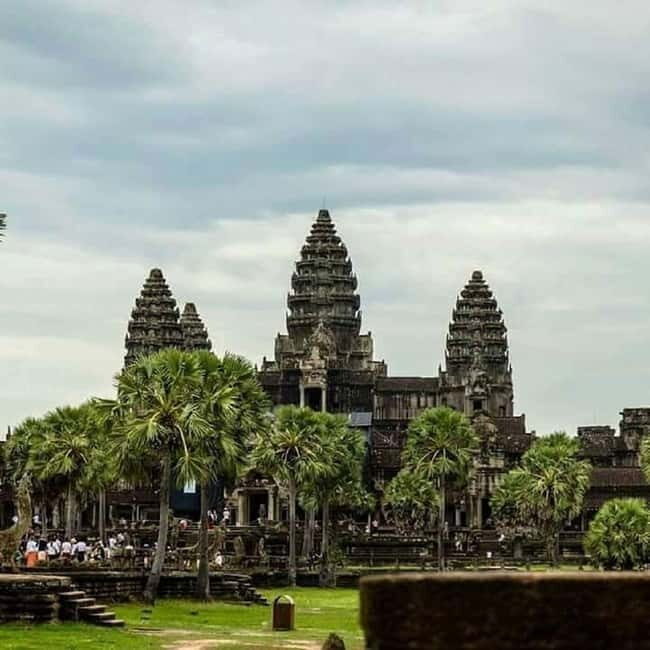
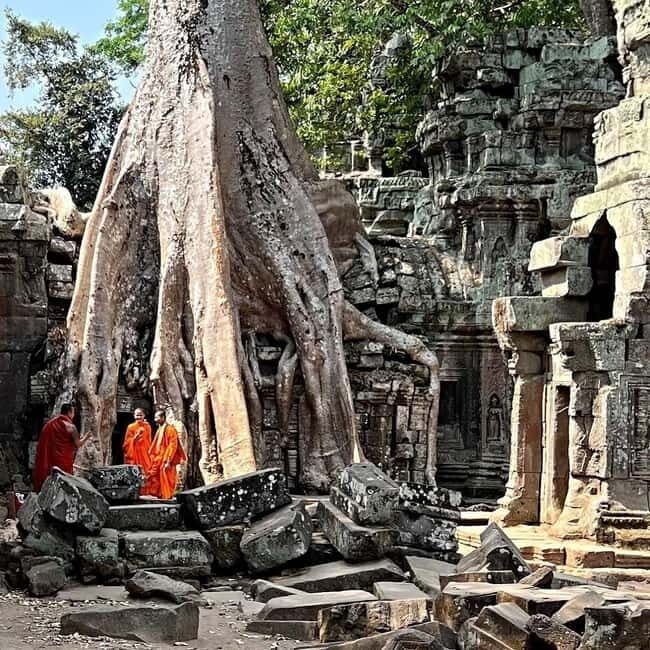
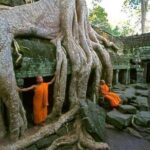
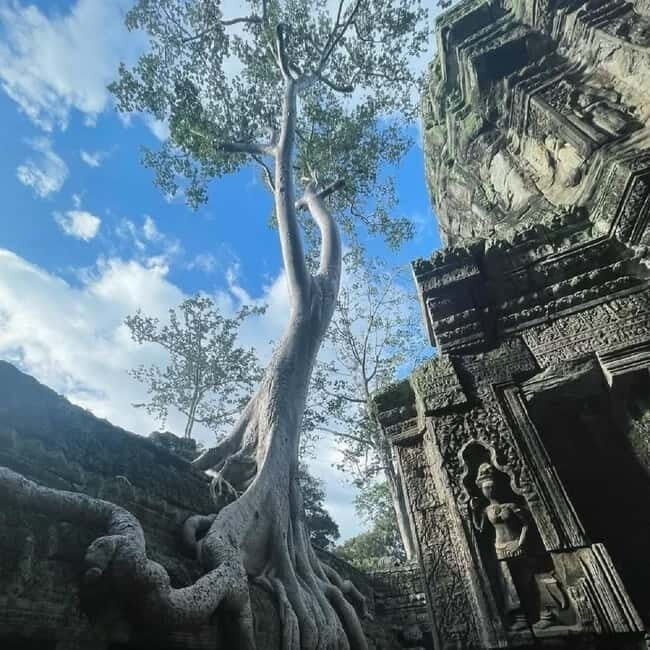
Ta Prohm is the temple that most people already recognize—giant tree roots wrapped into stone, with a feel that looks staged but isn’t. When I think about why this stop works, it’s because you get your imagination working early, before the day becomes a checklist of names.
You’ll spend about an hour here with a guide. That matters because Ta Prohm isn’t just a photo background; carvings and doorways have their own logic, and the guide can point out what to look for without you hunting for meaning on your own.
The practical side: this is one of the places where shade can be patchy and walking is uneven. Comfortable shoes are non-negotiable, and you’ll want sun protection even if you’re wearing long sleeves or using a hat. Cold water and a towel help, but you still need to pace yourself.
Ta Keo and Victory Gate: fast stops that set the mood
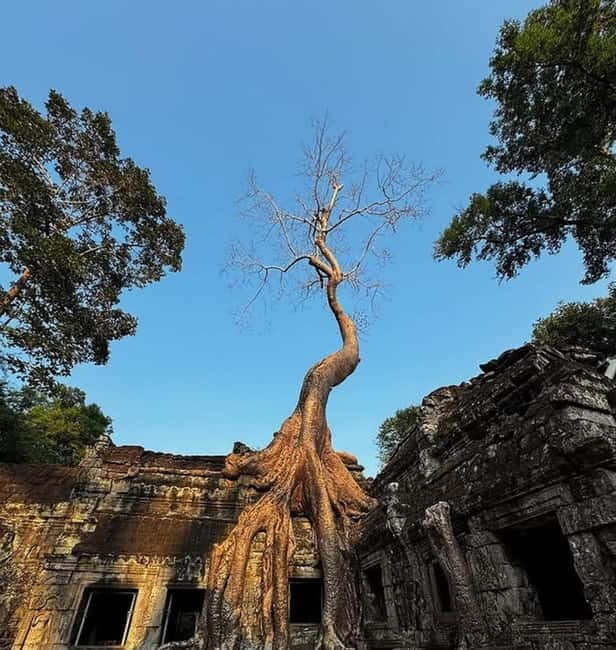
After Ta Prohm, the route hits Ta Keo (about 30 minutes) and then Victory Gate (a short photo stop). These stops are short by design, and that’s the good news: you get variety without losing the main temple time.
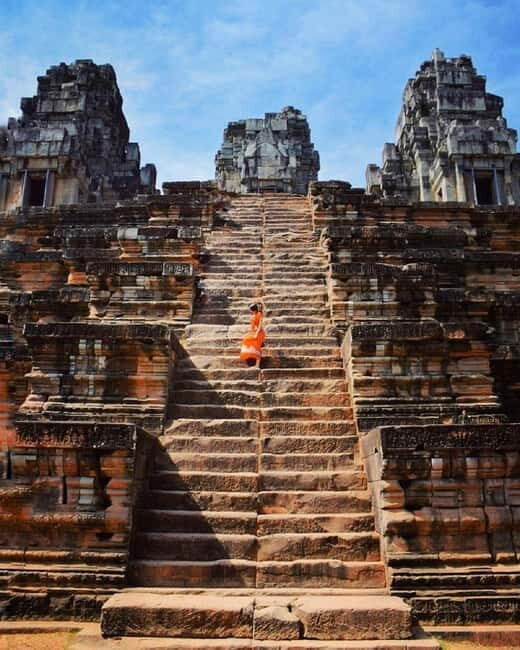
Ta Keo is a powerful example of Angkor-era architecture—clean lines and a temple-mountain vibe that can look dramatic in different light. A good guide helps you notice how the structure was meant to read from specific angles.
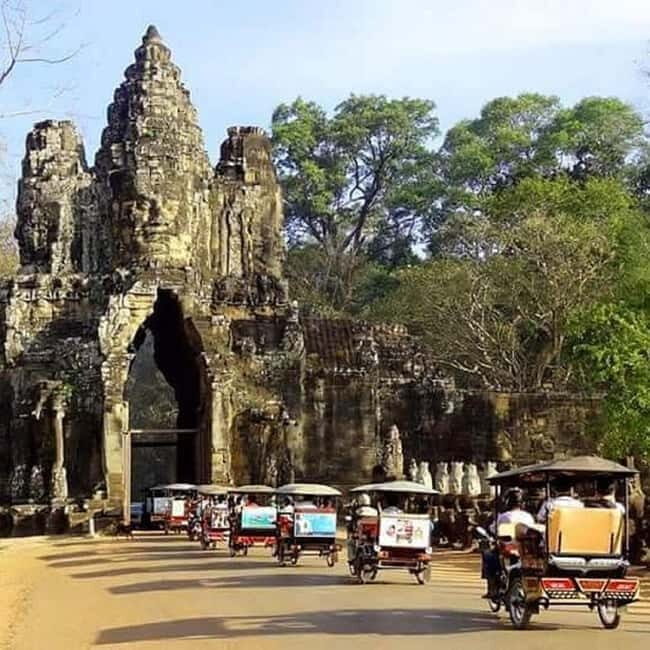
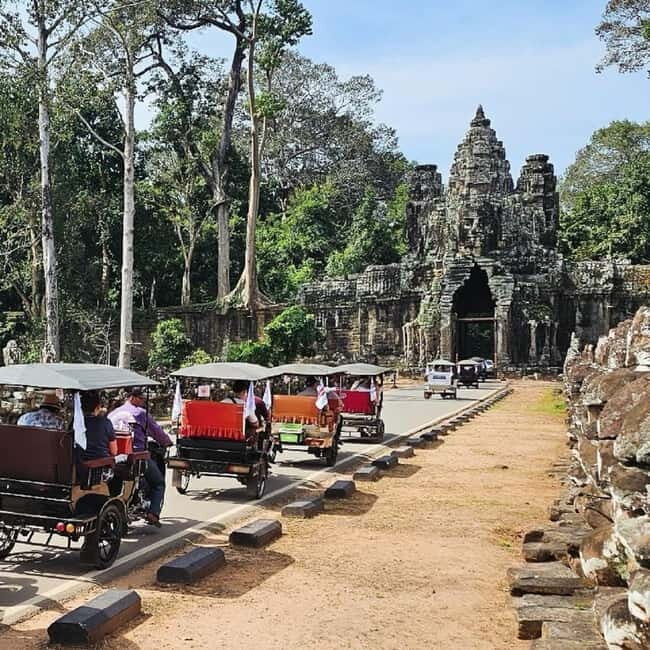
Victory Gate is where the city’s ceremonial entrance feeling kicks in. It’s a quick moment, but it gives you a framing reference before you walk into Angkor Thom, where the faces and terraces take over.
Angkor Thom: the South Gate, Bayon smiles, and the terraces
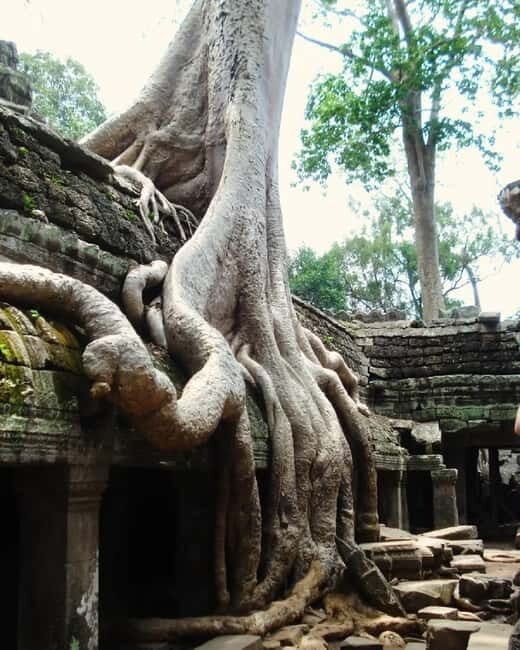
You’ll enter Angkor Thom through the South Gate, where the giant stone faces are the visual headline. Expect a guided pass (about 1.5 hours for Angkor Thom time) that usually starts with context: why this place mattered and how the city’s design communicated power.
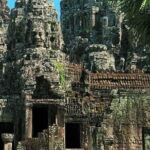
Then you’ll get to Bayon Temple (about 1 hour). Bayon is famous for its smiling faces, but the smarter part is learning how those faces connect to the temple’s role and symbolism. If you love details, this is the area where a guide’s storytelling really pays off.
Two terrace stops are part of the experience: the Terrace of the Elephants and the Terrace of the Leper King. These terraces can feel like stone collections if you show up cold. With a guide, they become carved narratives—what you see is tied to how people lived, worshipped, and imagined the world.
One drawback to flag: this is active walking over stone surfaces. It’s not hard in a fitness sense, but it is constant. If your legs are sensitive, build in slow moments and use the guide’s pacing choices.
Baphuon and Srah Srang: history hits, then you reset
Between the main face-and-terrace zones and Angkor Wat, you’ll stop at Baphuon (about 45 minutes). Baphuon can feel less instantly famous than Bayon, but that’s why it’s worth time. You get a different angle on Angkor’s scale and craftsmanship, and it helps break up the emotional intensity.
Then comes Srah Srang, which gives you a breather. You’ll have a break and lunch time here (lunch isn’t included, but the pause is). Srah Srang’s role as a water feature also helps you understand how Angkor’s city planning worked—temples weren’t isolated; they were part of a broader system.
This is a good moment to regroup: sip water, wipe sweat, and check your energy. Your afternoon will depend on it, because Angkor Wat is the big one.
You can also read our reviews of more evening experiences in Siem Reap

Angkor Wat in afternoon light: the world’s biggest draw
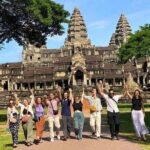
Angkor Wat is why most people come. On a private route, you don’t just stand there and take photos—you get help reading what you’re looking at.
You’ll spend about two hours at Angkor Wat with your guide. That time matters because Angkor Wat rewards attention: axis lines, bas-reliefs, and the layout all connect to the temple’s meaning. A guide who explains symbolism and history makes the architecture feel less like a monument and more like a designed message.
If you choose the sunrise option, your Angkor Wat visit happens earlier in the day. If you choose sunset, it’s later, which can mean you move through galleries with different crowd levels and a different light mood. Either way, expect heat to be a factor if the sky is clear.
Practical tip: plan to take a few photos, then slow down and watch people move. You’ll start to notice where you can stand for photos without constantly getting pushed out of position.
Phnom Bakheng sunset hill: when the view pays off
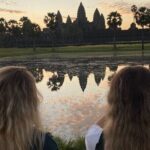
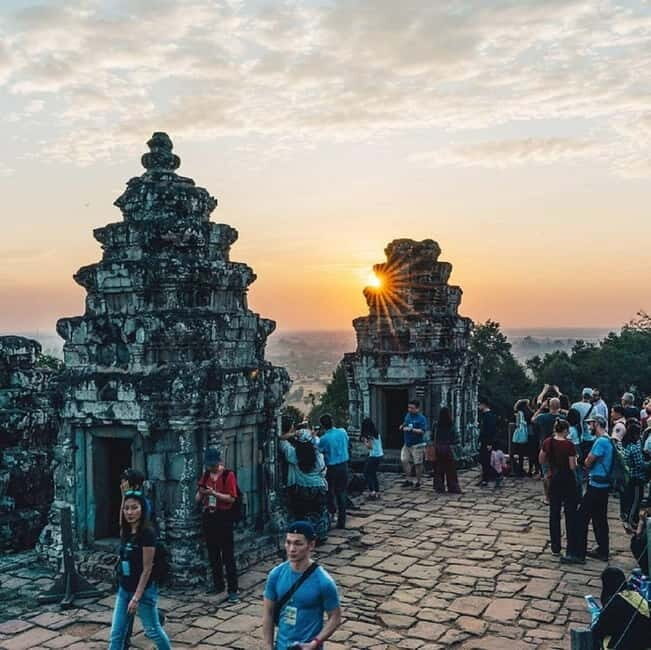
Your sunset day ends at Phnom Bakheng, where you’ll watch the sunset. You’ll usually have about two hours here for photo time and viewing.
This is the part that can make or break the day. If the sky is good, the view can feel like the jungle and temple city are on the same stage. If clouds or haze block the horizon, the climb can feel like effort with less payoff.
A smart way to handle it: don’t treat sunset as guaranteed fireworks. Keep your expectations tuned to weather and take photos throughout the approach, not only at the top. If you feel the sky is likely to disappoint, focus on smaller views and the atmosphere rather than the perfect horizon.
The 2-day upgrade: Grand Circuit plus Banteay Srei sunrise
If you have two days, the payoff is not only more temples—it’s a better rhythm. The 1-day loop packs a lot in, and it can feel like you’re always moving. The 2-day option spreads the experience out and gives you time to see temples with fewer pressure moments.
Day 2 starts very early with sunrise at Angkor Wat (pick-up about 05:00). After sunrise, you’ll have a breakfast window (bring a breakfast box or snacks). Then you’ll move through the Grand Circuit temples.
The Grand Circuit sequence includes Preah Khan, Neak Pean, Ta Som, East Mebon, and Pre Rup, before finishing at Banteay Srei. Preah Khan brings a moody, corridor-rich feeling. Neak Pean offers a calmer pause with its water setting. Ta Som’s signature tree-covered gate is a strong photo moment. East Mebon gives you a sense of how these places once sat on islands in older water systems. Pre Rup adds big viewpoints over the countryside.
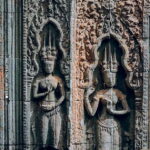
Then you land at Banteay Srei, the so-called Citadel of Women, famous for its intricate pink sandstone carvings. This is one of the most satisfying endings because the fine detail is a different “type” of Angkor beauty compared to massive face towers. You’ll finish around 13:00 and return to your hotel.
Private transport and pacing: tuk-tuk, AC, and fewer bottlenecks
Private touring changes the texture of Angkor. You’re not stuck with a giant group’s timing, and your guide can adjust for the way your group walks, stops, and photographs.
Transport is handled in two ways depending on your party size. For 1–2 people, the tour uses a tuk-tuk on the 1-day option. For 3+ people, you’ll typically ride in an A/C van or bus. In the 2-day version, Day 1 uses tuk-tuk for 1–2 people, then Day 2 switches to a private car.
The practical benefit shows up in small ways: fewer waits, easier control of photo timing, and the ability to step aside when you want a cleaner view. Cold water and cold towels during visits add real comfort in Cambodia’s heat.
One note: Angkor is not a wheelchair-friendly day. The route includes walking on uneven temple ground, so if mobility is limited, plan carefully.
Price and value: what $110 covers (and what’s extra)
The tour price is $110 per group up to 2 people. That’s the baseline for a private day with a licensed guide, hotel pickup/drop-off, and the transportation plan tied to your group size.
But the entrance ticket is separate. You’ll pay the Angkor Archaeological Park entrance ticket directly: $37 per person for a 1-day ticket or $62 per person for 2–3 days. Lunch is also not included.
So what does that mean for value? For two adults on a 1-day tour, you can estimate: $110 for the private tour + $74 for tickets (before lunch). After that, you’re paying for comfort, time saved, and interpretation—this is where private guiding makes a difference. If you’re the type who likes to understand why carvings exist and how temples were designed, the guide’s storytelling can be worth more than an extra few dollars saved by a cheaper group tour.
If you’re budget-tight and only want quick photos, the extra cost of private touring may feel less justified. If you want to learn as you go and avoid stress, it usually feels like good spending.
Practical stuff: what to pack and temple dress rules that matter
Angkor is famous, but the rules are still rules. Make your life easier by dressing correctly from the start.
Bring comfortable shoes, sunglasses, a sun hat, sunscreen, and insect repellent. You’ll also want comfortable clothes that cover enough skin to meet temple requirements.
Dress code essentials:
- You can use a scarf to cover knees and shoulders to enter most temples.
- Except for Angkor Wat, you must wear pants and skirts that cover the knees, plus a shirt that covers shoulders.
- Shorts, short skirts, and sleeveless shirts aren’t allowed.
Also, avoid bringing prohibited items. The tour info lists no pets and no alcohol or drugs.
If you’re planning for sunrise, bring a way to eat on the go. The sunrise schedule leaves little room for a normal breakfast stop, so having a breakfast box from your hotel (or snacks) is smart.
Who this private Angkor tour suits best
This setup fits best if you want structure without crowds pushing you around. It’s especially good for couples, small families, and anyone who doesn’t want to translate temple signs on their own.
Choose the sunrise option if you love early starts, want the atmosphere with fewer later-day logistics, and you’re okay with potential crowd intensity at popular viewpoints. Choose the sunset option if you prefer a later start and want a full day with a sunset finale.
Pick the 2-day tour if you want a calmer pace, more temples like Banteay Srei, and you’d rather not cram everything into one long push. And if you’re the kind of person who takes photos but also wants meaning behind them, a private guide makes those stops feel more intentional.
Should you book this Siem Reap private Angkor tour?
I’d book it if you want your day to feel planned, not improvised. The biggest reason is the mix of hotel pickup, private transport, cold water and towels, and a licensed guide who can explain what you’re seeing.
I’d think twice if you hate early mornings and you’re only motivated by the most famous views, regardless of weather. Sunrise and sunset both depend on sky conditions and crowd levels. If you’re flexible on timing and you care about understanding temples, this tour format is a strong match.
If your goal is to leave Angkor with context—not just images—this private day (or the 2-day upgrade) is one of the best ways to do it.
FAQ
FAQ
What’s the pickup time for the sunset option?
Pickup is around 08:30 AM, and the full-day tour typically ends around 06:30 PM.
What’s the pickup time for the sunrise option?
Pickup is around 05:00 AM, and the sunrise tour typically ends around 12:00 PM. It’s recommended to bring a breakfast box or snacks.
Is lunch included?
No. Lunch is not included on the tour.
Which temples are included on the 1-day experience?
The tour includes stops such as Ta Prohm, Ta Keo, Victory Gate, Angkor Thom, Baphuon, Bayon, Srah Srang (break/lunch time), Angkor Wat, and Phnom Bakheng for the sunset.
What’s included on the 2-day option?
Day 2 includes sunrise at Angkor Wat, then Grand Circuit temples like Preah Khan, Neak Pean, Ta Som, East Mebon, Pre Rup, and ends at Banteay Srei.
Are Angkor entrance tickets included in the price?
No. The Angkor Archaeological Park entrance ticket must be purchased separately: $37 per person for 1 day and $62 per person for 2–3 days.
What languages are the guides available in?
Licensed guides are available in English, Spanish, French, Portuguese, Italian, German, and Japanese.