REVIEW · SIEM REAP
Tonle Sap Lake and Kampong Phluk Village Private Half Day Tour
Book on Viator →Operated by Green Era Travel · Bookable on Viator
Tonle Sap Lake changes with the seasons, and Kampong Phluk shows you how. This is one of the few Siem Reap-area trips that mixes real village life, big water views, and mangrove scenery into a tight half-day plan. I like that it’s private and led by an English-speaking guide, so you don’t just cruise past the highlights.
Two things I especially like: you get clear context for what you’re seeing (how families live around water and space), and you spend time in the stilt-built community, including schools and government homes. It also helps that the trip uses an air-conditioned vehicle plus cold bottled water, so your day doesn’t feel like a slog before you reach the lake.
One drawback to plan for: depending on the season, the village may not look fully “floating,” and extra canoe time in the mangroves may cost more. If weather turns bad in the July to mid-November window, your day can be rescheduled without much notice.
In This Review
- Key things to know before you go
- Why Kampong Phluk on Tonle Sap is worth 4 hours
- Morning pickup and the countryside drive from Siem Reap
- Kampong Phluk floating village: stilt homes, schools, and close-quarters life
- Tonle Sap boat ride: feeling the lake’s real scale
- Mangrove forest time and the optional canoe ride (season matters)
- Guide style makes or breaks this kind of tour
- Price and what $59 buys you for a private half-day
- What to expect at each stage, in plain language
- Who should book this private Kampong Phluk tour
- Should you book it? My quick decision guide
- FAQ
- What is the duration of the Tonle Sap and Kampong Phluk private tour?
- What time is pickup in Siem Reap?
- Is the tour private or shared?
- Does the tour include pickup and drop-off?
- What’s included in the price?
- Do I need to pay for the mangrove canoe ride?
- What should I bring for possible extra costs and tips?
- Can I cancel and get a full refund?
- What happens if the weather is bad?
- Is the tour suitable for kids?
Key things to know before you go
- Private guide + private vehicle for a smoother ride out of town
- Stilt homes, schools, and government buildings built high above seasonal water
- Local boat time on Tonle Sap (real lake scale, not a postcard version)
- Mangrove paddling can be seasonal and extra-cost depending on timing
- Guides with strong storytelling get named often (Sath, Nak, Sorphea, Sophy, Phi, Roem)
Why Kampong Phluk on Tonle Sap is worth 4 hours
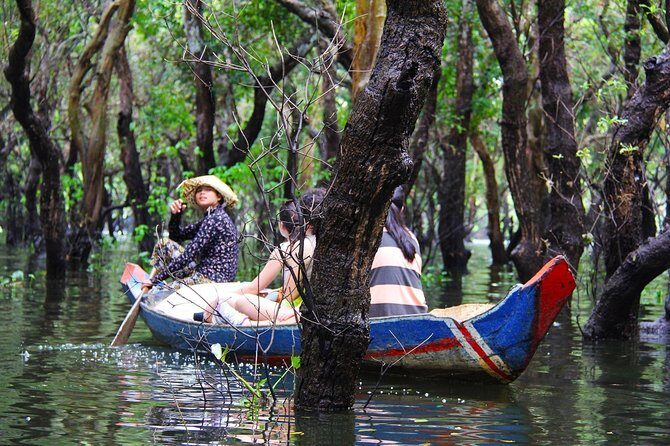
Tonle Sap isn’t a calm pond. It’s a massive system that swells and shrinks across the year, so what you see at Kampong Phluk depends on when you visit. That seasonal shift is exactly what makes this stop more interesting than a quick photo stop.
Kampong Phluk’s stilt-built township is also a lesson in adaptation. You’ll notice how daily life is organized around high water levels: homes, community space, and key buildings rise above the changing shoreline. And while you’re there, you’re not stuck only looking from a distance. You can see how people keep normal routines going in very close quarters.
I also like the “no ends in front of you” feel described for the lake. Once you’re out on the water, the scale hits you, especially if you’ve mostly seen Cambodia through temple circuits.
You can also read our reviews of more private tours in Siem Reap
Morning pickup and the countryside drive from Siem Reap
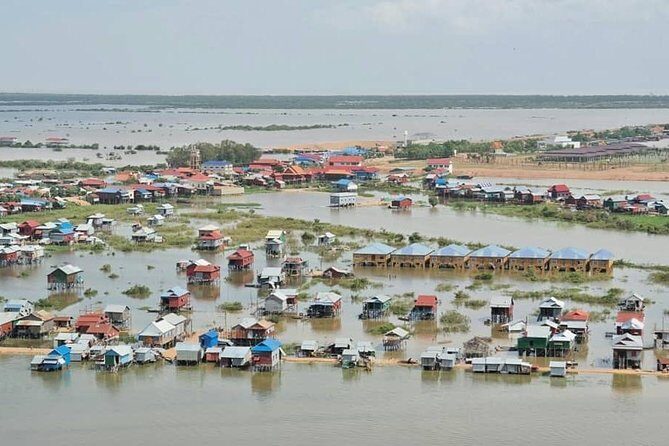
The day starts with an 8:00 am hotel pickup, and you’ll head out of Siem Reap with a local driver in a private air-conditioned vehicle. The transfer is about 45 minutes, which is long enough to feel like you’re escaping town, but short enough that you don’t lose your whole morning.
On the ride, your live English-speaking guide has room to set expectations. This matters here because Tonle Sap life can look confusing at first glance. When you understand the basic pattern of seasonal water levels and why stilt homes make sense, the village starts to click immediately.
Practical tip: bring a light layer. Even with air-conditioning in the car, it can feel warmer once you’re back outside near the water.
Kampong Phluk floating village: stilt homes, schools, and close-quarters life
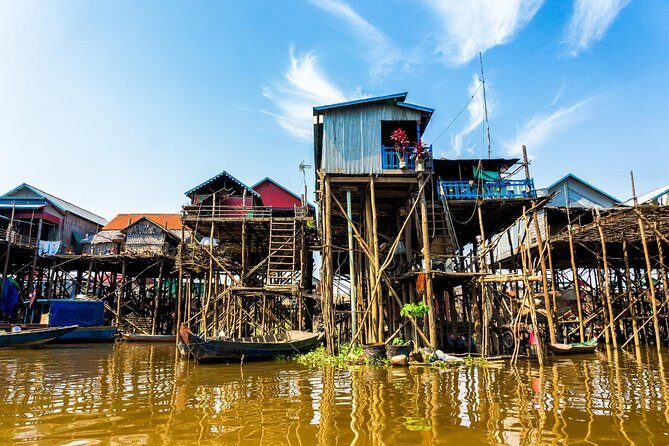
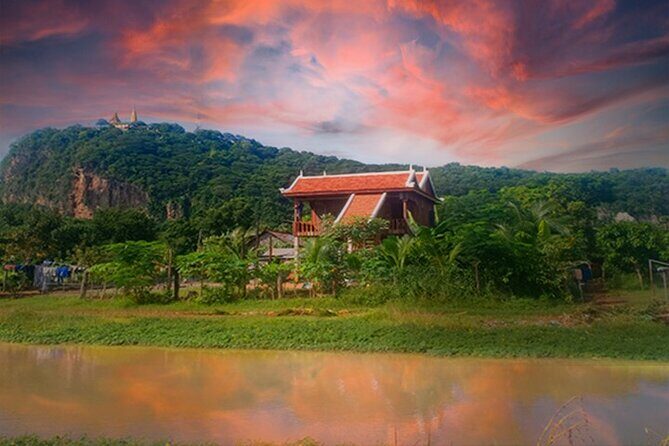
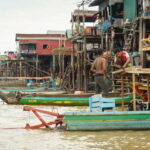
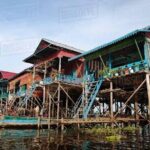
This is where the trip becomes more than scenery. The core experience is being inside the Kampong Phluk village, not just circling its edge. You’ll see a township with buildings lifted above the water, including schools and government homes. That mix is useful because it shows this isn’t only a fishing outpost—it’s a functioning community.
Season changes the surface look. During the dry season (February to July), access to the village involves minibuses, and the village may not appear fully “floating” in the way people imagine. One reason this tour stays popular is that it adjusts to what the water is doing, so you’re still in the community even when conditions aren’t picture-perfect.
What you’re looking for: how life is arranged vertically and horizontally at the same time. Stilt homes create a layered view—rooms and walkways above water, and daily routines shaped by where boats can go and where people can move safely.
The best moments tend to be the small ones. Many guides encourage you to walk around and notice daily activity—people cooking, kids playing, and the way residents use shared space. If you want to get the most out of that, ask your guide what to look for at each cluster of homes.
Tonle Sap boat ride: feeling the lake’s real scale
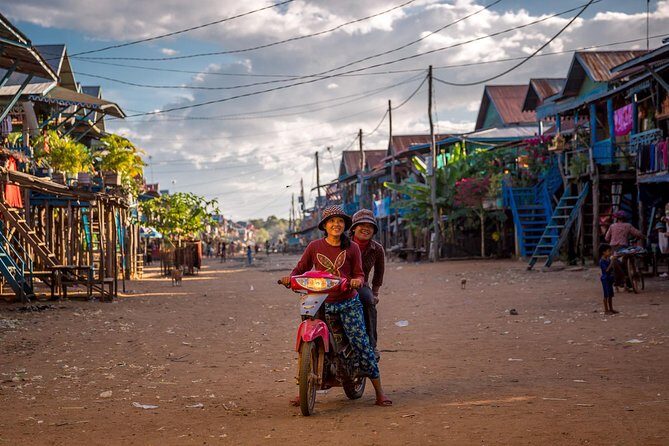
After getting oriented on village life, you switch to a local boat ride and spend about 1.5 hours on Tonle Sap Lake. This is the part that often surprises people, because “Tonle Sap” can sound like a named attraction rather than a place with size and presence.
Out on the lake, you’ll see nature in a way that’s hard to replicate from land. In the village area, you can also spot vegetation and structures peeking from the water—something that’s especially noticeable as seasonal levels shift. Birds may fly overhead slowly, and the whole scene can feel calmer than the drive-and-temple rhythm you’re used to.
This portion also has a good pace. Ninety minutes is enough to see change along the waterline and settle into the scenery without feeling dragged out. Keep your camera ready, but leave space for watching quietly. A lot of the value here is the feeling of being on this landscape that locals treat as everyday reality.
If you’re prone to motion discomfort, take it easy at first and keep your gaze on the horizon. The ride is short enough that most people manage fine, but it’s still open-water travel.
Mangrove forest time and the optional canoe ride (season matters)
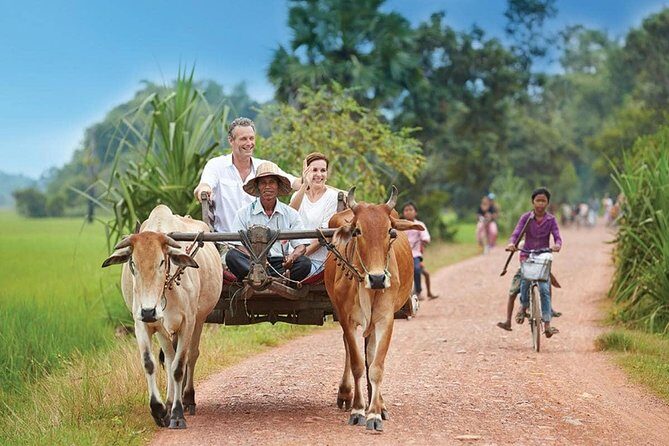
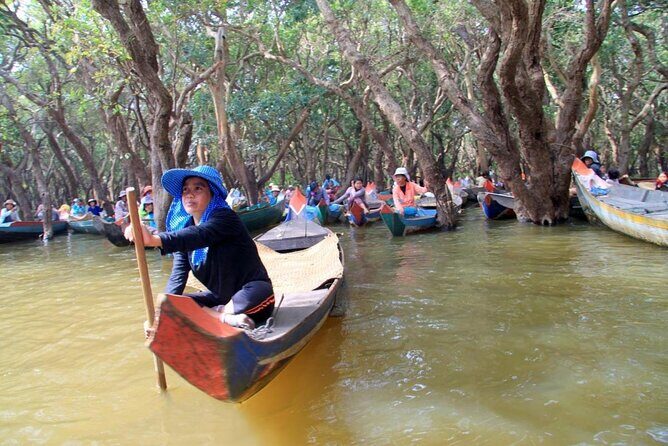
Mangroves are the signature “nature contrast” of this tour. The experience description focuses on paddling through a forest that can be fully or mostly submerged, depending on the season. That’s the kind of detail that turns a lake village trip into something more adventurous.
Here’s the budgeting reality: an extra canoe ride in the mangrove forest may not be included for certain months. During the Aug–Jan window, the canoe portion is listed as not included. A guide-driven option like this is also where you may see additional payments handled directly during the tour. One traveler noted the canoe trip worked out to about $12 for 2 people per canoe, and said it could be paid by credit card, but cash in small USD bills was appreciated.
My advice: if you care about mangroves (and most people do after seeing the village), carry some small bills. You don’t need a wad, but you do want the option to say yes quickly if conditions and timing line up.
Guide style makes or breaks this kind of tour
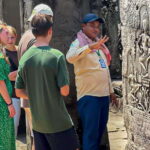
For half-day village experiences, the guide is the difference between “pretty” and meaningful. The private guide setup is a big part of the value because you can ask follow-ups as you go, instead of waiting for a group.
From the names that show up repeatedly, I’d expect guides like Sath, Nak, Sorphea, Sophy, Phi, Roem, and Wat to be strong at storytelling and explaining daily life. You’ll often hear about how families maintain peace and routine while living in close quarters, and how the local environment shapes fishing, school life, and community rhythms.
You can also ask your guide for photo help. Several people praised guides who took lots of photos and videos, and that’s useful because it means you won’t spend the whole day pointing a camera and forgetting to look around.
When you meet your guide, set a simple goal: do you want more nature talk (birds, mangroves, water levels) or more human talk (houses, schools, how life works)? Your day will feel better when it matches your priorities.
Price and what $59 buys you for a private half-day
At $59 per person for about 4 hours, this is priced like a “workable splurge” rather than a bargain group tour. The value comes from three parts that matter in real life:
- Private air-conditioned transport from your hotel and back (about 45 minutes each way)
- A private English-speaking guide, so you get context instead of just motion
- Cold bottled water and a private format that’s easier with kids or sensitive travelers
You’re also paying for access time—time spent actually inside the floating village and on the lake—rather than only seeing things from a distance. The lake boat portion is part of the experience, and admission for the village and lake components is listed as included.
What isn’t included is where you should budget for flexibility: tips/gratuities (recommended), and the optional mangrove canoe ride in certain months. Also, meals aren’t included. One traveler noted lunch wasn’t provided, though their guide helped arrange a stop elsewhere when asked. If you’re hungry, plan to eat before you go or bring a snack you can keep in your day bag.
If you compare this to standard temple-tours-with-an-hour-lunch, $59 can feel fair, especially when the focus is on local life and not only sightseeing.
What to expect at each stage, in plain language
Here’s how the day tends to unfold, and what you should watch for:
Pickup and drive (Siem Reap → Kampong Phluk area)
- About 45 minutes out of town
- Your guide sets context so you don’t miss what makes the village tick
Kampong Phluk village time
- You’ll see a stilt township, including schools and government homes
- You’ll get time to walk and observe how people use shared spaces
- In dry season, access can involve minibuses and the village may look different than full flood-season images
Tonle Sap boat ride
- About 1.5 hours on the water
- Expect nature views: birds, waterline vegetation, and the sense of scale
- This is where photos are good, but slow watching is better
Return to Siem Reap
- You’re back in town after the experience, roughly within the 4-hour total window
- Total return drive is around 50 minutes, then you’re done for the day
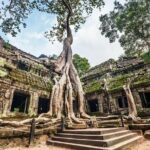
If you’re combining this with temples, treat it as the “human and nature” half-day. It balances temple stone with lake life and everyday architecture.
Who should book this private Kampong Phluk tour
I’d book this if you want a calmer, more grounded day than the temple circuit. It suits you well if you like learning how people live, not just taking pictures of landmarks.
It’s also a good fit if you’re:
- Short on time in Siem Reap but want an experience beyond the main sights
- Traveling as a couple, family, or small group that prefers a private pace
- Interested in water ecology and how seasonal changes shape housing and community life
It may be less ideal if:
- You need fully “floating village” visuals the way you’ve seen online. In dry season, it can look different even though the experience stays valuable.
- You dislike boat travel or being on the water for an extended stretch, even though the ride is only 1.5 hours.
Children are welcome, with the note that kids must be accompanied by an adult.
Should you book it? My quick decision guide
Yes, I think you should book this if your priority is real village life on Tonle Sap and you want a guide to help you understand what you’re seeing. The private setup and strong guide storytelling are the big wins, and the route is well-timed for a half-day.
If you’re chasing specific flood-season visuals, go in the wet season. If you’re visiting during the dry months, don’t worry—this tour still puts you inside the community and out on the lake. Just be ready for a different look, and consider asking your guide how the water levels are affecting access and views.
FAQ
What is the duration of the Tonle Sap and Kampong Phluk private tour?
It’s listed as about 4 hours.
What time is pickup in Siem Reap?
Pickup is at 8:00 am from your hotel.
Is the tour private or shared?
It’s private. Only your group participates.
Does the tour include pickup and drop-off?
Yes. Hotel pickup and drop-off are included.
What’s included in the price?
The tour includes a private air-conditioned vehicle, a private local live English-speaking guide, cold bottled water, and the private tour. Admission for the lake/village components is shown as included where applicable.
Do I need to pay for the mangrove canoe ride?
A canoe ride in the mangrove forest is listed as not included for Aug–Jan. You may need to pay extra depending on timing.
What should I bring for possible extra costs and tips?
Tipping/gratuities are recommended, and it’s a good idea to have cash for small purchases. One traveler also recommended having small USD bills.
Can I cancel and get a full refund?
Yes. Free cancellation is offered up to 24 hours before the experience start time for a full refund.
What happens if the weather is bad?
From July to mid-November, if weather is poor, the tour may reschedule without any prior notice.
Is the tour suitable for kids?
Children must be accompanied by an adult, and it notes that most travelers can participate.