Temples, myths, and real life in three days. This private 3-day tour in Siem Reap strings together major Angkor Archaeological Park highlights (Banteay Srei, Bayon, Ta Prohm, Angkor Wat) and finishes with Tonle Sap life. I love how the route mixes big-name temples with lesser-seen stops, so you don’t just speed-run the most famous stones. I also like having a private English-speaking guide to explain what you’re seeing instead of guessing. One thing to plan for: you’ll pay extra on top of the $110 price for temple tickets and the boat fee.
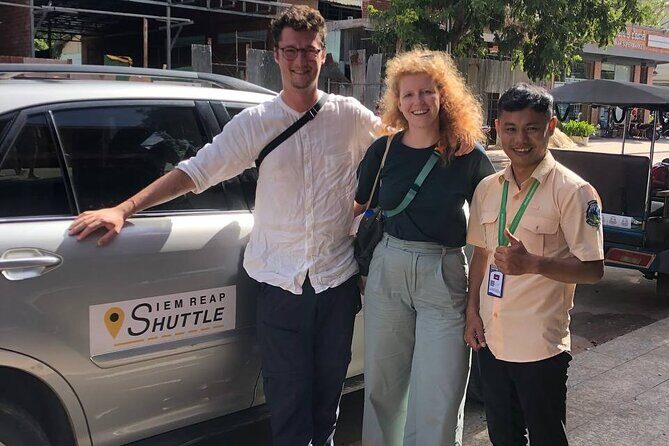
A standout detail is the kind of guide you can get—one praised guide name is Mr. Buth Chansip, noted for turning multiple temples into clear stories across the full three days. Add hotel pickup/drop-off, private A/C transport, and bottled water, and it’s set up for comfort when the Cambodian heat and walking add up.
In This Review
- Key moments that make this tour feel worth it
- How this private 3-day Angkor route helps you actually understand the place
- Day 1: Banteay Srei, Ta Som, Neak Pean, and Preah Khan
- Banteay Srei: pink sandstone and fine carving focus
- Ta Som: Bayon-style Buddhist design by Jayavarman VII
- Neak Pean: the island temple in the middle of a baray
- Preah Khan: a huge monastic complex you can explore
- Day 2: Angkor Thom’s South Gate drama, Bayon faces, Ta Prohm, then Angkor Wat
- Angkor Thom South Gate: 54 devas and 54 asuras pulling the Shesha snake
- Bayon: over 2,000 faces and bas-reliefs from everyday life
- Baphuon and Phimeanakas: Hindu temple focus before the later shifts
- Ta Prohm: the jungle temple and giant roots
- Angkor Wat: Hindu beginnings, later Buddhist use, and the world-scale
- Day 3: Chong Kneas floating village on Tonle Sap plus Artisans Angkor
- Chong Kneas floating village: boat time and daily living
- Artisans Angkor (Les Artisan D’Angkor): connect temple art to modern craft
- Price and value: what $110 covers, and what to budget for on top
- What you should expect from the guide (and how to use them)
- Should you book this private Angkor temples tour?
- FAQ
- Is hotel pickup and drop-off included?
- How long is the tour?
- What’s included in the price?
- What costs extra?
- Is this a private tour?
- Can I cancel for a full refund?
Key moments that make this tour feel worth it
- Private A/C transport that keeps your day moving between widely spaced sites
- English-speaking guide storytelling, especially for face towers, bas-reliefs, and icon details
- A classic Angkor route across both Angkor Thom and the Angkor Wat complex
- Ta Prohm with giant roots—the jungle temple effect is the whole point
- Tonle Sap boat ride to Chong Kneas, showing daily life across multiple communities
- Artisans Angkor (Les Artisan D’Angkor), where you can connect temple art to modern craft
How this private 3-day Angkor route helps you actually understand the place
Angkor isn’t one temple. It’s a whole system—capitals, water management, religious shifts, and rulers who left behind buildings that still look like they’re holding their breath. This tour works because it doesn’t treat Angkor like a single checklist.
Day 1 leans into classical Khmer artistry and Jayavarman VII’s late 12th-century footprint, then Day 2 pushes deeper into the most recognizable face-filled and jungle-wrapped highlights. Day 3 gives you a palate cleanser: real life around Tonle Sap, plus a craft-focused stop at Les Artisan D’Angkor. That balance matters. You’ll come away with more than photos—you’ll have a sense of how these sites connect to Cambodian identity today.
The private setup is also practical. Instead of crowd choreography, you get a guide who can pace your time across the temples and explain what to look for. When you’re paying attention, the carvings and architecture stop being random decoration and start reading like a language.
You can also read our reviews of more private tours in Siem Reap
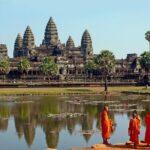
Day 1: Banteay Srei, Ta Som, Neak Pean, and Preah Khan
Day 1 is built for detail. If you like ornate stonework and smaller temple shapes (instead of only massive central complexes), this is your day.
Banteay Srei: pink sandstone and fine carving focus
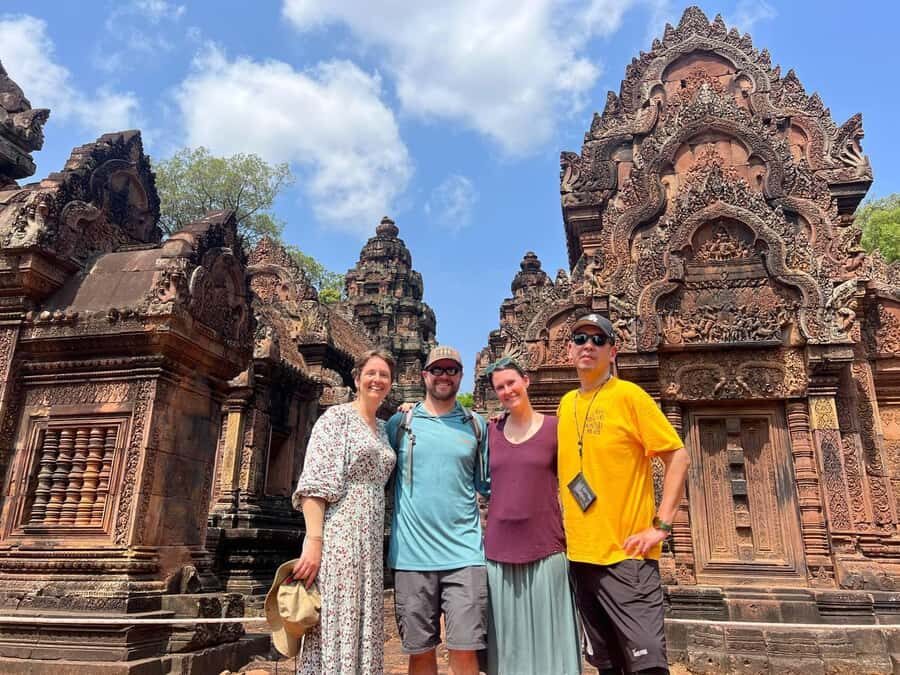
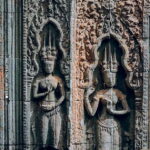
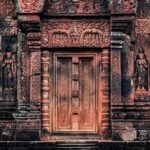
You start with Banteay Srei, a 10th-century temple often described as a jewel of classical Khmer art. The big hook here is the material and the finish: it’s known for its intricate decoration carved in pinkish sandstone. Even if you don’t know Khmer design terms, you’ll feel the difference. This is the kind of place where the carvings reward slow looking.
In practice, you’ll want to take a few moments to step back and then step in. Close-up details can look messy at first. Zoom out, and the pattern makes sense—like the temple was designed to be read in layers.
Admission ticket isn’t included, so factor that into your budget.
Ta Som: Bayon-style Buddhist design by Jayavarman VII
Next is Ta Som (Prasat Tasom), built in the late 12th century in a classic Bayon style by Jayavarman VII. The listing frames it as Buddhist, which matters because Angkor architecture often reflects shifting religious use over time.
Ta Som is a good contrast to Banteay Srei. Instead of focusing on delicate carving as the main attraction, this stop helps you see how Jayavarman VII’s era expressed itself through building style and Buddhist symbolism.
Neak Pean: the island temple in the middle of a baray
Then you go to Neak Pean, a small island temple in the middle of the last baray constructed in the Angkor area. If the term baray is new to you, here’s the value: Angkor wasn’t only about temples. It was also about water engineering and sacred landscapes.
Even with a shorter stop (listed at about 30 minutes), Neak Pean is a reminder that temple location and water function were both part of the spiritual plan. Expect it to feel more intimate than the biggest complexes.
A few more Siem Reap tours and experiences worth a look
Preah Khan: a huge monastic complex you can explore
After lunch, you finish Day 1 at Preah Khan. This is a huge monastic complex built by Jayavarman VII in the late 12th century. The main idea is scale and exploration—this isn’t just a single-photo temple.
If you enjoy roaming a site at your own pace (with your guide pointing out what to focus on), Preah Khan fits. It’s also a helpful bridge into Day 2, because it shows the breadth of Jayavarman VII’s influence across the broader Angkor world.
At the end, you return to your hotel. After a full day of sites, that drop-off is not a small detail.
Day 2: Angkor Thom’s South Gate drama, Bayon faces, Ta Prohm, then Angkor Wat
Day 2 is where many people first feel like Angkor is too big to process. The trick is having a guide and staying grounded in what each place is supposed to communicate.
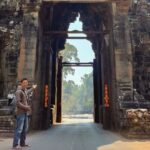
Angkor Thom South Gate: 54 devas and 54 asuras pulling the Shesha snake
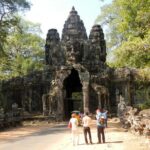
You begin at the South Gate of Angkor Thom. This gate is famous for its mythic imagery: 54 devas pulling the head of the snake Shesha on one side, and 54 asuras pulling the tail on the other.
What’s useful here is not just the count—it’s the idea that you’re looking at Khmer storytelling carved into stone. Once you understand that these gates weren’t meant to be mere entrances, they start feeling like stage sets.
Bayon: over 2,000 faces and bas-reliefs from everyday life
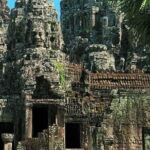
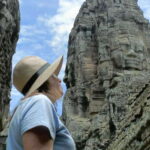
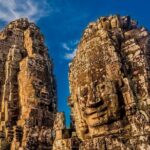
Next comes Bayon, with over 2,000 large faces carved on 54 towers. It’s hard to forget once you see it. The faces turn the temple into a kind of visual gravity—your eyes keep returning to them.
Then there are the bas-reliefs showing genre scenes from everyday life: markets, fishing, festivals with cockfights, and jugglers. This is where your guide earns their pay. Without explanation, you might only notice the big faces. With explanation, you start connecting the architecture to the people who lived in the Khmer world.
This is also one reason the route feels strong: Bayon gives you both symbolic and human detail in the same stop.
Baphuon and Phimeanakas: Hindu temple focus before the later shifts
After Bayon, you visit Baphuon, built in the middle of the 11th century (1060) by Udayadityavarman II and dedicated to Siva (Hindu). Then you move to Phimeanakas, built in the late 10th century to beginning of the 11th century by Jayavarman V and Udayadityavarman I, also dedicated to Hindu.
Why these two stops matter: they ground you in the Hindu roots of Angkor temple design before the Buddhist-heavy fame of later sites like Bayon’s connections and Ta Prohm’s atmosphere.
Even if you spend less time here than at the biggest names, the payoff is mental. You’ll notice how the religious context changes the feel of what you’re looking at.
Ta Prohm: the jungle temple and giant roots
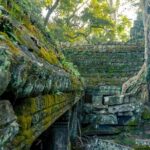
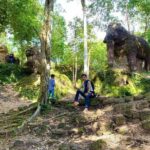
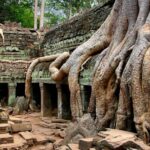
Then you go to Ta Prohm, often called the Jungle Temple. It’s described as ethereal, with fig, banyan, and kapok trees spreading gigantic roots over the stones. This is the stop most people remember as soon as they hear the name.
In practical terms, Ta Prohm is visually complex. Tree roots, stonework, angles—your brain wants to take it all at once. A good guide helps you pick out the key structures and understand what you’re seeing rather than just staring in awe (which is totally allowed, by the way).
If you’re worried about time or energy, don’t. The stop is listed at about 1 hour, which is enough to enjoy it without feeling rushed.
Angkor Wat: Hindu beginnings, later Buddhist use, and the world-scale
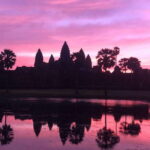
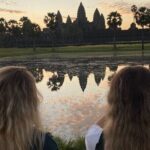
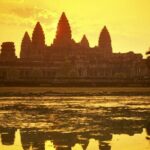
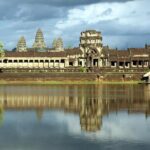
You end the day at Angkor Wat. The tour frames it as first a Hindu, then subsequently a Buddhist temple complex, and calls it the largest religious monument in the world. It was built by Khmer King Suryavarman II in the early 12th century.
This is your big finale. Angkor Wat has a different rhythm from the other temples. It’s not just faces and roots—it’s geometry, symmetry, and monumentality. With a private guide, you can focus on how the site’s layout and function support worship across time.
The listed time here is about 3 hours, which is a lot, but it also feels right for a place like this. You’ll have time to step back, take in the mass, and still notice the carvings.
Day 3: Chong Kneas floating village on Tonle Sap plus Artisans Angkor
Day 3 is the part that makes the tour feel more complete. It’s not only about ancient stone. It’s about how the region’s life continues today.
Chong Kneas floating village: boat time and daily living
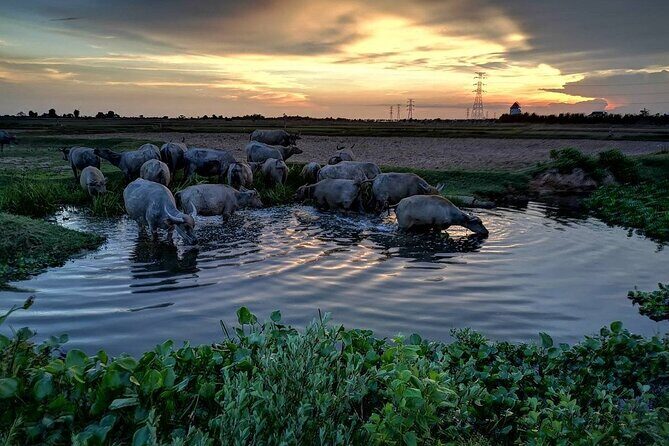
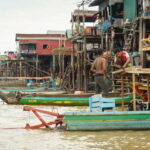
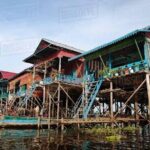
You head to Tonle Sap lake and visit Chong Kneas, a floating village. You take a boat to see the real lifestyle of communities including Cambodian, Cham, and Vietnamese groups.
The listed stop time is about 2 hours. That’s long enough to get beyond the initial wow factor and understand what life looks like on the water. Also, the boat fee to Tonle Sap is not included, listed at $15 per person, so budget for that.
One small practical note: because this is on water, you’ll probably feel a mix of sun, wind, and splash risk. If you’re the type who hates getting chilled or wet, plan accordingly.
Artisans Angkor (Les Artisan D’Angkor): connect temple art to modern craft
Then you visit Les Artisan D’Angkor, a fine art school and workshop center. It’s described as a place for wood and stone carving, lacquering, silver plated craftwork, and silk painting. This stop is included (listed at about 1 hour).
This part is smarter than it looks on paper. Angkor’s temples are art. The carvings you saw over the last two days didn’t come from nowhere. Seeing how carving, lacquer, and painting traditions are taught and practiced today helps you appreciate what you saw earlier—without requiring you to be an art historian.
After that, you return to your hotel and you’re dropped off.
Price and value: what $110 covers, and what to budget for on top
Let’s talk money plainly.
The tour price is $110 for approximately 3 days, and it includes:
- private transportation with A/C
- a private English-speaking tour guide
- drinking water
- hotel pickup & drop-off
- travel insurance
Not included:
- temple tickets at $62 per person
- boat fee to Tonle Sap at $15 per person
- meals & beverages
So your basic add-on math looks like this: $110 + $62 + $15 = about $187 per person, before meals. For a private guide plus A/C transport across multiple major Angkor sites and a lake boat segment, that can feel like decent value—especially if you’re traveling in a small group and want your own pace.
Where the cost can catch you is meals and the fact that temple tickets are a separate line item. Plan for lunch and snacks each day. If you’re trying to keep the trip lean, you might want to decide in advance what you’ll pay for food so the day doesn’t turn into decision fatigue.
What you should expect from the guide (and how to use them)
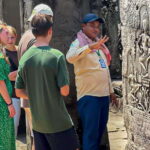
The tour is built around a private English-speaking guide, which changes your experience more than most people expect. When you have a person explaining what you’re looking at—like why Bayon has those towers of faces, or how the South Gate myth of Shesha fits into the overall Angkor story—you stop treating the day like a photo sprint.
Also, bottled water is included, and that’s genuinely useful over two temple-heavy days plus a lake stop. You’re not juggling logistics while you’re sweating.
My practical suggestion: ask your guide for one thing per stop—one question that forces you to focus. For example:
- What am I supposed to notice first at this temple?
- How does this stop connect to the last one?
- What detail here shows the ruler or religion behind the building?
That’s how you get more out of fewer hours.
Should you book this private Angkor temples tour?
Book it if you want a private, guide-led Angkor experience that covers the major hits plus thoughtful additions—Banteay Srei, Bayon’s everyday bas-reliefs, Ta Prohm’s jungle atmosphere, and Angkor Wat. The Tonle Sap floating village and Artisans Angkor craft stop are also strong reasons to choose this over a pure temple-only plan.
Skip or rethink it if you’re trying to keep costs extremely low, because temple tickets ($62) and the boat fee ($15) sit on top of the base price, and meals are not included. Also, if you hate long, scheduled days across several big sites, you might find the pacing intense.
If you’re flexible, this is one of those tours that can turn “I saw Angkor” into “I understand what I saw.”
FAQ
Is hotel pickup and drop-off included?
Yes. The tour includes hotel pick up and drop off in Siem Reap.
How long is the tour?
It’s listed as approximately 3 days.
What’s included in the price?
Included are private transportation with A/C, a private English-speaking tour guide, drinking water, hotel pickup and drop-off, and travel insurance. A mobile ticket is also mentioned.
What costs extra?
Temple tickets are listed as $62 per person, and there is also a boat fee to Tonle Sap of $15 per person. Meals and beverages are not included.
Is this a private tour?
Yes. It’s private, meaning only your group participates.
Can I cancel for a full refund?
Yes, free cancellation is offered. You can cancel up to 24 hours in advance for a full refund, based on local time.