REVIEW · SIEM REAP
Private Angkor Wat Exploring Tour (Sunset or Sunrise)
Book on Viator →Operated by Angkor Guide Sarak · Bookable on Viator
Angkor hits hardest when you see it early, not later. This private tour mixes Angkor Wat at first light with the big hits at Ta Prohm and Angkor Thom, while you have an English-speaking licensed guide to translate what you’re looking at as you walk. The one thing to plan for: your Angkor ticket is not included, so you’ll need to budget for that pass (and you’ll do a fair amount of walking).
This is built for timing. Starting around sunrise or finishing at sunset helps you dodge some of the worst heat and crowds, and it also makes the stone look dramatic instead of flat.
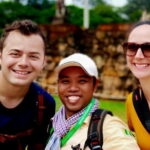
I also like how personal it feels. The guide is often listed as Sarak (with a colleague sometimes helping with pickup), and the reviews credit him for clear English, smart photo tips, and even photo skills beyond the basics.
In This Review
- Key highlights at a glance
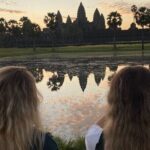
- Early Light at Angkor Wat: Why sunrise or sunset changes everything
- What Sarak (and his team) adds beyond the temple ticket
- Walking Angkor Wat’s long galleries and climbing to the central towers
- Ta Prohm: shaded courtyards, tight passages, and the root effect
- Angkor Thom South Gate, Bayon faces, and the Elephant Terrace
- Price and tickets: what you’re paying for (and what you still need)
- Getting picked up in Siem Reap and staying comfortable all day
- How long is the day, and where you might feel the effort
- Who this private Angkor Wat tour fits best
- Should you book this private sunrise or sunset Angkor tour?
- FAQ
- Is the Angkor ticket included in the price?
- What’s included in the $49 per person tour price?
- How long is the private tour?
- Where do we meet in Siem Reap?
- Is pickup offered and is the vehicle air-conditioned?
- How private is this tour?
- Is this experience physically demanding?
Key highlights at a glance
- Sunrise or sunset timing to make the temples look their best
- Licensed English-speaking guide who explains what you’re seeing
- Angkor Wat first, so you get the calmer galleries before the day heats up
- Ta Prohm’s giant tree roots, with shaded courtyards for easier pacing
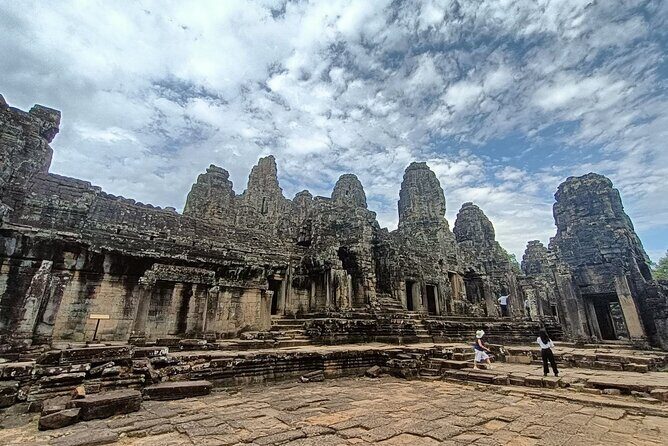
- Angkor Thom via the South Gate, then Bayon and the Elephant Terrace
- Air-conditioned vehicle + drinking water to keep you going between stops
Early Light at Angkor Wat: Why sunrise or sunset changes everything
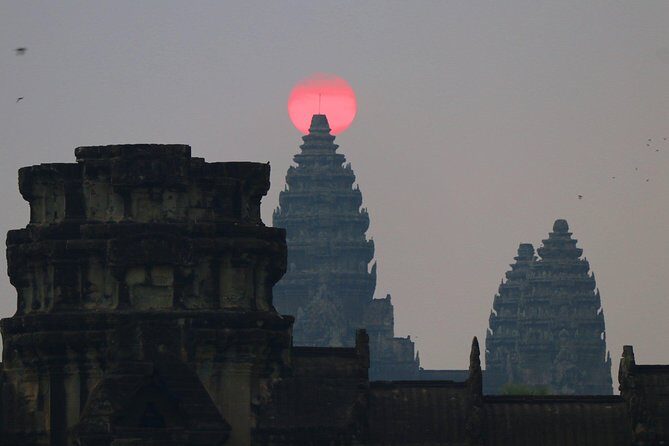
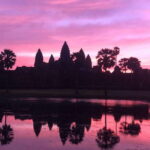
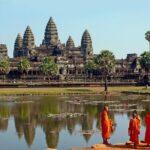
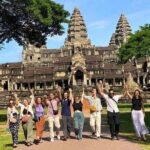
Angkor Wat is the kind of place where the light really matters. In the early hours, the stone picks up shape and texture, and you’re less likely to feel like you’re walking through a moving crowd. In late light, the shadows stretch and the towers start to look even more sculpted.
This tour is designed around that idea. You’re going to start with Angkor Wat and then work your way through the other major sites, which is smart because the first stop usually sets the tone for the day.
Keep expectations practical: you’ll be outside, walking between temples, and you’ll likely want to hold your phone/camera steady for a few stretches. Still, the payoff is that you see the temples before the day steamrolls your energy.
You can also read our reviews of more private tours in Siem Reap
What Sarak (and his team) adds beyond the temple ticket
A good temple day isn’t just moving from point A to point B. It’s understanding the layout, noticing what matters on the carvings, and knowing where to stand for the best views without wasting time.
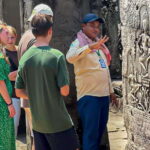
That’s where Sarak’s reputation comes in. Multiple write-ups highlight his clear English, a friendly tone, and strong guidance on both temple details and photo spots. One of the most useful mentions is that he doesn’t just point and talk—he actively helps with pictures, including references to his advanced photo/AI-style skills, which can be handy when you’re trying to get sharper shots in tricky lighting.
And because this is private, your pace and interests can shape the day. If you want more time studying carvings or less time rushing to the next platform, you’re not stuck in a fixed group rhythm.
Walking Angkor Wat’s long galleries and climbing to the central towers
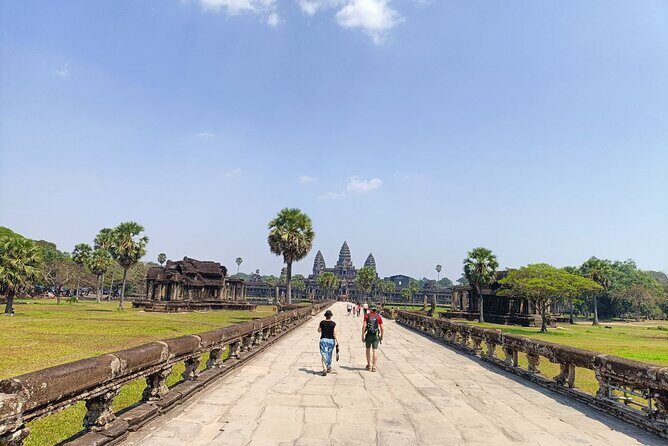
Angkor Wat is huge, and the best way to enjoy it is to slow down in the places that most people sprint through. This start is timed so you can enjoy the long galleries and carvings with fewer distractions before heat and crowds pile on.
What you’ll do here:
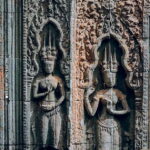
- Walk through the grand galleries and take in the carvings in better light
- Climb up to see the central towers from higher ground
The climb is part of the experience, and it’s worth taking it seriously. Even if you’re not an athlete, you’ll feel it in your legs and knees once you stack the stairs on top of a long day of temple walking. If you have moderate mobility limits, plan on going at an easy pace and using the moments where you can step aside to catch your breath.
Also, remember: Angkor Wat is not just one photo spot. The “wow” comes from noticing the details across multiple angles—the walls, the edges of doorways, and the way perspective changes as you move.
Ta Prohm: shaded courtyards, tight passages, and the root effect
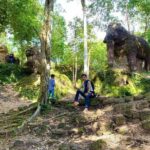
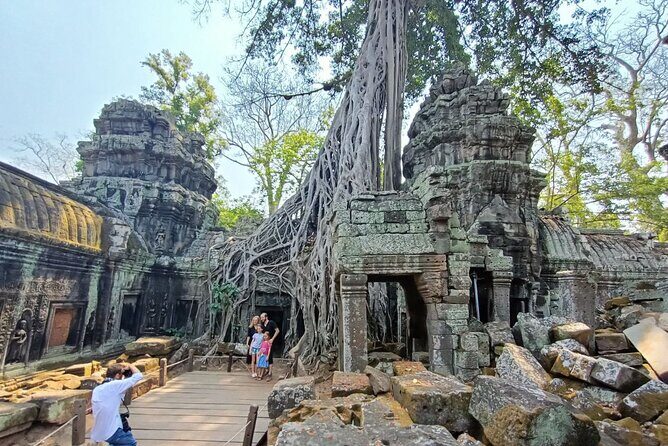
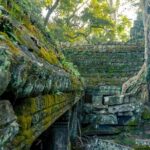
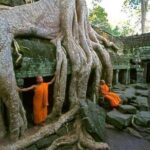
Ta Prohm is famous for a reason. The giant tree roots don’t just sit around the ruins—they seem to grab the stone, pulling it into the forest. It’s atmospheric in a way that photos don’t always fully capture.
This stop works well for a practical reason too. You’ll spend time moving through shaded courtyards and narrow passages, which can feel cooler and more comfortable than long open stretches.
Here’s how to make the most of Ta Prohm:
- Give yourself a little time to look down at the roots and up at how they interact with carvings and edges
- Use the shaded areas to reset during the day
The main “drawback” is that narrow passages can feel tight if you’re claustrophobic or if you’re traveling with bulky daypacks. If that’s you, keep your load light and be ready for some close-quarter walking.
Then you’ll move on to Angkor Thom, which is a good flow: Ta Prohm gives you the haunting, tangled feeling; Angkor Thom brings you back into the grand civic layout.
Angkor Thom South Gate, Bayon faces, and the Elephant Terrace
Angkor Thom is where you start seeing Angkor’s power and planning in a bigger, more ceremonial way. You’ll enter through the South Gate, which is known for impressive stone figures that frame your arrival.
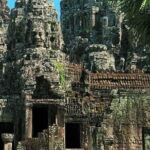
Then comes Bayon Temple, famous for its many smiling stone faces. This is one of those sites where the number of viewpoints matters. As you move along the corridors and around the main areas, those faces change expression because your angle changes—so wandering a bit (without rushing) is part of the fun.
You’ll also walk along the Elephant Terrace. This area was used for royal ceremonies, and it adds context to the site. It’s not only “pretty ruins”; it’s connected to how power was staged and performed.
Practical tip: Bayon is visually intense. If you’re trying to see everything, you’ll end up seeing nothing clearly. Instead, pick a few moments to stop: a face you like, a corner viewpoint, and one stretch where you can take in the scale without rushing.
You can also read our reviews of more evening experiences in Siem Reap

Price and tickets: what you’re paying for (and what you still need)
The price is $49 per person for the private exploring tour, lasting about 8 to 9 hours. That rate mainly covers the human and logistics side: a licensed English-speaking guide, air-conditioned vehicle, and drinking water.
The big extra cost is the Angkor ticket. You’ll pay $37 per person for a 1-day Angkor pass, and it’s not included in the tour price. So your real day budget is closer to $86 per person before tipping.
Is it good value? For a private day, it often is, mainly because:
- You’re not stuck waiting on other people’s pace
- You’re less likely to waste time at the wrong photo angle or the wrong entrance
- You have guidance that turns ruins into a readable story
If you’re traveling with family or friends and can split costs, you may also benefit from group discounts (the offer notes group discounts, though the exact savings depend on your setup). Either way, you’re buying time and understanding, not just transport.
One more practical note: you’ll receive a mobile ticket for the activity. That’s for the tour booking itself—make sure you still plan for the Angkor admission pass you must purchase separately.
Getting picked up in Siem Reap and staying comfortable all day
Meeting point is simple: 7-Eleven at 212 Sivutha Blvd in Siem Reap. The tour starts there and ends back at the same spot, which means you’re not left scrambling for transport at the end of a long temple day.
Pickup is offered, and the vehicle is air-conditioned. Between stops, that matters. Angkor can wear you down even if you’re excited, and an A/C break helps you stay functional for the next climb or walk.
What’s provided:
- Licensed English-speaking guide
- Air-conditioned vehicle
- Drinking water
What you should plan yourself for:
- Your Angkor admission ticket ($37 for the 1-day pass)
- Tipping for the guide and driver (it’s noted as expected)
- A moderate fitness level is recommended
For clothing, think temple-ready and weather-aware. Lightweight breathable clothing helps, and you’ll likely want something comfortable for uneven stone and stairs. Bring a hat and sunscreen if you’re doing sunrise (morning can still burn) and something for rain just in case, since weather can flip plans in Cambodia.
How long is the day, and where you might feel the effort
This is an all-day temple run, approximately 8 to 9 hours. That’s not “one stop and a snack.” You’ll visit multiple major sites, with walking that adds up across galleries, terraces, and stair climbs.
The tour notes a moderate physical fitness level, which is a good reality check. If you’re generally okay with walking for extended periods and climbing stairs at a relaxed pace, you should be fine. If stairs are your problem, be up front early, so the guide can pace you smartly.
A small strategy that helps: build in your own micro-pauses. Stop for water, take a few minutes to look away from crowds, and let your brain “reset” before the next big face or root-covered walkway.
Who this private Angkor Wat tour fits best
This is ideal if you want:
- A private day instead of a group shuffle
- Clear English explanations, not just silent sightseeing
- Sunrise or sunset timing for better atmosphere and photos
- A guide who can adapt to your interests
It’s also a good choice for travelers who care about photography. The guide is repeatedly noted for finding the right photo locations and helping with photo results, including advanced photo capabilities.
If you’re the type who loves ruins but hates being hurried, private is the way to go. If you’re traveling with mobility limits, you’ll need to judge your comfort with stairs and uneven surfaces—but the “moderate fitness” note suggests it’s not designed for extreme hiking.
Should you book this private sunrise or sunset Angkor tour?
If you’re choosing between a cheap bus tour and a private guide, this private option is usually the better use of your limited time in Siem Reap. $49 sounds simple, but the real value is in having Sarak’s guidance, clear English, and help with the practical stuff like photo spots and pacing.
I’d book it if:
- You want sunrise or sunset and you care about how the temples look
- You’re happy to pay for the Angkor pass separately ($37 for a 1-day ticket)
- You want a guide who can explain what you’re seeing as you walk
I might skip it if:
- You’re on a tight budget and need the lowest possible upfront cost
- You don’t like full-day walking and stair climbs
- You prefer doing Angkor completely on your own without a guide’s direction
FAQ
Is the Angkor ticket included in the price?
No. The Angkor ticket (1-day) is listed as $37.00 per person and it is not included in the tour price.
What’s included in the $49 per person tour price?
The tour includes a licensed English-speaking guide, an air-conditioned vehicle, and drinking water.
How long is the private tour?
It runs about 8 to 9 hours.
Where do we meet in Siem Reap?
The meeting point is 7-Eleven, 212 Sivutha Blvd, Krong Siem Reap, Cambodia.
Is pickup offered and is the vehicle air-conditioned?
Pickup is offered, and the tour uses an air-conditioned vehicle.
How private is this tour?
It’s a private tour, so only your group participates.
Is this experience physically demanding?
It’s recommended for travelers with moderate physical fitness, since you’ll be walking through multiple temple areas and climbing at least some stairs.