REVIEW · SIEM REAP
Two Days Angkor Historical and Kulen Mountain Waterfall
Book on Viator →Operated by Toptrip Inspire Cambodia · Bookable on Viator
Temple time starts early in Siem Reap. This two-day tour strings together the big hitters and the little stops in between: Angkor Thom highlights like Bayon faces and Elephant Terrace, plus Phnom Kulen hikes with waterfall views and river-carved spirits. I especially like the way the day is organized so you hit the most famous temple zones without feeling lost, and I like the practical pacing that saves a sunset moment at Bakheng mountain or Pre Rup. The main catch is budget creep: temple entry tickets and the Kulen ticket aren’t included, and meals are not included either.
A big plus is that this feels like a handled plan, not a scramble. You get an air-conditioned vehicle, a parking-covered route, and an English-speaking guide, and pickup is offered. Just note that you’ll be on the move for two full days, so this is best when you pack water, sunscreen, and comfy shoes.
In This Review
- Key things to know before you go
- How this 2-day plan saves you time in Siem Reap
- Day 1 at Angkor: South Gate to Bayon, Elephant Terrace, and then Ta Prohm
- Elephant Terrace and the terraces around it
- Bayon Temple: the faces, up close
- Ta Prohm: the jungle temple moment
- Quick reset at Srah Srang
- Angkor Wat and dusk: Bakheng mountain or Pre Rup sanctuary
- Evening plan: Kulen II buffet and customary shows
- Day 2: Banteay Srei’s carved details (and a 45-minute ride)
- Phnom Kulen: reclining Buddha, the River of a Thousand Ling, and waterfall views
- What to expect on the ground
- Price and value: what $150 covers (and what costs extra)
- The service feel: pickup, responsive admin, and driver Thet
- Who this tour suits best (and who might want a different pace)
- Should you book Two Days Angkor Historical and Kulen Mountain Waterfall?
- FAQ
- How much does the tour cost?
- Is pickup from my inn included?
- What’s included in the price?
- Are temple tickets included?
- Is the Kulen ticket included?
- Are meals included?
- How long is the tour?
- Is this a private tour?
- Can I cancel for free?
Key things to know before you go
- A tight Angkor circuit on Day 1 covering major Angkor Thom areas and then Angkor Wat at a calmer pace
- Two sunset options so you can get dusk views at either Bakheng mountain or Pre Rup sanctuary
- A temple-arts focus on Day 2 with Banteay Srei’s carved details
- Phnom Kulen includes a hike-and-waterfall moment with reclining Buddha stops and the River of a Thousand Ling
- You’re not adding extra hassles: pickup offered, English guide, and parking fees covered
- Tickets and meals are on you: temple tickets and the Kulen ticket aren’t included
How this 2-day plan saves you time in Siem Reap
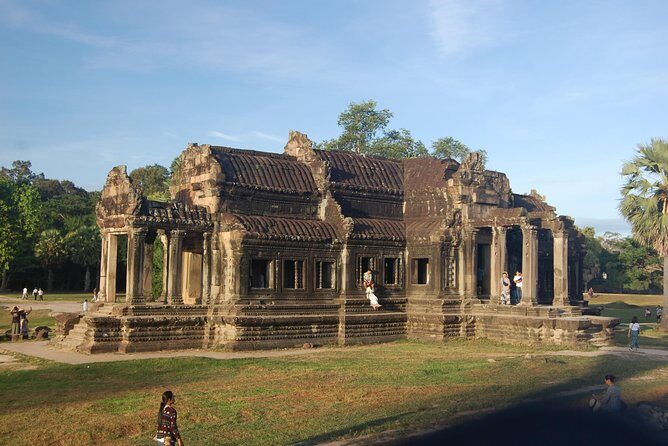
Angkor can chew up your whole day fast. It’s spread out, tickets can be confusing, and the sun has its own agenda. This tour helps you avoid that chaos by grouping sites into a logical route over two days, with a dedicated English-speaking guide and an air-conditioned vehicle doing the heavy lifting.
The other thing I like is that it’s not just a checklist of temples. The plan also includes a short water stop at Srah Srang and builds in a dusk option, so you’re not racing temple-to-temple with zero breathing room. You’ll spend most of your time where it matters: the stonework, the viewpoints, and the specific sites that people come for.
You can also read our reviews of more historical tours in Siem Reap
Day 1 at Angkor: South Gate to Bayon, Elephant Terrace, and then Ta Prohm
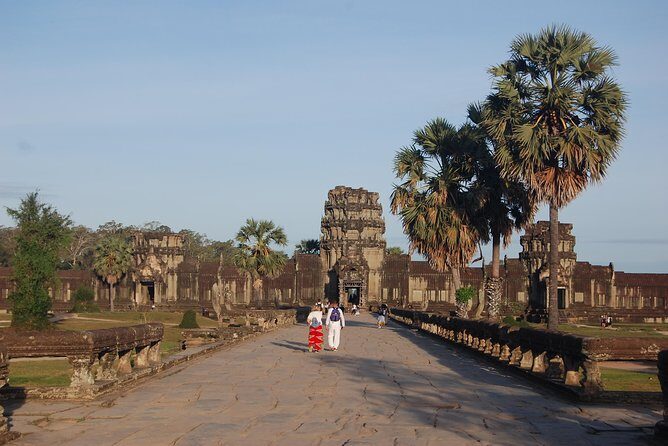
You start at 8:00 am and go straight into the Angkor Thom zone. The route begins at the South Gate of Angkor Thom, which is a good anchor point for orientation. From there, the tour moves through key Angkor Thom structures like Bayon and Baphoun, then on to classic “you’ve seen this in photos” stops such as the Elephant Terrace and the King Palace zone.
Here’s why I like this sequence: it gives you context. The face towers of Bayon make more sense after you’ve walked through the surrounding ceremonial spaces and terraces. You’re not just snapping pictures. You’re watching how the complex is laid out—courtyards, raised platforms, and the way visitors would have moved through the royal and ceremonial areas.
Elephant Terrace and the terraces around it
The Elephant Terrace isn’t just a decorative feature. It’s part of the stagecraft of Angkor—space designed for display and movement. Nearby, the tour includes stops such as Phimean Akas and the Terrace of outcast lord. Even if you don’t know every label, these are the spots where the carvings and elevation changes help you understand the scale.
Bayon Temple: the faces, up close
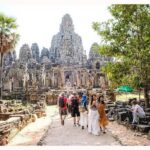
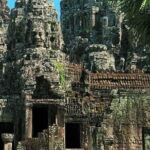
Bayon Temple is the next big focus, with about 1 hour 30 minutes allocated. This is where the famous faces really hit. Up close, the expression details and the repetition of faces across towers make the temple feel less like a single monument and more like a living presence across the complex.
If you’re sensitive to heat, plan to slow down here. Bayon areas can feel exposed, and this tour keeps you moving, so your best strategy is short stops, then a slower walk when you’re surrounded by shade.
Ta Prohm: the jungle temple moment
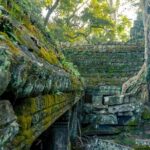
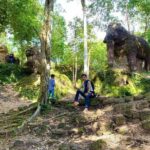
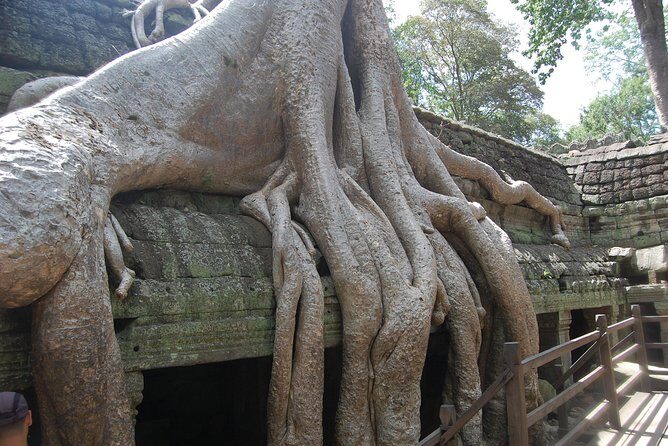
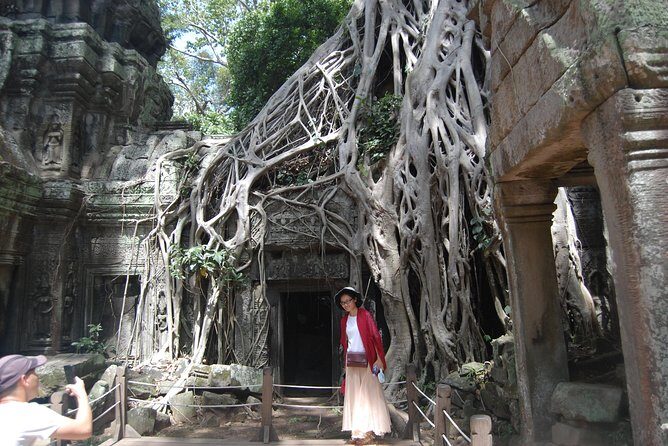
Then you head to Ta Prohm for about 1 hour 30 minutes. This is the temple where roots and stone share the spotlight. It’s a special stop because Ta Prohm doesn’t look like it was “built and finished.” It looks like nature moved back in and never left.
Practical note: Ta Prohm is visually dramatic, but it’s also a bit of a crowd magnet. Go at a pace that lets you notice small details—stone edges, root angles, and how the carvings are worn over time—rather than rushing only for the iconic photo frames.
A few more Siem Reap tours and experiences worth a look

Quick reset at Srah Srang
You also pass Srah Srang (the royal bathing area) for about 20 minutes, walking through the water-adjacent space near Banteay Kdei. This is a good change of rhythm after temples. It’s also a helpful reminder that Angkor wasn’t only about religious structures; water management and ceremonial bathing were part of daily and ritual life in this landscape.
Angkor Wat and dusk: Bakheng mountain or Pre Rup sanctuary
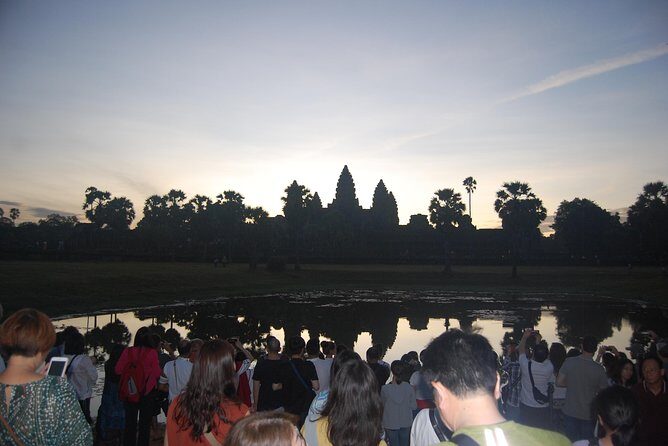
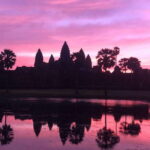
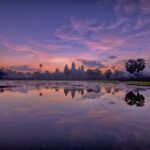
After lunch in the Angkor Park area, the plan shifts to Angkor Wat, then ends Day 1 with dusk at Bakheng mountain or Pre Rup sanctuary. This timing matters. Dusk light softens the harsh edges of the stone and makes the viewpoints feel less “tour bus fast” and more like a moment.
Why this sunset choice is useful: you’re not locked into a single exact spot. Depending on the day’s conditions and flow of crowds, one viewpoint might feel easier to settle into than the other. Either way, you’re finishing Day 1 with a view angle that’s different from the temple courtyards.
Evening plan: Kulen II buffet and customary shows
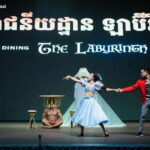
On the evening side, the tour strongly suggests a buffet supper with customary shows at the Kulen II restaurant, and they can help you book front seats if you want. Meals aren’t included in the tour price, so this is one of those “if you don’t want to think hard at night, take the handled option” moments.
Even if you skip the show, a buffet can be a time saver. You’ll already be tired, and you’ll want food without a long search.
Day 2: Banteay Srei’s carved details (and a 45-minute ride)
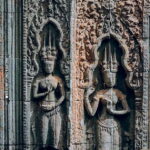
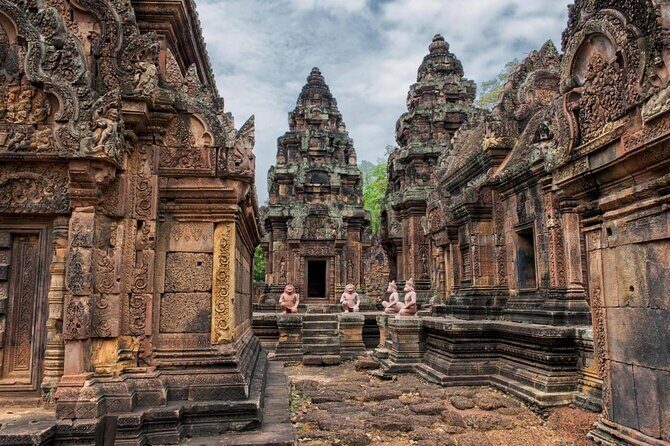
Day 2 starts with Banteay Srei, reached by driving about 45 minutes. This temple is often remembered for fine carving work. The plan gives you about 2 hours here, which is enough time to appreciate details without feeling trapped.
I like Banteay Srei as a counterbalance to the bigger, louder Angkor Thom and Ta Prohm stops. It’s more “slow looking” than “big landmark photo.” If you enjoy close-up stonework, you’ll have fun tracking the patterns—devotional scenes, decorative borders, and how the craftsmanship shows up across surfaces.
One consideration: because you’re going for carvings, you’ll want decent light and some time to hover. If you’re the type who hates lingering in heat, this might feel slower than you expected. Still, the effort tends to pay off when you step back and realize how much is actually carved into the stone.
Phnom Kulen: reclining Buddha, the River of a Thousand Ling, and waterfall views
Next comes the Kulen National park portion—about 3 hours—built around a mountain-day feel. The tour includes a visit to a Reclining Buddha standing on top of the mountain, plus the River of a Thousand Ling, where carvings appear along the riverbanks.
This is also where the tour’s promise about waterfalls shows up. Kulen is known for that hike-and-view rhythm. Even when the waterfall isn’t the only focus, the walk gets you out of temple mode and into something more rural: trails, riverside air, and the sense that you’re stepping outside the Angkor bubble.
What to expect on the ground
You should expect uneven footing at least some of the time, and you’ll probably want a layer you can handle if you get misty around water. The tour doesn’t list gear, so bring your own common-sense basics: water, sun protection, and shoes with traction.
One detail worth checking: the tour data says Phnom Kulen admission ticket Free, but it also says Kulen Ticket is not included. That usually means the situation can be changed by local rules or the way entry is packaged. Before you go, confirm what you’ll actually need to pay on the day so you’re not surprised.
Price and value: what $150 covers (and what costs extra)
At $150 per person for a two-day plan, the value mostly comes from what’s included: air-conditioned vehicle, private transportation, parking fees, and an English-speaking tour guide. In other words, you’re paying for the time-saving machine and the guiding voice that keeps you oriented.
What’s not included matters for your budget:
- Temple tickets are not included
- Kulen ticket is listed as not included
- Meals are not included
- Tipping for guide and driver is recommended
So the smart way to think about the total cost is: start with the $150, then add the ticket costs for temples and the Kulen area, plus whatever you choose for lunch and dinner (or the Kulen II buffet if you take that suggestion).
If you hate hidden fees, don’t wait until the end. Ask the operator what to expect for tickets, and carry cash for tips.
The service feel: pickup, responsive admin, and driver Thet
One of the most praised parts of this Siem Reap setup is how calm it feels once you’re in the system. The tour is offered through Toptrip Inspire Cambodia, and the communication style stands out—fast responses to questions and a handled, stress-light feel.
The driver name that comes up again and again is Thet. In real-world terms, that means you can expect politeness, punctuality, and a helpful attitude that reduces the little frictions that happen when you’re tired and the day is long. When the plan includes airport pickup/drop for other arrangements, that same consistency matters because you’re dealing with fewer handoffs and fewer surprises.
You can also see why this matters on a two-day temple-and-mountain itinerary: the day involves early starts, multiple stops, and entry/ticket timing. A steady driver plus a responsive admin can turn the experience from “logistics work” into sightseeing.
Who this tour suits best (and who might want a different pace)
This works best for you if:
- You want maximum coverage across Angkor’s top sights in a short window
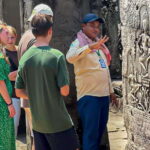
- You like having an English-speaking guide to explain what you’re seeing
- You prefer pickup and transport over self-driving or DIY ticket-tangle days
- You want both big temples and a mountain/nature day with waterfalls
It might feel like too much if you:
- Want long, slow museum-like time inside fewer sites
- Hate heat and walking and expect everything to be strictly flat and shaded
- Don’t want to manage extra costs like temple and Kulen entry tickets and meals
For the “first time in Angkor” crowd, this is a strong fit. For repeat visitors who want totally custom routing, you might prefer a more flexible day design.
Should you book Two Days Angkor Historical and Kulen Mountain Waterfall?
If your goal is a smart, efficient two-day arc through Angkor and Kulen, I’d book it—mainly because the plan reduces decision fatigue. You get the big Angkor Thom landmarks, the Ta Prohm jungle vibe, a meaningful sunset window, and then a different day type on Kulen with Buddha, river carvings, and waterfall views.
Do it with open eyes on cost: tickets and meals add up, and you’ll want to budget time for walking and sun. If you want the least-stress way to make the most of a short stay in Siem Reap, this tour format does that job.
FAQ
How much does the tour cost?
The price is $150.00 per person for this two-day experience.
Is pickup from my inn included?
Pickup is offered, so you can arrange pickup from your lodging.
What’s included in the price?
You get an air-conditioned vehicle, private transportation, parking fees, and an English speaking tour guide.
Are temple tickets included?
No. Temple Tickets are not included, so you’ll need to pay for entry separately.
Is the Kulen ticket included?
The tour lists Kulen Ticket as not included. At the same time, the Phnom Kulen stop shows admission ticket free. Confirm the exact entry situation with the operator before you go.
Are meals included?
No. Meals are not included. The plan also recommends a buffet supper with customary shows at Kulen II restaurant in the evening.
How long is the tour?
It’s 2 days (approx.).
Is this a private tour?
Yes. It’s described as a private tour/activity, and only your group will participate.
Can I cancel for free?
Yes. Free cancellation is available up to 24 hours in advance for a full refund.