REVIEW · SIEM REAP
Siem Reap: 2-Day Temples with Bonteay Srei Private Tour
Book on Viator →Operated by Angkor Visit Tour · Bookable on Viator
Two days in Angkor can feel like a whole lifetime. This private tour strings together the major temple hits and the “less obvious” sacred sites at a pace that doesn’t feel rushed, with sunrise timing built in and a licensed English guide doing the talking. I like that the itinerary mixes big-picture Khmer storytelling with concrete details you can actually see in the stones.
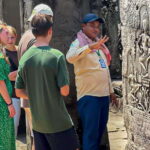
My favorite part is the guide attention: Phally Sok was friendly, funny, and made the history feel usable, not like a quiz you forget five minutes later. You’ll also get practical comfort upgrades that matter in Cambodia heat—private air-conditioned transport, plus cold drinking water and cold towels after the walking starts to add up.
One thing to consider: the tour depends on early starts and paid temple entry. If you’re not a morning person, the 5:00am sunrise plan on Day 1 may test your patience, and the entrance fee ($37 per person) is not included.
In This Review
- Key points worth knowing before you go
- Angkor in two days: what this route gets right
- Sunrise at Angkor Wat starts at 5:00am (and why that’s a good deal)
- Angkor Thom essentials: Bayon faces, elephants, and Baphuon’s quick hit
- Ta Prohm: the famous roots moment you’ll actually enjoy
- Day 2 starts at Preah Khan: a temple with royal momentum
- Neak Pean and the “middle of water” temple idea
- Ta Som and East Mebon: short stop vs. meaningful time
- Banteay Srei: the jewel-of-carving temple with real wow factor
- Phnom Bakheng sunset: the last climb and the final views
- Price and entrance fees: what the $66.50 really buys
- Your private guide (Phally Sok) makes the trip feel personal
- Who this tour suits best
- Should you book this 2-day private temples tour?
- FAQ
- Is the $66.50 price the full cost?
- What’s included in the tour price?
- What time does the Angkor Wat sunrise part start?
- Is this tour private or shared?
- Where does pickup and drop-off happen?
- Is free cancellation available?
Key points worth knowing before you go
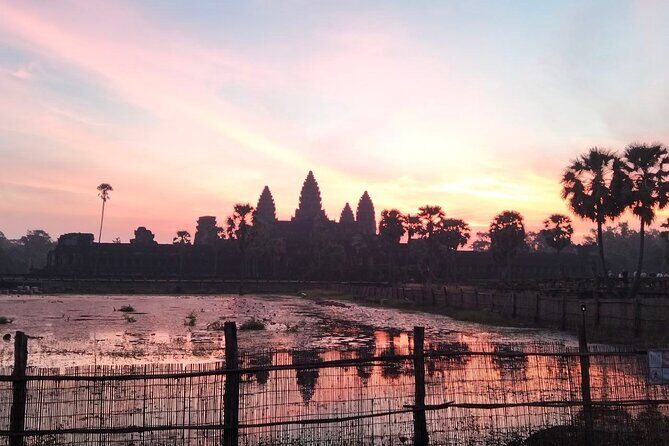
- 5:00am Angkor Wat sunrise option means cooler temps and better light for photos
- Two days with a private English guide keeps the pace comfortable and explanations clear
- Hotel pickup and private vehicle plus cold water and cold towels cut down logistics stress
- Day 1 temple trio hits Angkor Wat, Bayon, and Ta Prohm in smart sequence
- Day 2 adds quieter sites like Preah Khan and Neak Pean before ending with Phnom Bakheng sunset
- Entrance fees are separate, so plan for the extra cost up front
Angkor in two days: what this route gets right
Angkor is huge. Even the word huge feels small. The clever part of this plan is that it doesn’t try to cram every ruin you’ve ever heard of—so you can actually notice the differences in style, purpose, and layout.
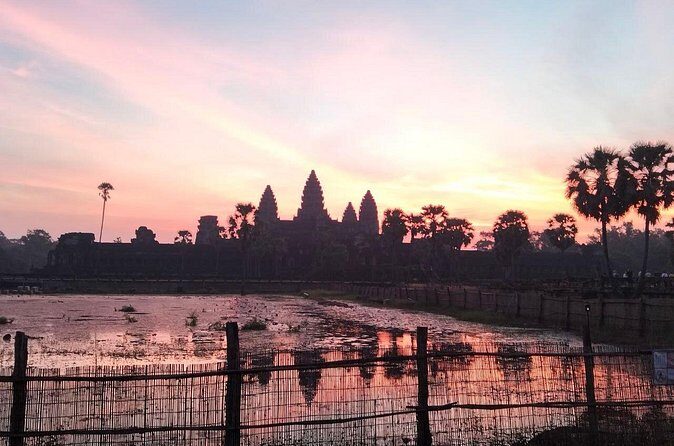
You’ll start with the most famous visual anchor: Angkor Wat. Then you move into the heart of the ancient capital with Bayon and the grand ceremonial viewing area at the Terrace of the Elephants. Day 1 also includes Ta Prohm, the famous “jungle temple,” so you get that dramatic mix of carved stone and living roots.
Day 2 shifts to additional Khmer royal-era sites: Preah Khan, Neak Pean, East Mebon, and Banteay Srei, then finishes with a climb-and-view moment at Phnom Bakheng for sunset. The balance matters. You get both the headline temples and the kind of temples that feel like you’re learning how this empire worked—through design, religion, and royal planning.
You can also read our reviews of more private tours in Siem Reap
Sunrise at Angkor Wat starts at 5:00am (and why that’s a good deal)
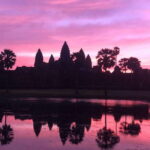
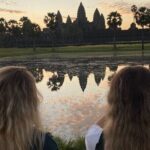
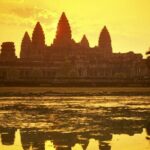
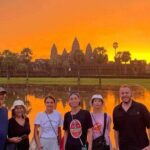
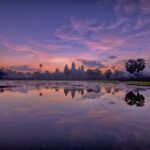
The tour offers an early start at 5:00am for the sunrise view at Angkor Wat. That timing is more than a cute idea for photos. It usually means less heat while you’re walking among stone galleries and courtyards, and it gives you the right kind of light to see the temple’s geometry.
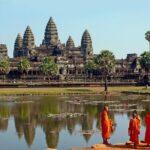
Angkor Wat is the largest religious monument in the world, and it can be overwhelming even when you’ve studied it online. Going early helps you slow down. You can take in the scale without fighting midday glare. You’ll have about 2 hours at Angkor Wat, and admission isn’t included, so you’ll want to factor in the ticket cost before you go.
Practical tip: dress for early morning chill and then warm-up. Cambodia mornings can start cooler than you expect, but you’ll be walking under stronger sun by the time you’re done. Bring a hat, and keep your water ready even if the tour includes cold drinks.
Angkor Thom essentials: Bayon faces, elephants, and Baphuon’s quick hit
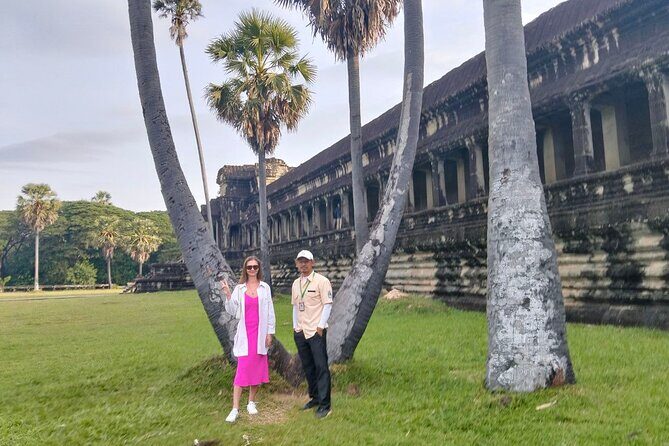
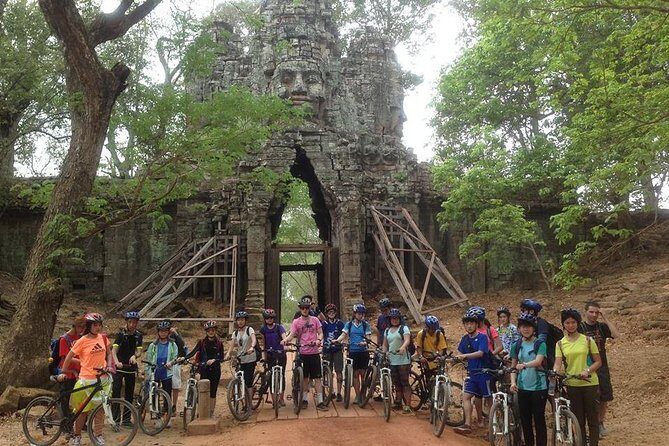
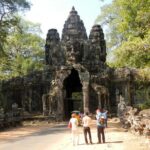
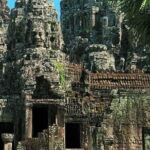
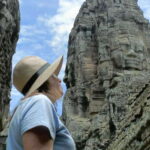
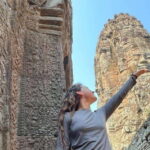
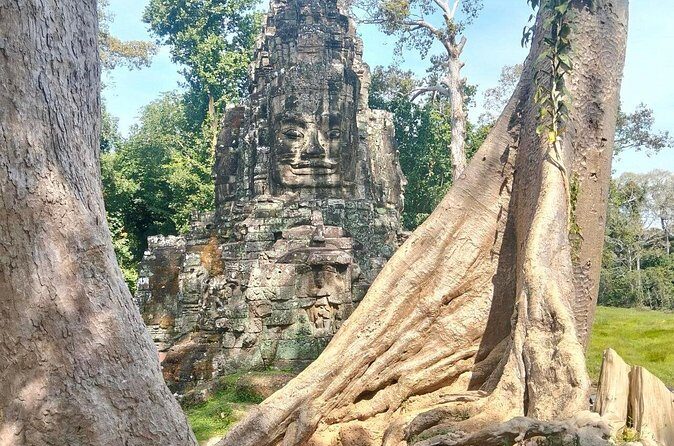
After Angkor Wat, you head into Angkor Thom territory with Bayon Temple. Bayon is famous for its large faces and for its position as a symbolic center for the Khmer empire. The tour’s stop is about 2 hours, which is enough time to do more than just snap a picture and leave. With the guide’s explanations, you’ll connect what you’re seeing to how rulers used temples to project authority and belief.
Next comes the Terrace of the Elephants (listed at 30 minutes). Even though it’s a shorter stop, it’s a strong one because it’s clearly designed for public ceremony. The terrace is described as a giant review stand for events and as a base for the king’s audience hall. That makes it easier to imagine not only the architecture but the political theater around it.
Then there’s Baphuon Temple, built as a three-tiered temple mountain and dedicated to Shiva. The scheduled visit is very short (listed at 1 minute). That’s the tradeoff with any tightly planned two-day itinerary: not every stop gets a long pause. If you love architecture details, plan to use those quick minutes well—look for the tiered structure and the Shiva connection the guide mentions, then move on rather than expecting a deep explore here.
Ta Prohm: the famous roots moment you’ll actually enjoy
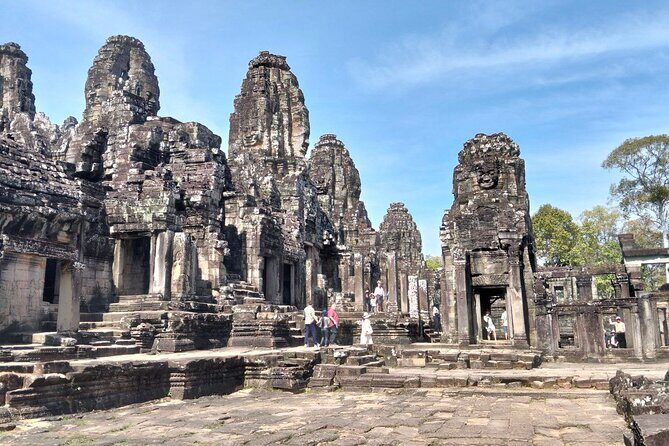
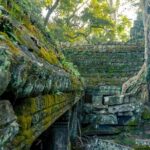
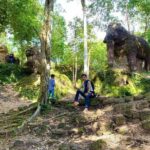
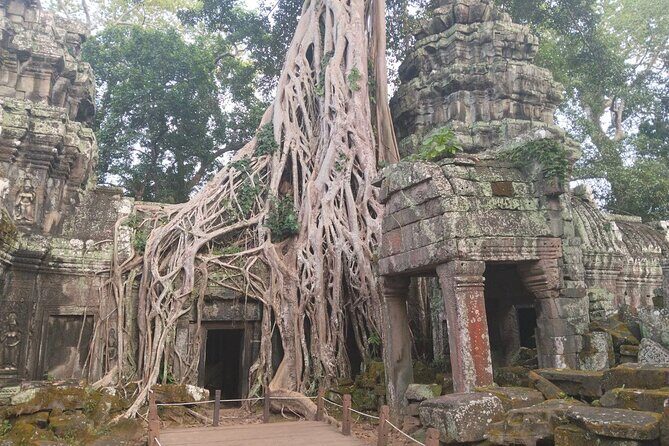
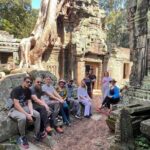
Ta Prohm is known for huge trees and massive roots growing out of its walls. The scheduled time is about 1 hour, which is a realistic amount for this kind of temple: enough to walk through the main areas, take photos, and get the most meaningful view angles without feeling like you’re circling the same spot.
This is also one of those temples where “what you see” and “what you understand” come together. With a guide narrating the temple’s late 12th to early 13th century era, you’ll be able to place Ta Prohm in the Khmer timeline instead of treating it like a movie set.
If you’re photographing: watch your footing around roots and uneven stone. In general, temple floors can be slick or uneven, and you’ll appreciate spending less time adjusting your balance and more time framing the shot.
Day 2 starts at Preah Khan: a temple with royal momentum
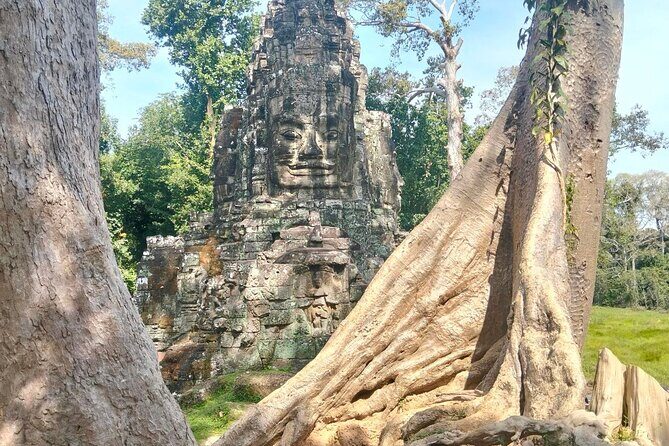
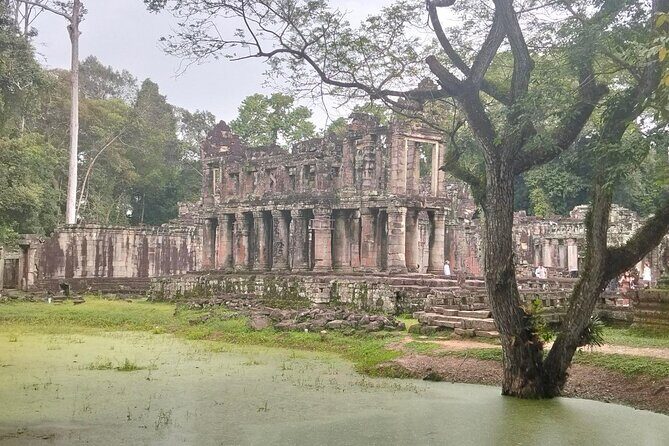
Day 2 begins with Preah Khan (about 2 hours). The name translates to the Royal Sword or the Holy Sword, and it’s described as a 12th-century Buddhist temple built by King Jayavarman VII to honor his father, located at the site of a victory. That matters because Preah Khan isn’t just a structure—it’s a statement about kingship and meaning. Temples in this era often served as political memory machines, and this one has that vibe.
With 2 hours, you can slow your pace here more than at the shorter stops. If you’ve been absorbing Angkor Wat’s grand symmetry and Bayon’s face-laden symbolism, Preah Khan gives you a different feel: royal Buddhism tied to conquest narratives.
A few more Siem Reap tours and experiences worth a look

Neak Pean and the “middle of water” temple idea
Next is Neak Pean (listed at 1 hour). It sits in the middle of a circular artificial island in Jayatataka Baray. The tour notes that it was built by Jayavarman VII in the mid-12th century.
This stop is a good reset because it changes the environment. Instead of focusing only on stone towers, you’re focusing on placement—on how the builders shaped water and sacred space together. If you like temple planning, this is the kind of site where the guide’s explanation helps you “read” the layout, not just view it.
Ta Som and East Mebon: short stop vs. meaningful time
You’ll also visit Ta Som and East Mebon.
- Ta Som is listed as very short (shown as 1 minute). It’s described as a charming temple in the Bayon style and well restored, built as part of Jayavarman VII’s construction program. Since the scheduled time is brief, think of it as a quick stylistic check-in: look for what makes it Bayon-adjacent and then keep moving.
- East Mebon gets about 40 minutes. It’s a mountain temple built in the mid-10th century by King Rajendravarman II, dedicated to Shiva. A longer stop here makes sense because mountain temples are all about how the vertical form guides your eyes and your sense of scale.
This mix of brief and longer stops can frustrate people who want every temple to be a half-day study session. But for most first-time visitors, it’s a workable compromise—especially when a guide helps you prioritize what to notice during the shorter moments.
Banteay Srei: the jewel-of-carving temple with real wow factor
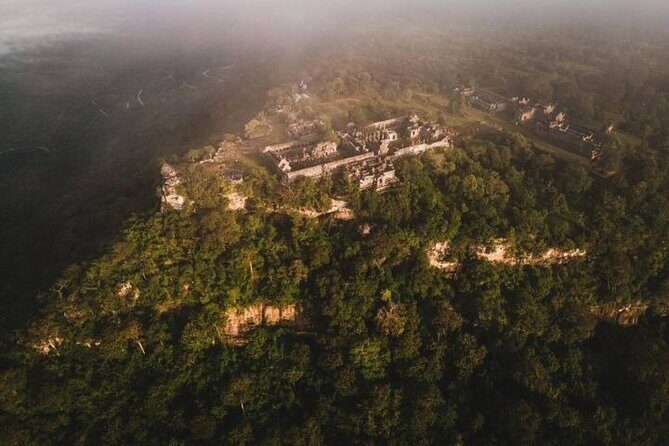
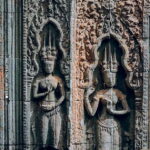
Then you get to Banteay Srei, scheduled for about 1 hour. This is the stop many people remember most, and the reason is practical: the carvings are intricate, and the tour describes the temple as the jewel of Khmer art. It’s a 10th-century temple dedicated to Shiva.
Banteay Srei feels different from the bigger mass-visit temples. The architecture and decoration reward a slower look. Even with only an hour, you’ll be able to scan the key carving areas and learn how the guide interprets the design choices.
Another advantage: this is one of those temples where your interest can stay personal. If you enjoy fine detail, you’ll lean in. If you just want the highlights, you can focus on the most recognizable carved motifs the guide points out and still feel satisfied.
Phnom Bakheng sunset: the last climb and the final views
To close the trip, you’ll head to Phnom Bakheng for a sunset view. The stop is listed as 1 hour.
This is a classic Angkor “look up” moment. After two days of temples at ground level and in courtyards, the sunset plan gives you a different perspective on the complex—both literally, from the viewpoint, and emotionally, because the day’s story lands in one visual sweep.
Practical tip: sunset timing can mean crowds and strong contrast light. Bring something to keep your camera steady (even just good grip) and wear shoes with grip for the climb and uneven surfaces.
Price and entrance fees: what the $66.50 really buys
The tour price is $66.50 per person for a private 2-day experience. The key value here isn’t just the guide—it’s the logistics package.
What you get included:
- Professional English-speaking licensed guide
- Pickup & drop-off at your hotel, using your hotel name/address
- All transfers by private air-conditioned vehicle
- Cold drinking water & cold towels
- Private transportation
- Mobile ticket (so you’re not stuck hunting for paper)
Not included:
- Entrance fee: $37 per person
- Tips for the guide
So, your real base cost is about $103.50 per person, before tips, assuming you pay the entrance fee the tour lists. For a private two-day plan, that can be a very fair deal—especially because you’re not organizing transport across multiple temple areas yourself.
One more note: since the entrance fee isn’t included, I’d treat that as a “day-one spreadsheet item.” Don’t let it be a surprise when you’re already on-site and tired.
Your private guide (Phally Sok) makes the trip feel personal
A private guide can either be a human audiobook or a real translator of what you’re seeing. In this case, Phally Sok comes through as both friendly and humorous, and that matters more than people think.
When the guide is comfortable with explanations, you start noticing patterns: why certain temples were dedicated, how Khmer kings used construction to communicate authority, and how religious themes show up in design. Instead of just reading about Jayavarman VII or temple purposes, you’ll hear it in the context of the place in front of you.
You’ll also notice the overall vibe: the tour mentions a funny driver as part of the experience, which tells you something about the day-to-day feel. You want a trip where the transport isn’t tense and the schedule doesn’t feel like a punishment.
Who this tour suits best
This is a strong choice if you want:
- A private experience (no sharing a long day with strangers)
- An English guide who can explain what you’re looking at
- A comfortable pace with flexible timing and family-friendly planning
- The classic Angkor must-sees plus a few additional stops that round out the story
If you’re traveling with kids or you’re not interested in museum-style memorization, this kind of guide-led route usually feels easier to follow. If you’re a serious temple scholar who wants hours inside every doorway, you might find the short stops (like Baphuon or Ta Som) too brief.
Should you book this 2-day private temples tour?
Yes—if you want the best chance of seeing major Angkor highlights in two days without turning your trip into a logistics project. The early Angkor Wat sunrise plan, the private vehicle comfort, and the guide’s personal touch (Phally Sok’s humor helps) all point to a trip that feels smoother than doing it on your own.
I’d book especially if you value context as you walk. These temples are famous for a reason, but the meaning becomes clearer when someone is pointing out how kings, religion, and design connect.
If you’re the type who hates early mornings, or you don’t want to deal with extra entrance fees, then the math and schedule may feel annoying. But if you can handle a 5:00am start and you like guided interpretation, this is a solid, practical way to experience Angkor in a short time.
FAQ
Is the $66.50 price the full cost?
No. The entrance fee is not included. The tour lists an entrance fee of $37 per person, and tips for the guide are also not included.
What’s included in the tour price?
You get a professional English-speaking licensed guide, hotel pickup and drop-off, private air-conditioned transportation, cold drinking water and cold towels, and mobile ticket access.
What time does the Angkor Wat sunrise part start?
The plan includes an early start at 5:00am for sunrise at Angkor Wat.
Is this tour private or shared?
It’s a private tour/activity. Only your group participates.
Where does pickup and drop-off happen?
Pickup is arranged from your hotel (you provide the hotel name and address). The experience ends back at the meeting point.
Is free cancellation available?
Yes. You can cancel for a full refund up to 24 hours in advance of the experience’s start time.
If you want, tell me your travel dates and your hotel area in Siem Reap, and I can help you think through whether the sunrise/sunset timing will fit your energy level.