REVIEW · SIEM REAP
Angkor Cab: Siem Reap 3 day private tour: ‘off the beaten track’
Book on Viator →Operated by ANGKOR CAB-OFF BEATEN TRUCK · Bookable on Viator
Crowds at Angkor can feel like a trap. This 3-day private route is built to keep you moving smart and still see the real variety around Siem Reap, from pink stone temples to lakeside life. I like that it’s small-group private (up to 3) with a guide who can explain what you’re looking at, not just point at ruins.
What I really appreciate is the balance of big hitters and calmer stops. You get the iconic Angkor Wat sunrise timing on Day 2, then you shift gears to lesser-visited temples and areas like Tonle Sap, where the scenery and the pace change. One thing to note: most temple sites and the Angkor Temple Pass are not included, so you’ll want to budget for entry fees and plan your day around opening hours.
In This Review
- Key things I’d focus on before you book
- A smart way to do Angkor without losing your day
- The value: what $550 per group buys you (and what it doesn’t)
- Day 1 in Siem Reap: pink stone, temple chambers, and Tonle Sap air
- Banteay Srei (the pink temple stop)
- Banteay Samre: close to East Baray
- Banteay Kdei: the “citadel of chambers”
- Srah Srang: the large man-made pool
- Tonle Sap Lake: the change of scenery on Day 1
- Day 2: Angkor Wat sunrise, Angkor Thom gates, and Ta Prohm’s trees
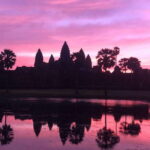
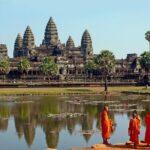
- Angkor Wat at first light
- Angkor Thom: South Gate and the main circuit
- Ta Prohm: the famous tree growth + a stone bridge stop
- Day 3: Beng Mealea’s adventurous feel and older Khmer capitals
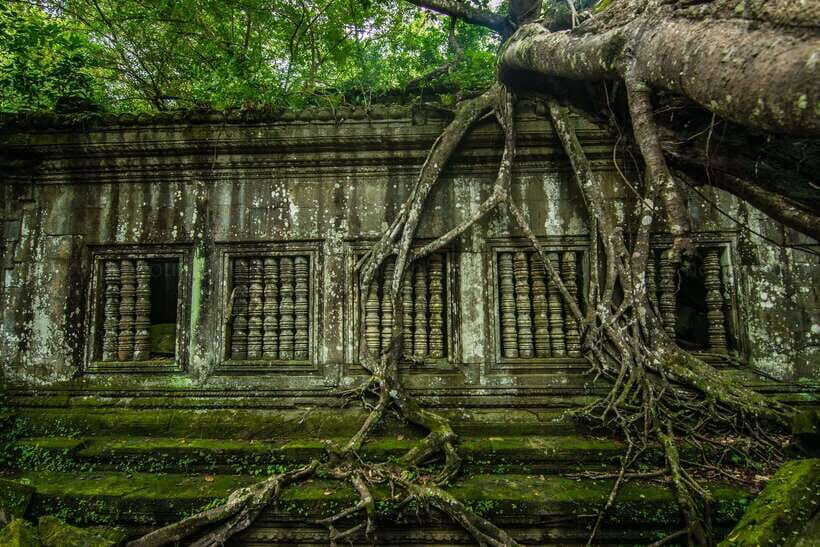
- Prasat Beng Mealea: where exploration feels more real
- Bakong: 9th-century Shiva capital vibes
- Preah Ko: the sacred bull (and the year 879)
- What makes this tour work for first-timers (and who should choose it)
- A possible consideration: physical effort and entry fees
- Small but important details that help on the ground
- Should you book Angkor Cab’s 3-day off-the-beaten-track tour?
- FAQ
- What is the group size for this private tour?
- Does the tour include hotel pickup?
- What time does the tour start?
- Are temple admission fees included?
- What is included in the price?
- How much should I budget for lunch and food?
- Can I customize the itinerary?
Key things I’d focus on before you book
- Private pickup and a relaxed schedule: you’re not riding a packed bus, and you can ask for timing tweaks.
- Sunrise at Angkor Wat: an early 5:00 am start helps you catch the view with far less friction.
- Lesser-visited Angkor-area temples: Banteay Srei, Banteay Samre, Banteay Kdei, Beng Mealea, Bakong, and Preah Ko are a strong mix.
- Local-color Day 1: the drive includes everyday village scenes, plus Tonle Sap for a break from stone carvings.
- Bottled water included: small comfort on hot days, especially with temple walking.
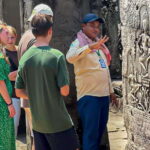
- A guide-led visit: you’ll get explanations on-site rather than reading alone.
A smart way to do Angkor without losing your day
Siem Reap is one of those places where planning matters. If you show up late, you get traffic, long lines, and the kind of crowd flow that turns your photos into a blur. This 3-day private tour is designed to avoid that feeling as much as possible by pairing early starts with routes that spread visits across different temple zones.
The best part is how the days are spaced. Day 1 leans into the quieter outside circuit—pink and stone “chamber” temples, then an open, breezy shift to Tonle Sap. Day 2 locks in the famous skyline moment with Angkor Wat sunrise, then continues through Angkor Thom and Ta Prohm. Day 3 swaps the busiest Angkor core for Beng Mealea and older capitals like Bakong and Preah Ko, which tend to feel more spacious and adventurous.
You’re also not stuck in a one-size-fits-all schedule. The tour’s description mentions a flexible itinerary, meaning you can request a different start or finish time, or add a different place if you tell them in advance.
You can also read our reviews of more private tours in Siem Reap
The value: what $550 per group buys you (and what it doesn’t)
At $550 per group up to 3 people, this is a mid-range private option. The value isn’t just the vehicle—it’s the driver and guide working as a team so you don’t waste time negotiating rides, finding routes, or figuring out which entrance makes sense.
Included:
- Driver
- Professional guide
- Private tour
- Bottled water
- Mobile ticket
Not included (important):
- Angkor Temple Pass
- Site admission tickets
- Food and drinks (including lunch; the tour notes lunch depends on what you choose, typically $5 to $10 per person, BYO)
That last part is key for budgeting. If you’re used to tours where most entry fees are rolled in, you’ll want to plan for the pass and individual site tickets separately. Still, the structure of the day—especially sunrise timing—often makes up for it if you like seeing more than just the most famous postcard angles.
Day 1 in Siem Reap: pink stone, temple chambers, and Tonle Sap air
Day 1 starts with a scenic drive from your hotel and the kind of real-world glimpses you only get when you’re not rushing between stops. Expect local activities along the way and enough time to transition between temples without feeling wrecked.
Banteay Srei (the pink temple stop)
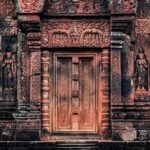
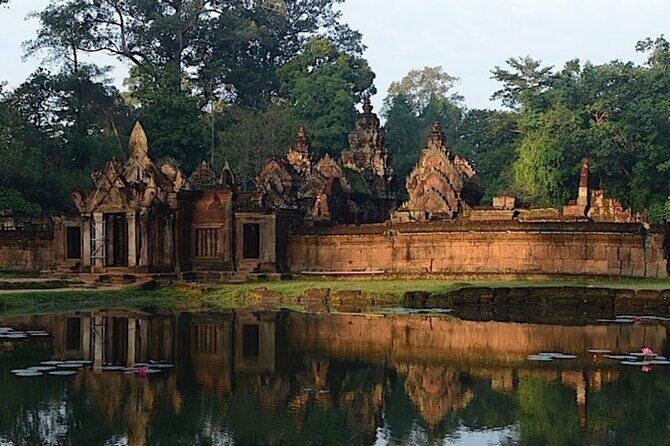
Banteay Srei is introduced as a 10-century pink temple, and that color is part of why it’s memorable. The tour description frames it as a highlight reached in about 45 minutes from the hotel, with the guide explaining details during the visit.
What you’ll likely enjoy here is the feeling of being inside a different layer of Angkor-era design. When you’re not surrounded by constant crowd movement, you can actually look at shape, layout, and the way the stone reads in different light.
Banteay Samre: close to East Baray
Next comes Banteay Samre, described as a 12th-century temple located about 400 meters east of East Baray and tied to King Suryavarman II. This is the kind of stop that rewards you if you like context—why it’s placed where it is, and how it relates to the landscape and royal projects.
A practical note: smaller temples still involve walking. Wear shoes with grip, because temple ground can be uneven, especially when you’re moving between viewpoints.
A few more Siem Reap tours and experiences worth a look
Banteay Kdei: the “citadel of chambers”
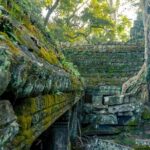
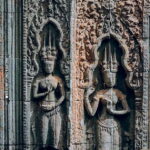
Then you head to Banteay Kdei, meaning citadel of chambers, built from the mid-12th to early-13th century and described as a Buddhist temple. The tour notes it’s southeast of Ta Prohm, and your guide uses the on-site moment to explain what you’re seeing.
I like this stop because it shifts the mood. If your brain is already tuned to temple geometry by this point, Banteay Kdei gives you more texture and less of the overwhelming scale you get at the mega sites.
Srah Srang: the large man-made pool
After a local lunch, the tour includes Srah Srang, billed as the largest swimming pool in the world, built in the mid-10th century and modified by King Jayavarman VII in the 12th. The name matters less than the setting: this is a breather between stone-heavy visits, with room to walk and reset your eyes.
If you’ve been doing sunrise or early starts, this kind of pause helps you keep your energy for the last stop.
Tonle Sap Lake: the change of scenery on Day 1
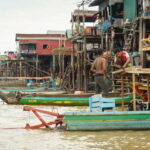
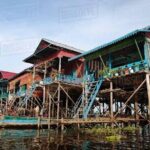
Day 1 ends at Tonle Sap Lake, described as the biggest freshwater lake in Southeast Asia. The tour provides a useful scale: about 10,000 square kilometers in the wet season and around 3,000 in the dry season.
This is where the trip becomes more than temples. Tonle Sap adds water, fishing livelihoods, and a broader sense of the region beyond Angkor stones. Even if you’re not doing a long excursion on the lake, it’s a strong way to balance your 3-day plan so you don’t feel like you’re just “templed out.”
Day 2: Angkor Wat sunrise, Angkor Thom gates, and Ta Prohm’s trees
Day 2 is built around a 5:00 am departure from your hotel, with a roughly 30-minute drive to Angkor Wat. Sunrise is described as a major Siem Reap moment, and the plan is clearly set up to get you there early.
Angkor Wat at first light
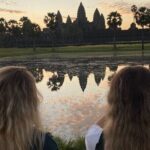
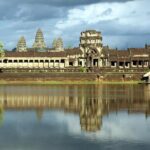
Angkor Wat sunrise is one of those experiences that’s popular for a reason. The tour’s promise is simple: you’ll see the sunrise behind Angkor Wat, and then you’ll have around 3 hours to explore.
What matters for you: the early timing also changes the experience quality. Morning light can make stone tones look different than midday, and the crowd density tends to rise as the day goes on. If you like photographing, early hours usually give you more calm and better angles.
Angkor Thom: South Gate and the main circuit
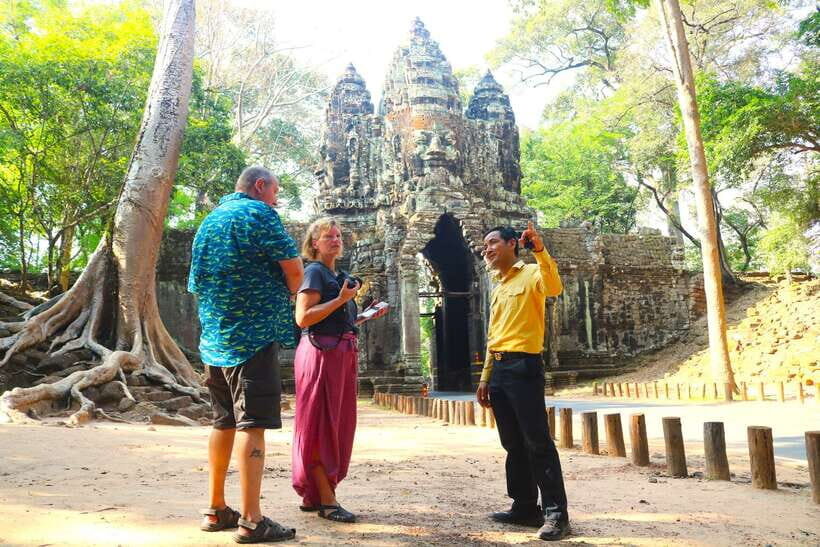
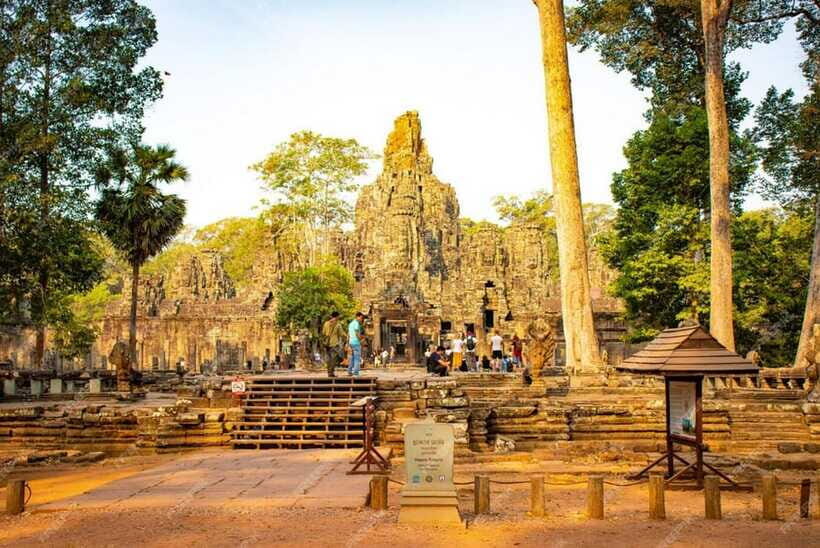
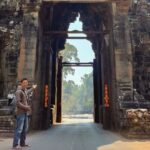
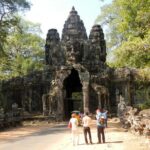
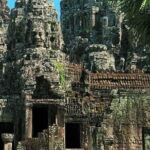
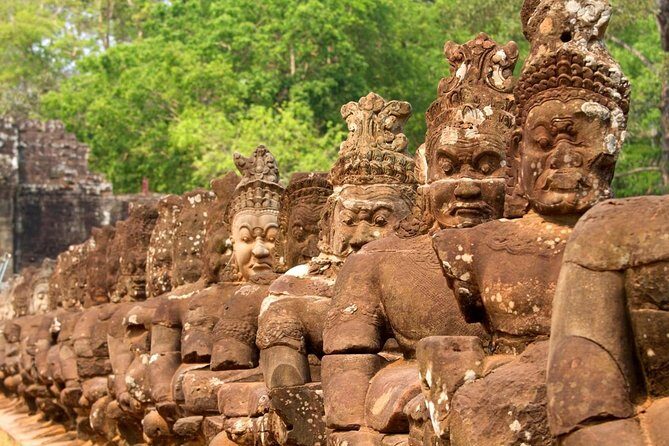
After Angkor Wat, the tour heads to Angkor Thom (the capital city). There’s a short drive to the South Gate for pictures, then you move through the main temples in Angkor Thom with 2 hours planned.
This is a good day segment if you want a sense of Angkor’s scale—bigger walls, bigger transitions, more “capital energy.” Just pace yourself. Angkor Thom can feel like you’re walking through a whole city, not just a monument.
Ta Prohm: the famous tree growth + a stone bridge stop
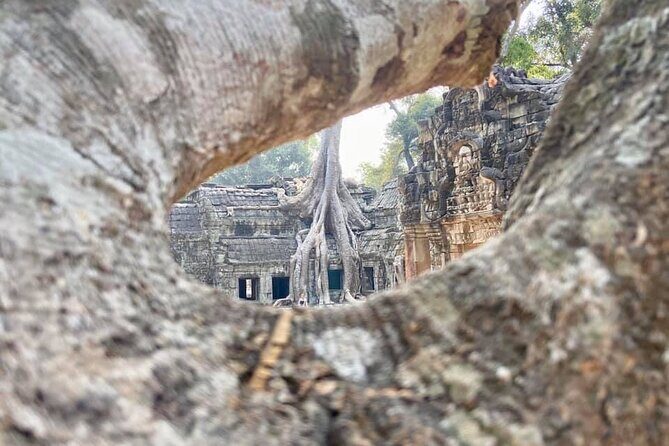
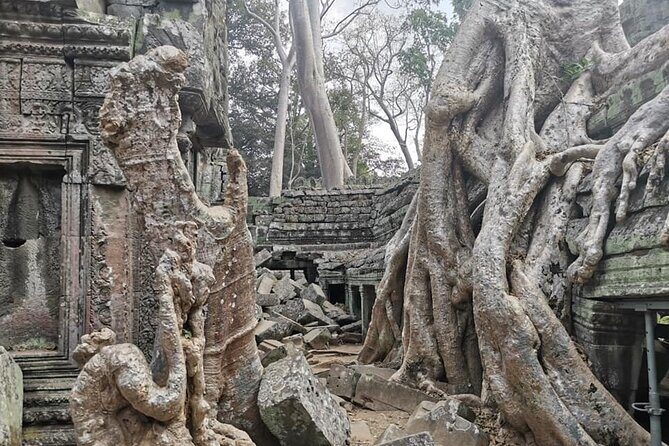
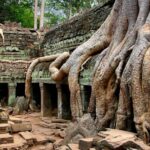
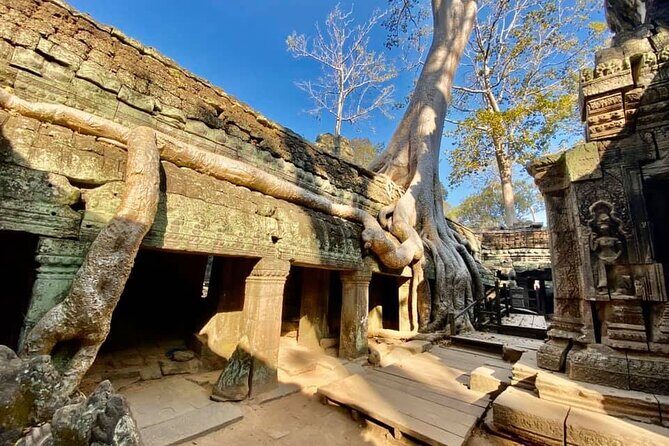
Then it’s on to Ta Prohm, where the tour includes a stop along the way at a stone bridge with tree growth on top. Ta Prohm is described as a stop with about 1 hour after an included lunch break.
Ta Prohm is the kind of place where the scenery and the storytelling work best when you’re not rushing. The combination of bridge stop + Ta Prohm time helps you catch the “lost in the jungle” mood people come for, without forcing your day to run at an unhealthy speed.
Practical tip: bring sun protection. Morning to afternoon sun can be fierce, and you’re walking through open areas as well as under some temple shade.
Day 3: Beng Mealea’s adventurous feel and older Khmer capitals
Day 3 starts later in the day. You meet around 9:00 am and drive roughly 1.5 hours to Prasat Beng Mealea. Along the way, the tour notes you’ll see local activities from everyday life.
This matters because Beng Mealea is more than a temple. It’s also a sense of getting out into a less controlled setting, where ruins can feel wilder and the scale can be harder to compare to the main Angkor circuit.
Prasat Beng Mealea: where exploration feels more real
Beng Mealea is allotted about 3 hours. The tour describes the experience as a temple visit with enough time to enjoy the site rather than just passing through.
If you like “what would it have felt like back then” imagining, this is the day for it. The ruins here tend to give a different vibe than the more polished Angkor stops.
Bakong: 9th-century Shiva capital vibes
After Beng Mealea, the tour heads to Bakong, described as part of an ancient Khmer capital city called Hariharalaya. Bakong is noted as being built in the 9th century by Shiva King Indravarman I.
This is a great closing act because it gives you an earlier Angkor-era feel. You’re not only ending with a temple; you’re ending with a different historical mood.
Preah Ko: the sacred bull (and the year 879)
Finally you visit Preah Ko, meaning the Sacred Bull. The tour notes it as the first temple built in Hariharalaya in 879, dedicated to Shiva and linked to Indravarman I.
Preah Ko pairs well with Bakong. If you’ve been trying to understand how the Khmer kingdom used temple complexes as statements of power and belief, ending here helps your brain connect the dots—temples as city-making, not just monuments.
What makes this tour work for first-timers (and who should choose it)
This is a strong fit if you’re in one of these situations:
- First-time Siem Reap visitors who want a clean orientation over multiple days.
- People who want the classic sights (especially Angkor Wat sunrise) but don’t want to spend every hour stuck with the biggest crowd flow.
- Small groups who value private timing and a guide who can explain on-site.
It’s also a decent option if you care about pacing. The tour’s structure spreads the heavy sights across three days, with a deliberate shift to Tonle Sap on Day 1 and more exploratory ruins on Day 3.
A possible consideration: physical effort and entry fees
The tour states you should have a moderate physical fitness level. Temple walking, uneven ground, and early mornings add up. If you’re prone to fatigue, you’ll want good footwear and a plan for hydration.
And as mentioned earlier, you’ll need to budget for Angkor Temple Pass and other admission tickets, since they’re not included.
Small but important details that help on the ground
A “private tour” can still be uncomfortable if the details are sloppy. In this case, the essentials are covered:
- Bottled water is included, which makes the heat more manageable.
- Pickup is offered, so you start the day with less friction.
- You get a professional guide for the time on-site, not just during transfers.
Also, the tour includes a mobile ticket, which is handy if you’d rather keep everything on your phone. Still, double-check what you need for entry fees and passes so you don’t get stuck at gates.
Should you book Angkor Cab’s 3-day off-the-beaten-track tour?
Book it if you want the best of Angkor without living inside crowds. The mix of Angkor Wat sunrise, Angkor Thom, and Ta Prohm on Day 2 gives you the iconic anchors. Day 1 and Day 3 then broaden the trip with calmer temples and the Tonle Sap contrast.
Skip or choose something else if you’re looking for a tour where all entry costs are bundled. Here, the Angkor Temple Pass and admissions are not included, so you’ll be doing a bit of extra planning.
If your group is up to 3 people and you value private time, guide explanations, and a route that changes scenery across three days, this is a practical, well-paced way to see Siem Reap.
FAQ
What is the group size for this private tour?
It’s a private tour, meaning only your group participates. The price is per group and is listed as up to 3 people.
Does the tour include hotel pickup?
Yes, pickup is offered.
What time does the tour start?
The meeting time listed is 9:00 am. On Day 2, the schedule starts with an early pickup at 5:00 am for Angkor Wat sunrise.
Are temple admission fees included?
No. Angkor Temple Pass is not included, and admission tickets are listed as not included for the temple stops.
What is included in the price?
The tour includes bottled water, a driver, a professional guide, and the private tour itself. Food and drinks are not included.
How much should I budget for lunch and food?
Lunch depends on what you choose, and it’s noted as typically $5 to $10 per person. BYO is mentioned.
Can I customize the itinerary?
Yes. The description says the itinerary is flexible, and you can request different start/finish times or another place to visit if you let them know in advance.