REVIEW · SIEM REAP
Best of Angkor Temples 3 Days Private Tour from Siem Reap
Book on Viator →Operated by Angkor Buddy Tour · Bookable on Viator
Three days, one unforgettable temple circuit.
I love the way this route pairs Angkor Wat sunrise with quieter, less predictable ruins like Ta Prohm, so your days feel varied instead of just repeating the biggest views. I also like the photo-forward way the guide helps you get the angles without rushing every doorway. One drawback to plan for: you begin at 4:30 am, and the major temple entrance costs (including the Angkor Pass) are separate.
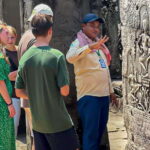
This is also a true private setup with a professional English-speaking guide, and the best kind of guide makes a difference here. In particular, I like the impact of bilingual guidance from Tann Sopheap, who has a knack for explaining what you’re seeing and staying flexible if you want to adjust pacing.
Finally, the practical side is strong: bottled water, air-conditioned transport, and free hotel pickup/drop-off in Siem Reap. Just note the rules around photos and tech—drones aren’t allowed at the temples except with APSARA permission—and you’ll want to follow the dress code closely (shoulders and knees covered, with a proper dress scarf).
In This Review
- Key highlights worth your time
- Why this private Angkor route feels easier than doing it on your own
- Pickup at 4:30 am: the sunrise rhythm that makes Angkor Wat click
- Angkor Thom South Gate and Bayon: the face-of-Angkor moment
- Ta Prohm and Banteay Kdei: the contrast day 1 makes for your photos
- Day 2 from Banteay Srei to Pre Rup: from delicate carvings to sunset payoff
- Day 3: Beng Mealea’s untamed ruin feel and Roluos’ quieter Khmer roots
- Price and value: what $217 covers and how the Angkor Pass fits in
- Practical tips you’ll thank yourself for (especially for photos)
- Dress code and comfort
- Tickets and payment
- Drone rules
- Food planning
- Who should book this 3-day private Angkor tour?
- Should you book this Best of Angkor Temples 3 Days tour?
- FAQ
- Is pickup provided in Siem Reap?
- How long is the tour?
- Are meals included?
- Do I need an Angkor Pass?
- Are temple entrance tickets included?
- Is this tour really private?
- What’s the dress code for temple visits?
- Can I fly a drone at the temples?
- What happens if weather is bad?
Key highlights worth your time
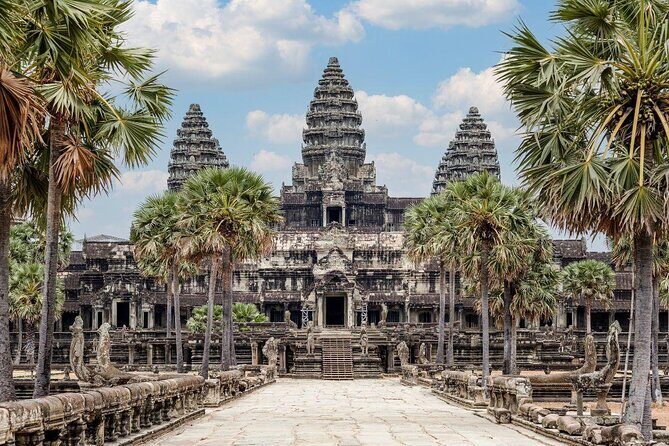
- Angkor Wat sunrise timing: you start early enough to catch the light and fewer crowds.
- A mix of major icons and lesser-visited stops: Angkor Wat, Bayon, Ta Prohm, plus Banteay Srei, Pre Rup, and Beng Mealea.
- Day-ending sunset at Pre Rup: a classic finish that feels made for the final golden light.
- Private, flexible guiding: your guide can tailor the rhythm and focus on the stories you care about.
- Roluos add-on with a different vibe: Bakong and Preah Ko feel quieter and more local than the main temple loop.
Why this private Angkor route feels easier than doing it on your own
Angkor can be overwhelming in the best way. It’s massive, the temple names blur together, and if you show up with just a map, you’ll still see the stone—you might miss the meaning. This tour helps because it bundles the major sites with smart sequencing, so your eyes get a “before and after” view of Khmer architecture rather than a checklist of random stops.
I also like that you’re not locked into a crowded coach pace. Being private means you can move at a human tempo: pause where the carvings matter, spend a little extra time at the viewpoints, and skip the moments that don’t grab you. That flexibility is where value shows up, especially if you care about photos and explanations, not just walking through rooms.
One more quiet win: the guide helps you focus your time. When you arrive at early-morning Angkor Wat, for example, that first walk matters. You don’t want to be half-awake, hunting for the best spots while the light is changing.
You can also read our reviews of more private tours in Siem Reap
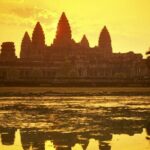
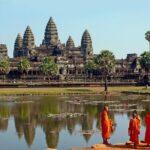
Pickup at 4:30 am: the sunrise rhythm that makes Angkor Wat click
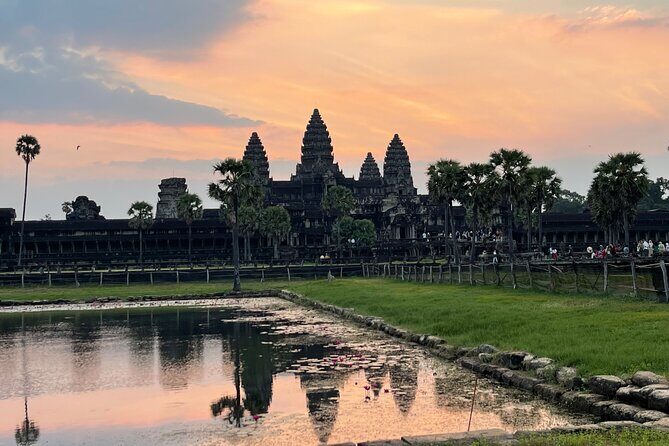
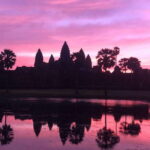
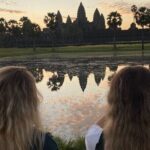
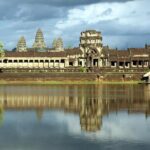
Starting around 4:30 am is not casual, but it is the point. Angkor Wat sunrise changes the whole mood of the temple—bright stone becomes softer, and silhouettes look dramatic instead of flat. With early timing, you also get a smoother flow through the main areas, which matters when you’re trying to take photos and still enjoy the place without stress.
At Angkor Wat, you’ll spend about two hours. You’ll be walking a Hindu temple complex that the Khmer Empire originally built for Vishnu, then later transformed toward Buddhism around the end of the 12th century. That shift is visible if you’re paying attention, and a good guide makes that connection easy to spot while you’re there.
Practical note: entrance tickets are not included in the price. The tour information indicates that the Angkor entrance fee can be accepted with Visa cards and purchased on the day before sunrise. If your hotel provides breakfast, you can request a breakfast pack and eat before you go, so you’re not stuck trying to function on an empty stomach at sunrise.
Dress code is part of sunrise survival. Cover shoulders and knees. A proper dress scarf is recommended, and the tour info specifically notes that only a real dress scarf is allowed.
Angkor Thom South Gate and Bayon: the face-of-Angkor moment
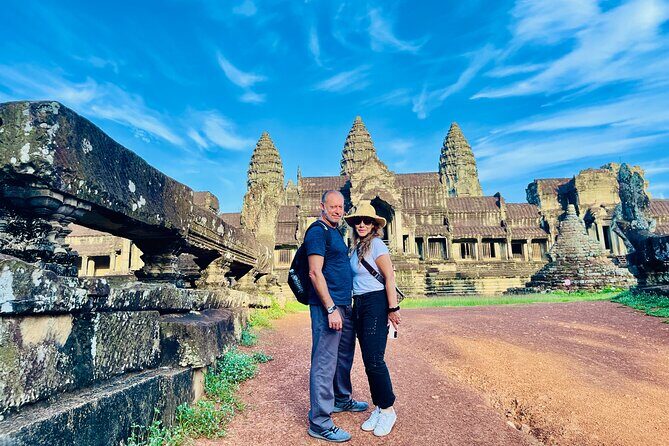
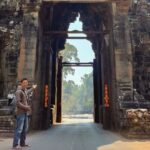
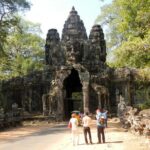
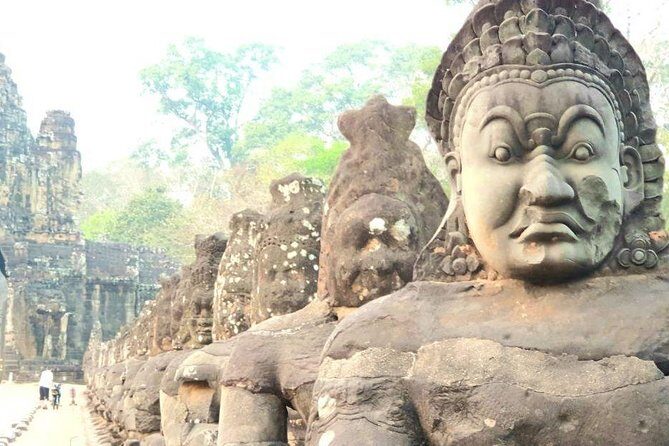
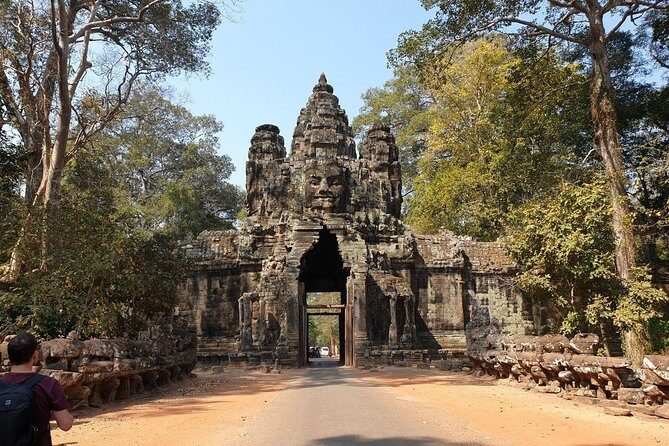
After Angkor Wat, the tour moves to Angkor Thom South Gate for a short stop. This is your gateway into the last and most enduring capital of the Khmer Empire, built in the late 12th century by King Jayavarman VII. Even with limited time, it’s a good way to set the stage: this is not just one temple, it’s a whole royal city layout.
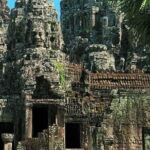
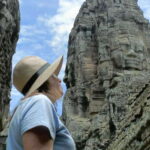
Then comes Bayon, the center of Jayavarman’s capital. Expect a richly decorated Mahayana Buddhist temple built around the late 12th or early 13th century. The big draw here is the sculpted faces—everywhere you look. In my view, Bayon works best when you don’t rush. If you take a few minutes to rotate your position and scan the relief work, you get a lot more than a quick stare.
From there, you move into the Angkor Thom interior with short stops like the Terrace of the Elephants and the Terrace of the Leper King. These terraces can feel like “side quests,” but they’re often where the fine carvings shine. Even if your time is brief, they’re worth it because they help you understand how Khmer storytelling was built into stone, not just into temple walls.
If you want great photos here, early timing is again helpful—getting the light right on carved stone is easier before the sun gets harsh.
Ta Prohm and Banteay Kdei: the contrast day 1 makes for your photos
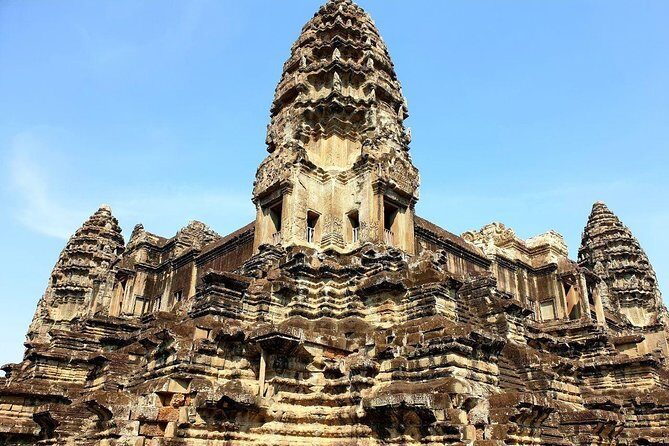
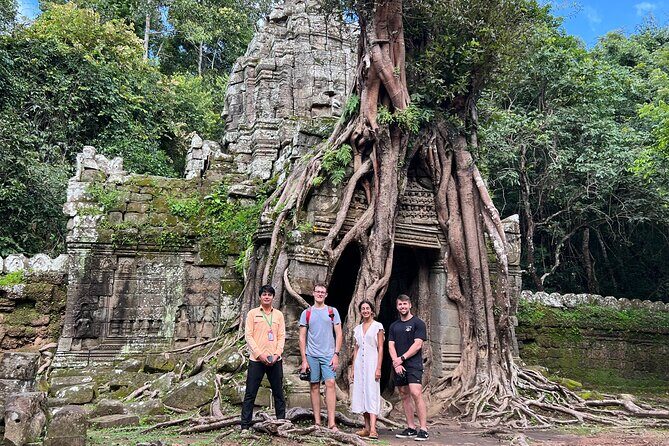
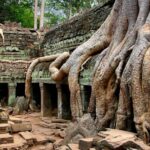
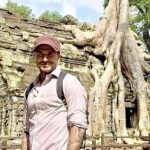
Ta Prohm is the temple people recognize fast, mostly because nature and stone share the scene so dramatically. You’ll spend about an hour here. It’s originally called Rajavihara and built in the Bayon style during the late 12th and early 13th centuries. What makes it special isn’t only the architecture—it’s the way trees and roots create a visual frame, turning ruins into something like a living museum.
A practical benefit of having a guide: you can focus on the best viewpoints rather than just wandering. With Ta Prohm, random wandering can lead to the same sightline again and again. The tour is set up so you can keep your angle variety across the day.
Next is Banteay Kdei, about 40 minutes. It’s a Buddhist temple often described as a citadel of monks’ cells, and it sits southeast of Ta Prohm and east of Angkor Thom. This stop gives you a calmer tempo after the emotional intensity of Ta Prohm’s jungle feel. If you’ve been taking photos all morning, it’s a good moment to switch from spectacle to observation: the details, doorways, and structural rhythm.
Day 2 from Banteay Srei to Pre Rup: from delicate carvings to sunset payoff
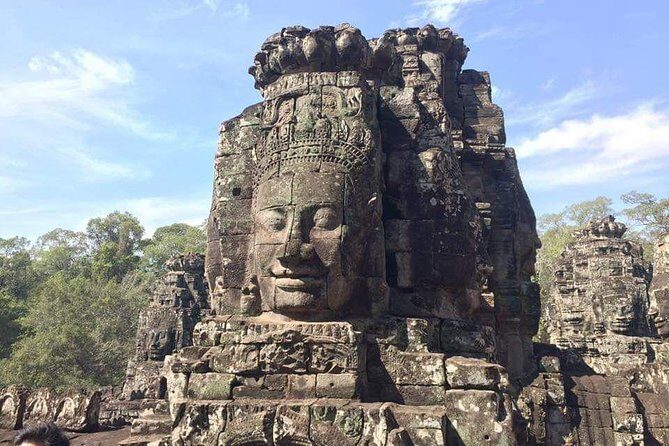
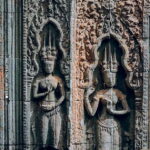
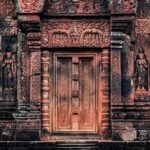
Day 2 starts with Banteay Srei (Banteay Srey), a 10th-century Hindu temple dedicated to Shiva. You’ll spend about two hours. It’s located roughly 25 km northeast of the main temple groups, near Phnom Dei. This is one of the most rewarding places on an Angkor tour because the stonework tends to look finer and more “crafted” than what you see at the biggest complexes. When your guide points out details, you’ll notice how much effort went into decoration at a smaller scale.
Then the route continues through a cluster tied closely to King Jayavarman VII, moving from Preah Khan (about an hour) to Neak Pean (about 30 minutes), Ta Som (about 35 minutes), Eastern Mebon (about 40 minutes), and Banteay Samre (about 50 minutes). This section works because the sites feel related without looking identical.
Here’s what you gain from this grouping:
- Preah Khan: built for Jayavarman VII to honor his father, with a history tied to a large temple organization. The setting near Jayatataka baray also adds context: Khmer temple sites weren’t random buildings; they sat inside water-and-ritual landscapes.
- Neak Pean: an artificial island with a Buddhist temple on a circular island in Jayatataka Baray. If you like “why it’s built like that” places, this one rewards attention.
- Ta Som: a smaller temple dedicated to Jayavarman VII’s father. It’s easier to enjoy when you’re not rushing.
- Eastern Mebon: a temple on what used to be an artificial island in the East Baray reservoir area. Even though the reservoir is now dry, the idea comes through.
- Banteay Samre: a Hindu temple in the Angkor Wat style. It’s a helpful way to shift back toward a more familiar Angkor architecture language.
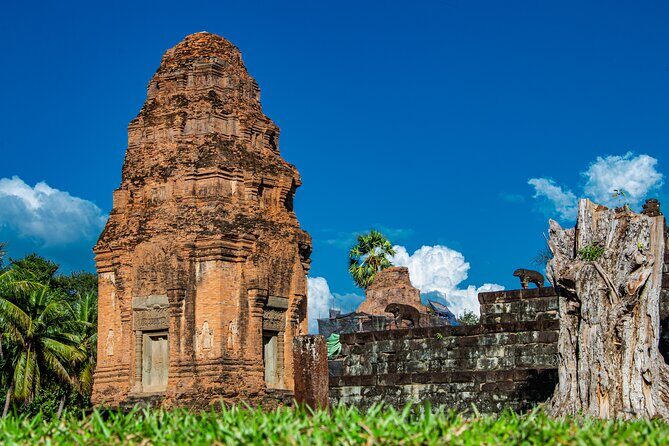
Finally, you reach Pre Rup for sunset. Pre Rup is a Hindu temple mountain dedicated in the mid-10th century and built with brick, laterite, and sandstone. You’ll spend about an hour here.
This is where timing matters most for the entire tour. Sunset at Pre Rup is a classic ending because the temple mountain silhouette and terrace lines look dramatic in the low light. Even if you’ve seen plenty of temples, this ending tends to make the day feel complete.
One more practical note: bring water habits in mind. Breakfast and lunch aren’t included, and drinks other than the bottled water provided are not listed as included. You’ll want to plan meals around your tour schedule instead of assuming you can grab food whenever you pause.
A few more Siem Reap tours and experiences worth a look
Day 3: Beng Mealea’s untamed ruin feel and Roluos’ quieter Khmer roots
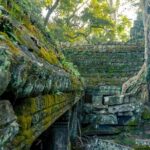
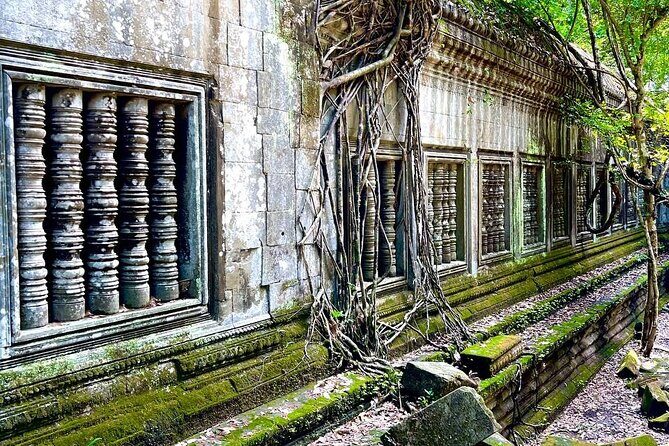
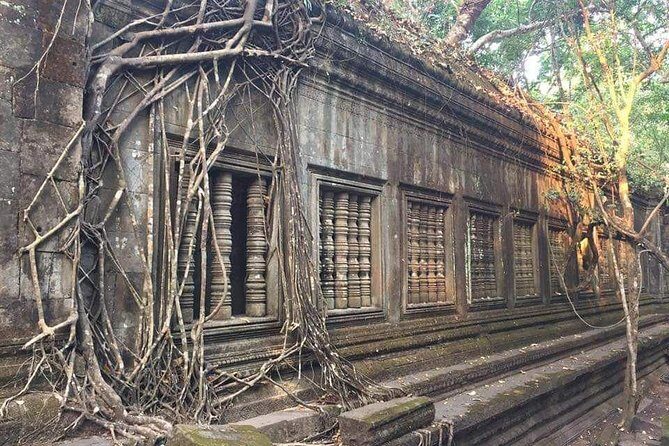
Day 3 shifts away from the main temple cluster and toward a more off-the-beaten-path feel. You start with Beng Mealea. It’s described as largely unrestored, with trees and thick brush thriving among towers and courtyards, and many stones lying in heaps. That matters because Beng Mealea doesn’t feel like a polished museum site. It feels like you’re walking through something that still belongs to the landscape.
You’ll also learn it was built as a Hindu temple, though carvings show Buddhist motifs. That blend is an Angkor theme in general, but Beng Mealea makes it feel especially real because the site isn’t smoothed out. If you want photo variety—less iconic, more textural—this is a strong pick.
Next are the Roluos temples, including Bakong and Preah Ko (often written Preah Ko or Prasat Preah Ko) with Lolei afterward. Roluos is about 15 km southeast of the main temple group, so it’s not far, but it feels different. These temples are older and smaller, and they tend to deliver a more grounded vibe.
- Bakong: the first temple mountain made of sandstone by Khmer rulers at Angkor. It served as the official state temple under King Indravarman I in the late 9th century.
- Preah Ko: built under King Indravarman I in 879 to honor members of the king’s family linked to Shiva.
- Lolei: the northernmost of the three Roluos temples, dedicated to Shiva and royal family members, built as part of the city of Hariharalaya.
What I like about adding Roluos on day 3 is pacing. After Beng Mealea, you don’t want a final day that’s only crowded highlights. These temples help you slow down. They also make the overall tour feel more complete because you’re seeing multiple eras and temple intentions, not just chasing the most photographed icons.
Price and value: what $217 covers and how the Angkor Pass fits in
At $217 per person for a three-day private tour, the value depends on what you personally want: convenience, guiding, and time management.
Here’s what’s included:
- bottled water
- free pickup and drop-off at city hotels
- a professional English-speaking tour guide
- sightseeing as specified
- transportation by air-conditioned vehicle
- the tour is private, meaning only your group participates
- mobile ticket
What’s not included:
- breakfast, lunch, and drinks
- travel insurance
- the 3 Days Angkor Pass for US$62, which covers all temples in the itinerary
- guide and driver tipping
So the real cost picture is usually the base price plus the Angkor Pass, plus meals you buy yourself. If you were to arrange your own driver and tickets, you might spend less on paper, but you’d pay with time and navigation stress. For many people, a guided, timed itinerary is what keeps the trip from turning into long taxi rides and missed sunset moments.
Also, the sunrise and sunset timing isn’t optional here. Since the tour starts early and includes a final sunset scene at Pre Rup, you’re paying for a schedule that’s designed to work, not just for transport and a list of names.
Practical tips you’ll thank yourself for (especially for photos)
Dress code and comfort
Keep shoulders and knees covered. The tour notes that a real dress scarf is required, and it also says only real dress scarf not allow. In practice, that means don’t rely on a flimsy costume scarf. Bring something you can wear properly and that won’t fall off in the early breeze.
Tickets and payment
Entrance tickets are not included. The information says temple entrance fee can accept visa cards and can be purchased on the day of the tour just before sunrise. That helps if you want everything sorted quickly, but it also means you should plan to have your payment method ready.
Drone rules
Flying drones at the temples is not allowed. You can only ask permission from APSARA. If you’re traveling with a drone, assume you won’t be able to use it unless you’ve handled permissions in advance.
Food planning
Breakfast and lunch are not included. If your hotel has breakfast, the tour suggests requesting a breakfast pack to eat after sunrise at Angkor Wat. That’s a useful idea because it lets you focus on the morning without losing time later.
Who should book this 3-day private Angkor tour?
I’d book it if you want an efficient Angkor temples tour that still feels personal. It’s ideal for couples, small families, and anyone who wants a guide who can explain what you’re seeing instead of leaving you to guess.
It’s also a good match if you care about:
- Angkor Wat sunrise and Pre Rup sunset
- a balance of big famous sites and smaller ruins
- photo planning that avoids random wandering
- a private setup rather than a long group shuffle
If you hate early mornings or you want everything spontaneous with no schedule, this may feel like too much structure. Starting around 4:30 am is the main thing that can make or break the experience.
Should you book this Best of Angkor Temples 3 Days tour?
If you want the kind of Angkor trip where the lighting and timing matter—and where temple stories actually connect to the stone in front of you—this private tour is a strong choice. The route is built around major anchor moments (sunrise at Angkor Wat, sunset at Pre Rup) while still giving you variety with Ta Prohm, Banteay Srei, Beng Mealea, and the Roluos temples.
Book it if you value convenience (hotel pickup, A/C transport, bottled water), clear temple sequencing, and a guide who can tailor pacing. If you’re on a tight budget, you’ll need to add the Angkor Pass cost and plan for meals, but the inclusions help keep the experience smooth.
If you’re the type who thinks a temple visit is mostly about walking and taking photos without explanations, you might prefer a cheaper self-guided plan. But if you want both photos and meaning, this is the kind of itinerary that tends to deliver.
FAQ
Is pickup provided in Siem Reap?
Yes. The tour includes free pickup and drop-off at city hotels, with the experience starting around 4:30 am.
How long is the tour?
It’s a 3-day private tour (approx.). The itinerary is structured across three days with multiple temple stops each day.
Are meals included?
No. Breakfast, lunch, and drinks are not included.
Do I need an Angkor Pass?
Yes. A 3 Days Angkor Pass for US$62 is listed as covering all temples in the itinerary.
Are temple entrance tickets included?
No. Admission tickets are not included, but the tour notes that entrance fees can accept Visa cards and can be purchased on the day of the tour just before sunrise.
Is this tour really private?
Yes. It’s described as a private tour/activity, and only your group participates.
What’s the dress code for temple visits?
You need respectful dress with shoulders and knees covered. A proper dress scarf is required, and the tour information notes that only real dress scarf is allowed.
Can I fly a drone at the temples?
No. Flying drones at the temples is not allowed unless you ask permission from APSARA.
What happens if weather is bad?
The tour information says the experience requires good weather. If it’s canceled due to poor weather, you’ll be offered a different date or a full refund.